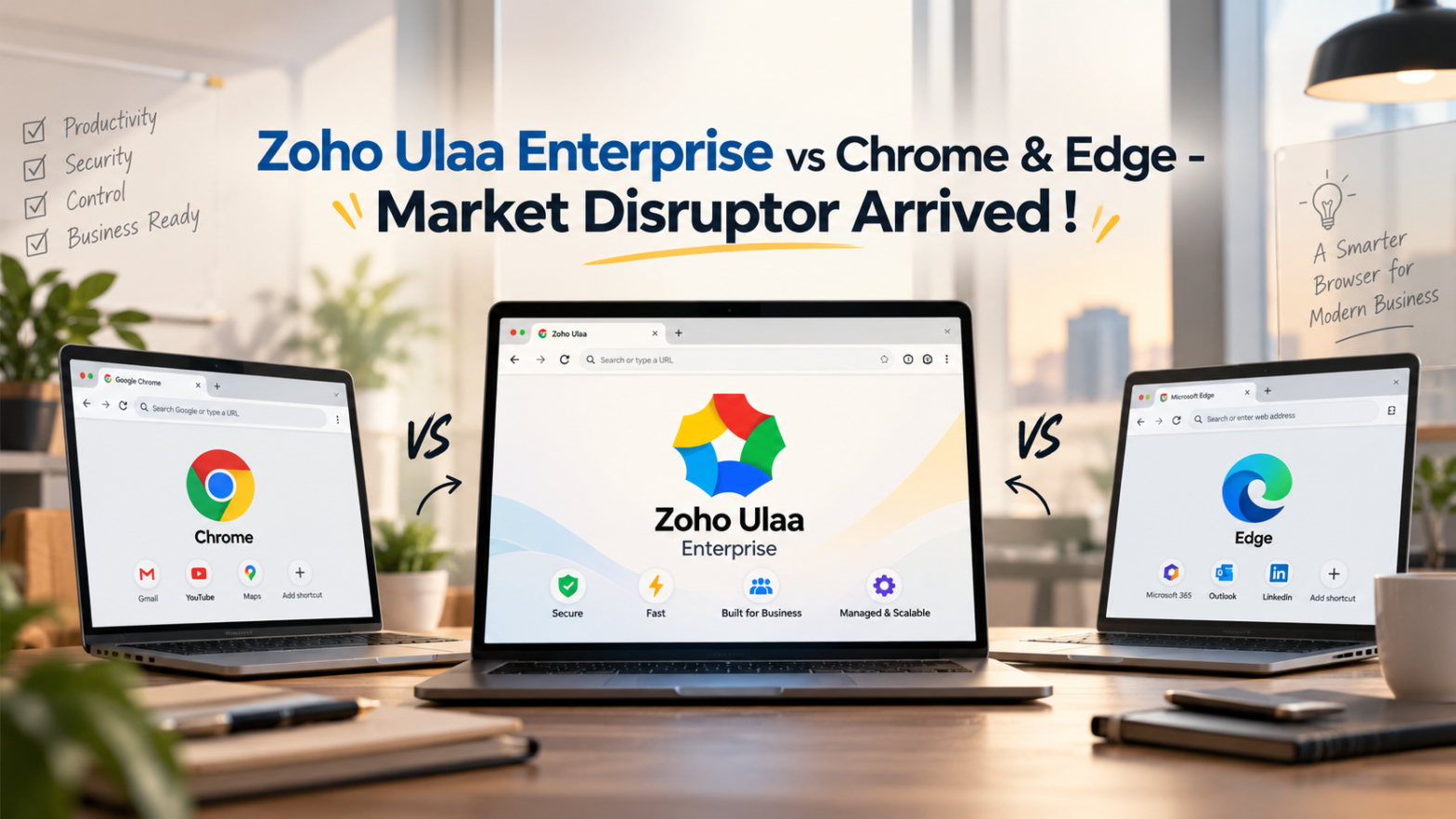
They access cloud applications, internal portals, analytics platforms and enterprise data through it.And that creates a problem most organizations are only beginning to recognize:
The browser is no longer just a productivity tool. It is an enterprise security endpoint.
This is the space Zoho is targeting with Ulaa Enterprise. And the interesting part is not that Zoho has built another browser. It is that Zoho is attempting to change where enterprise security happens.
Instead of putting security around the browser, Ulaa Enterprise puts significant security controls inside the browser itself.
That architectural difference deserves attention.
Think about a modern employee. In a single workday, they may access:
Much of this happens through one interface:
That means the browser sits directly between the employee and an enormous amount of organizational data.
An employee can copy information, Download a file, Upload data, Install an extension, Visit a malicious website, Enter credentials into a phishing page, Send confidential information to an external service, Use an unauthorized AI application
The traditional security architecture often tries to protect these activities through multiple external layers.
Ulaa Enterprise takes a different approach.
Control the environment where the activity actually happens.
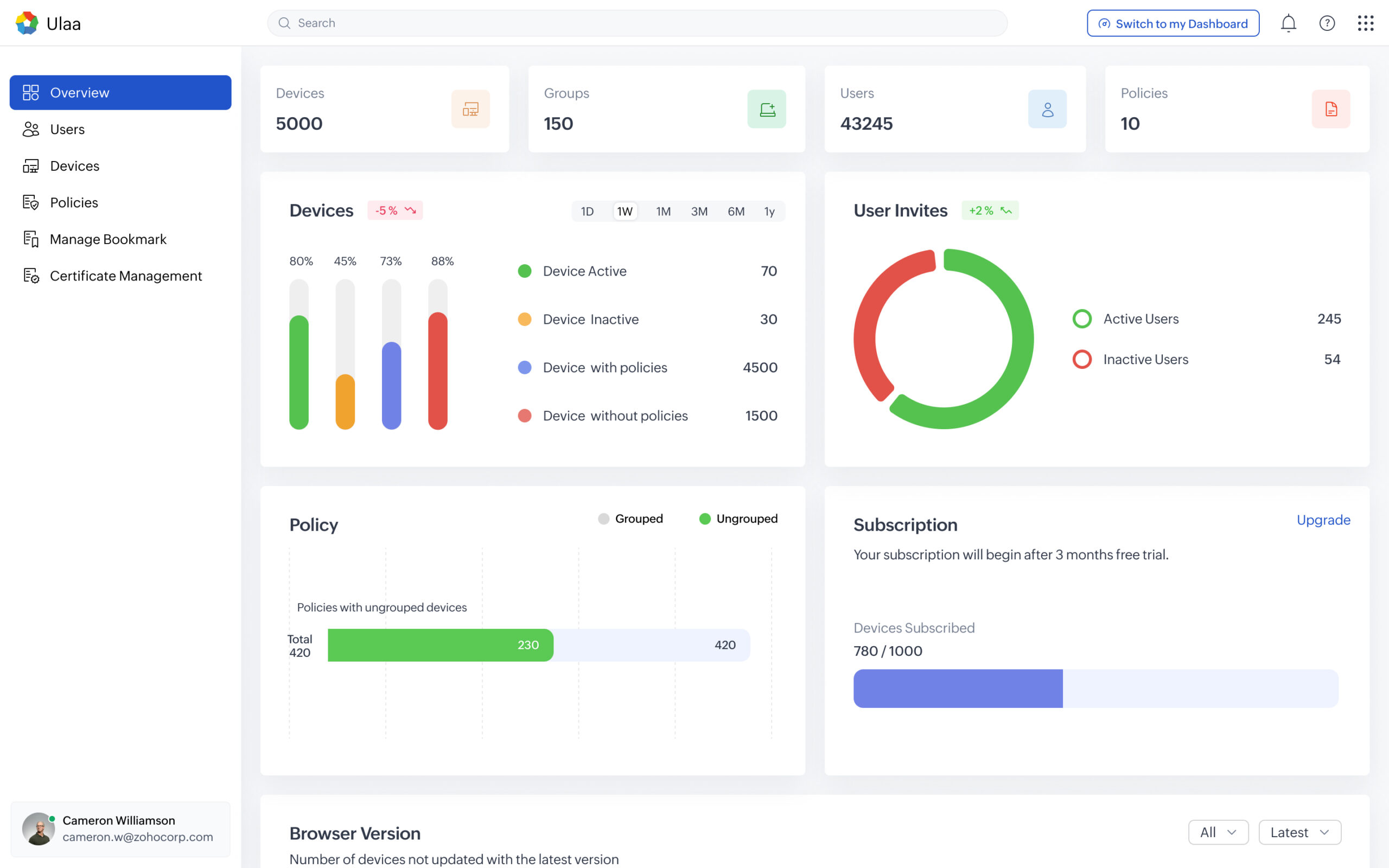
Zoho positions Ulaa Enterprise as an enterprise browser with centralized management, data loss prevention, phishing and malware protection, browser visibility, policy enforcement and productivity controls. (Ulaa)
That creates an important architectural model:
User → Browser → Business Applications → Business Data
Instead of treating the browser as a neutral layer, Ulaa makes it part of the security architecture.
This matters because security policies can then be applied at the point where users interact with web-based information.
For years, organizations have relied on browser extensions to add security functionality.
The problem is obvious. An extension sits on top of the browser. It is not the browser.
That can create limitations around enforcement, visibility, compatibility and administrative control.
Ulaa Enterprise takes a browser-native approach.
Its security capabilities are integrated directly into the browsing environment rather than relying solely on third-party extensions. Zoho specifically positions this as an alternative to extension-based security, VDI and DaaS approaches. (Ulaa)
This is an important distinction.
The question changes from:
“How do we add security to the browser?”
To
“How should the browser itself enforce security?”
Data Loss Prevention is traditionally associated with endpoint agents, network controls and monitoring systems.
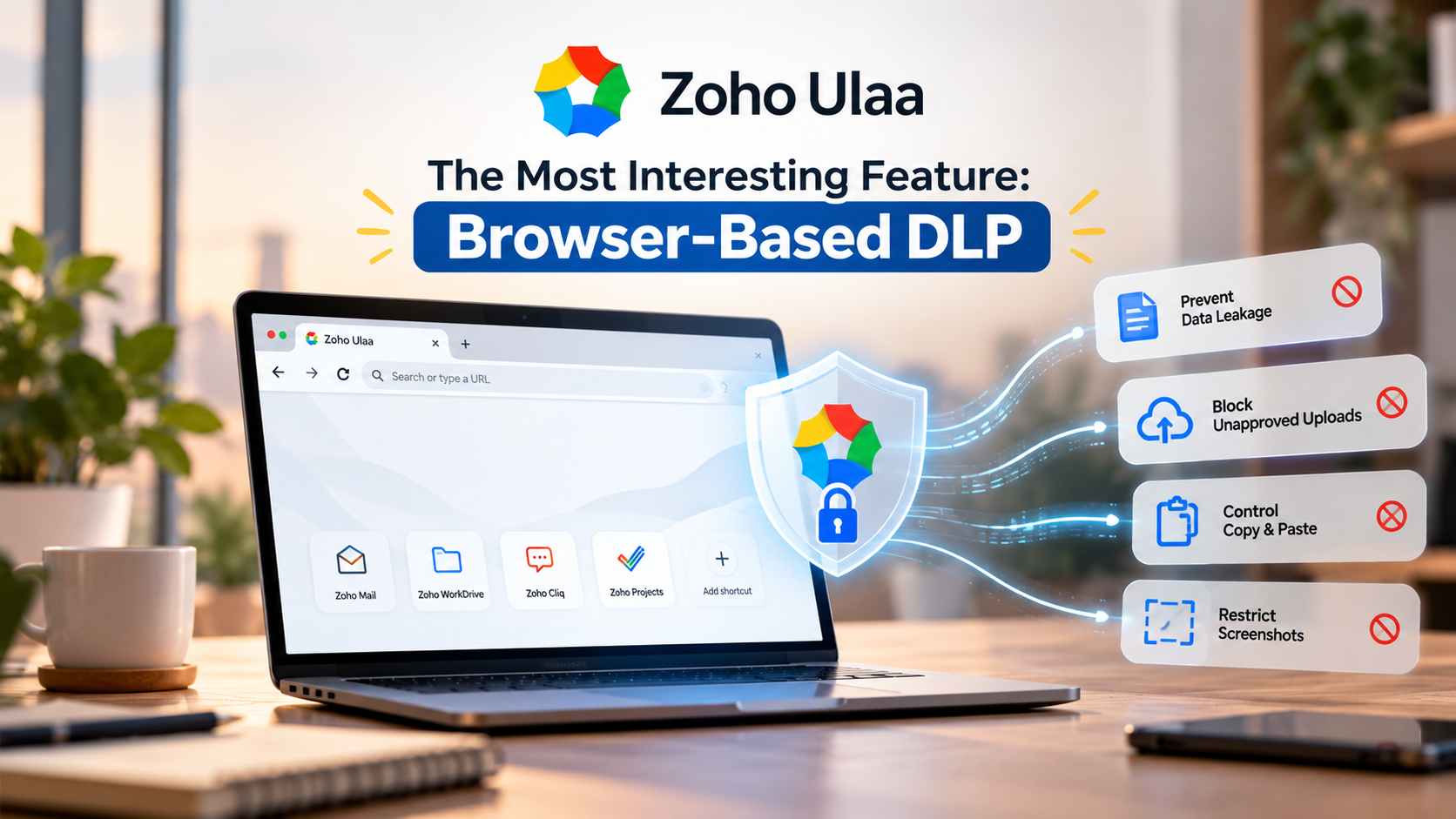
Ulaa Enterprise brings DLP directly into the browser.
This allows organizations to control actions such as:
Zoho describes its browser-based DLP as enforcing policies at the point of action, including controls over clipboard transfers, downloads and extensions. (Ulaa)
That creates a fundamentally different security model.
Instead of:
User performs action → Security system detects it → Security team responds
The architecture can become:
User attempts action → Browser evaluates policy → Action is blocked or permitted
That is preventive security at the interaction layer.
This becomes even more relevant in the AI era.
An employee might copy confidential customer information from a CRM and paste it into a public AI service.
The traditional question is:
“Did the employee violate our policy?”
The more useful question is:
“Can the browser prevent the sensitive information from leaving the approved environment in the first place?”
This is where browser-level DLP becomes strategically important.
As employees increasingly interact with AI platforms, the browser becomes a potential bridge between:
Enterprise Data ↔ External AI That bridge needs controls.
Enterprise browsers can easily be misunderstood as sophisticated website blockers.
That would undersell the technology.
Ulaa Enterprise combines:
Its current plans also include features such as conditional access, routing policies, secure access gateways, session recording and browser isolation at higher tiers. (Ulaa)
The browser becomes an administrative control plane for web-based work.
Modern security architecture increasingly assumes:
Do not automatically trust the user.
Do not automatically trust the device.
Do not automatically trust the application.
Access should depend on context and policy.
The browser can become part of that decision.
Who is accessing the system?
From which device?
Which website are they accessing?
What data are they handling?
What action are they attempting?
Should that action be allowed?
This is where Ulaa Enterprise’s policy-driven architecture becomes particularly interesting.
The browser can move from being a passive client to becoming an active security enforcement point.
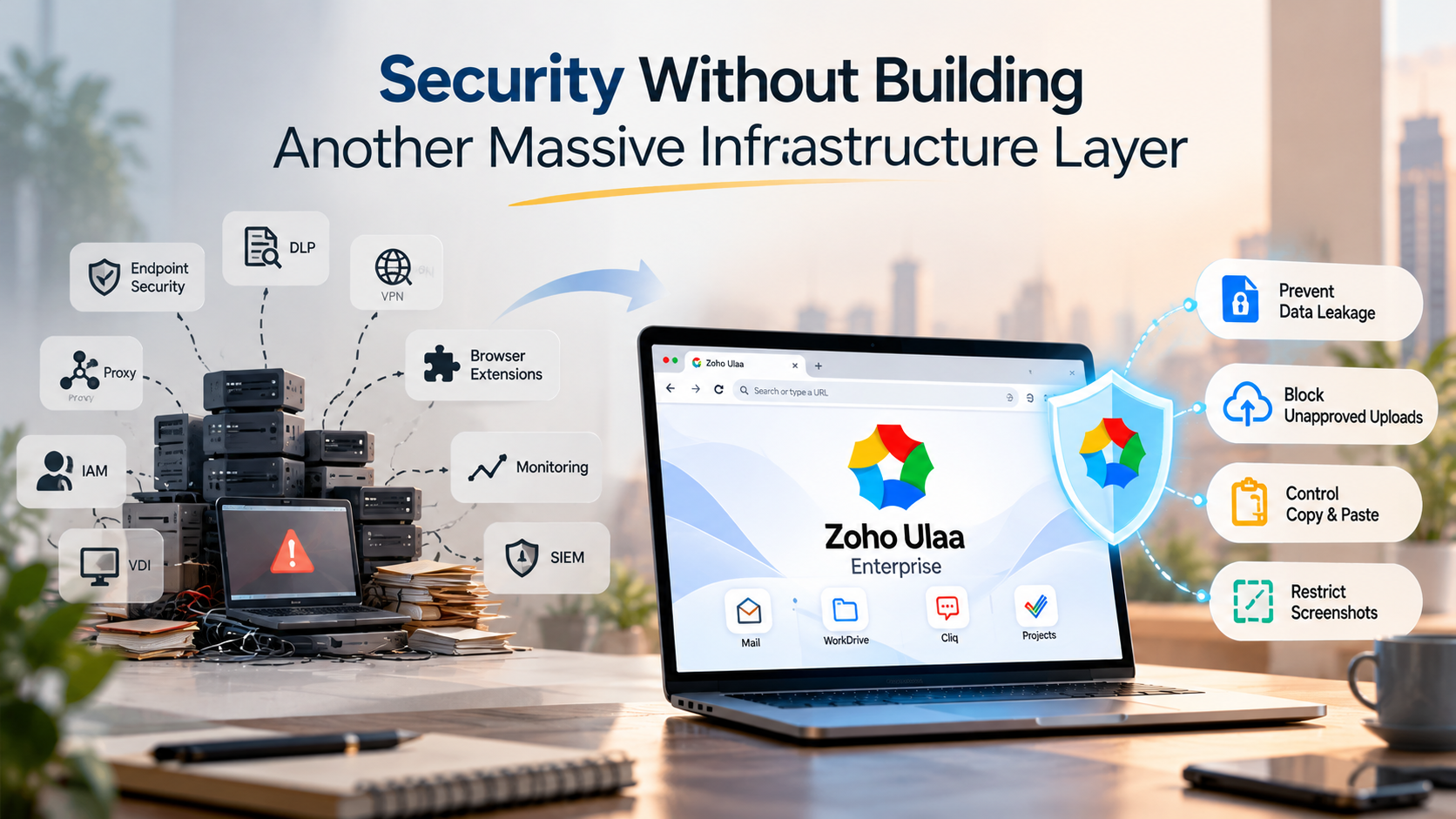
Another major problem with enterprise security is complexity. Organizations often end up with:
Endpoint Security + DLP + VPN + Proxy + Browser Extensions + IAM + Monitoring + VDI + SIEM
Each solves a problem.
Together, they can become difficult to manage.
Zoho’s argument with Ulaa Enterprise is essentially:
Why not move some of these controls into the browser itself?
Zoho describes Ulaa Enterprise as reducing reliance on endpoint agents, firewalls and third-party extensions by integrating security controls directly into the browser. (Ulaa)
This doesn’t mean every existing security layer disappears.
It means the browser can take responsibility for security controls that are particularly relevant to browser activity.
Enterprise security is usually discussed in terms of protection.
Ulaa adds another dimension:
Privacy.
Zoho says Ulaa Enterprise does not collect telemetry data or send browser activity to external services, keeping usage data within the organization’s environment. (Ulaa)
This creates an interesting contrast with the conventional browser business model.
The browser is one of the richest sources of behavioral information about a user.
Where they go.
What applications they use.
What they search.
What they access.
What they interact with.
For businesses handling sensitive information, the question is not only:
“Can the browser protect us?”
It is also:
“Who can see what our employees are doing?”
That distinction matters for privacy-conscious organizations.
Enterprise adoption often fails for a simple reason:
Employees don’t want to relearn their tools.
Ulaa Enterprise is Chromium-based, giving users a familiar browser environment while allowing organizations to apply enterprise security controls. It also supports Chromium-based extensions. (Ulaa)
That creates a practical balance:
Familiar user experience + enterprise control
The organization gets stronger governance without forcing users into an unfamiliar browsing model.
Consider the architectural difference.
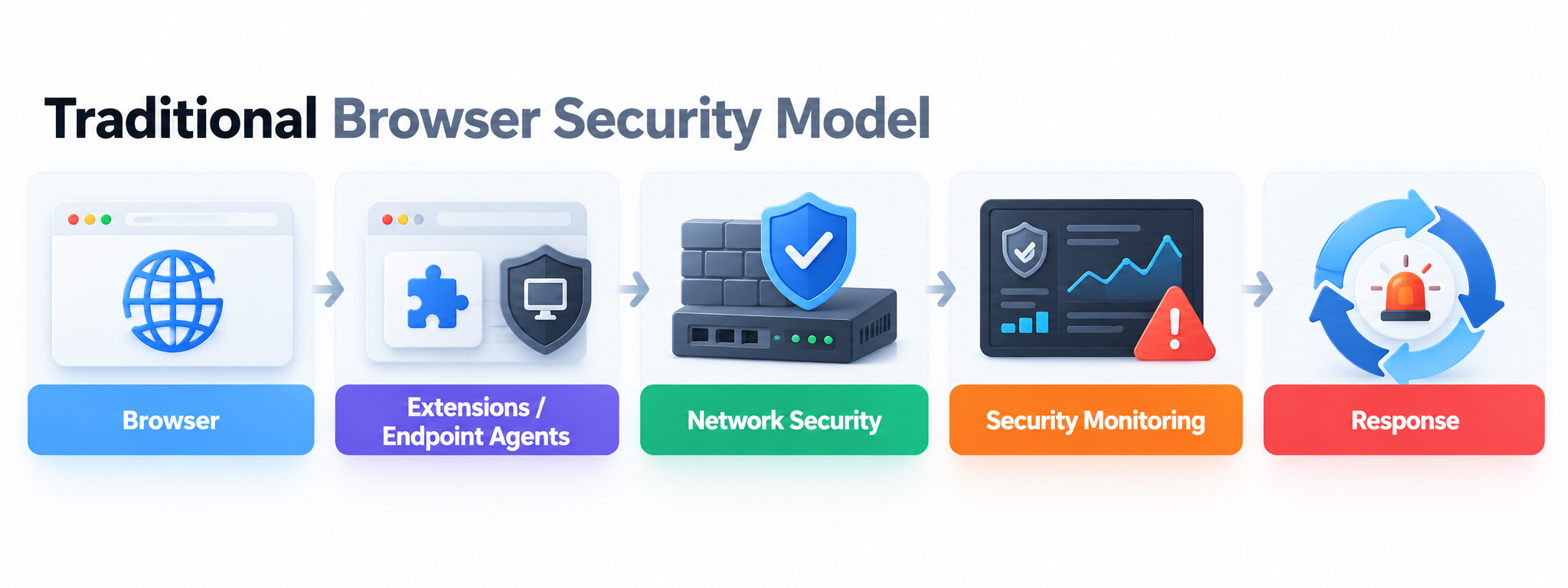
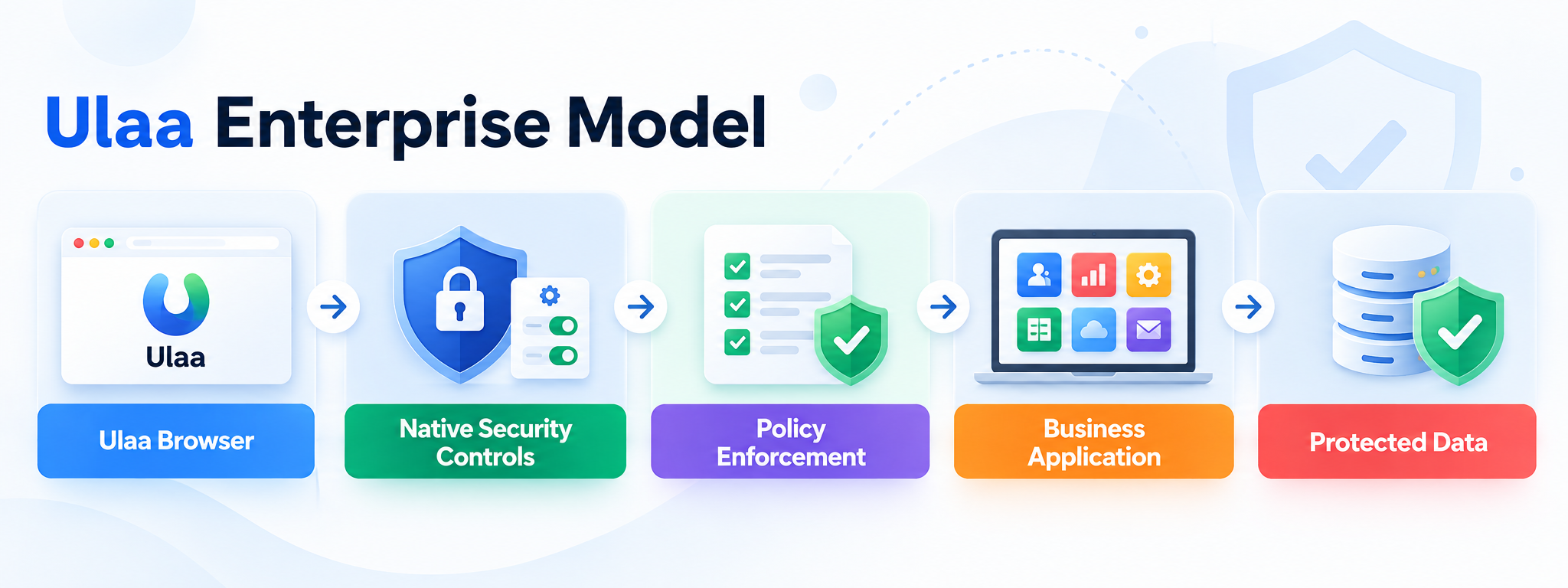
The second model moves more security decisions closer to the user’s actual interaction with the web.
That is the key technology story.
Google Chrome Enterprise is an established enterprise browser-management approach with a massive ecosystem.
So why does Ulaa deserve attention?
Because Ulaa is competing on a different philosophy.
Chrome’s strength is its enormous browser ecosystem and integration with Google’s enterprise environment.
Ulaa’s differentiation is its privacy-first architecture, browser-native security controls and Zoho ecosystem orientation.
Ulaa also positions itself around preventing data loss directly within the browser rather than relying solely on external security infrastructure.
For organizations already invested heavily in Google Workspace and Google’s security stack, Chrome Enterprise may remain a natural choice.
For organizations looking for a privacy-oriented enterprise browser with deeper alignment to the Zoho ecosystem, Ulaa presents a different proposition.
Microsoft Edge has a major advantage:
Microsoft’s enterprise ecosystem.
It can connect deeply with Microsoft 365, Entra, Defender and the broader Microsoft security environment.
Ulaa’s advantage is different.
It comes from a company whose broader philosophy emphasizes privacy, integrated business applications and reducing dependence on fragmented third-party systems.
For a Zoho-centered organization, that creates an interesting possibility:
Zoho applications + Zoho identity/security capabilities + Ulaa Enterprise
The browser becomes another part of the same technology ecosystem.
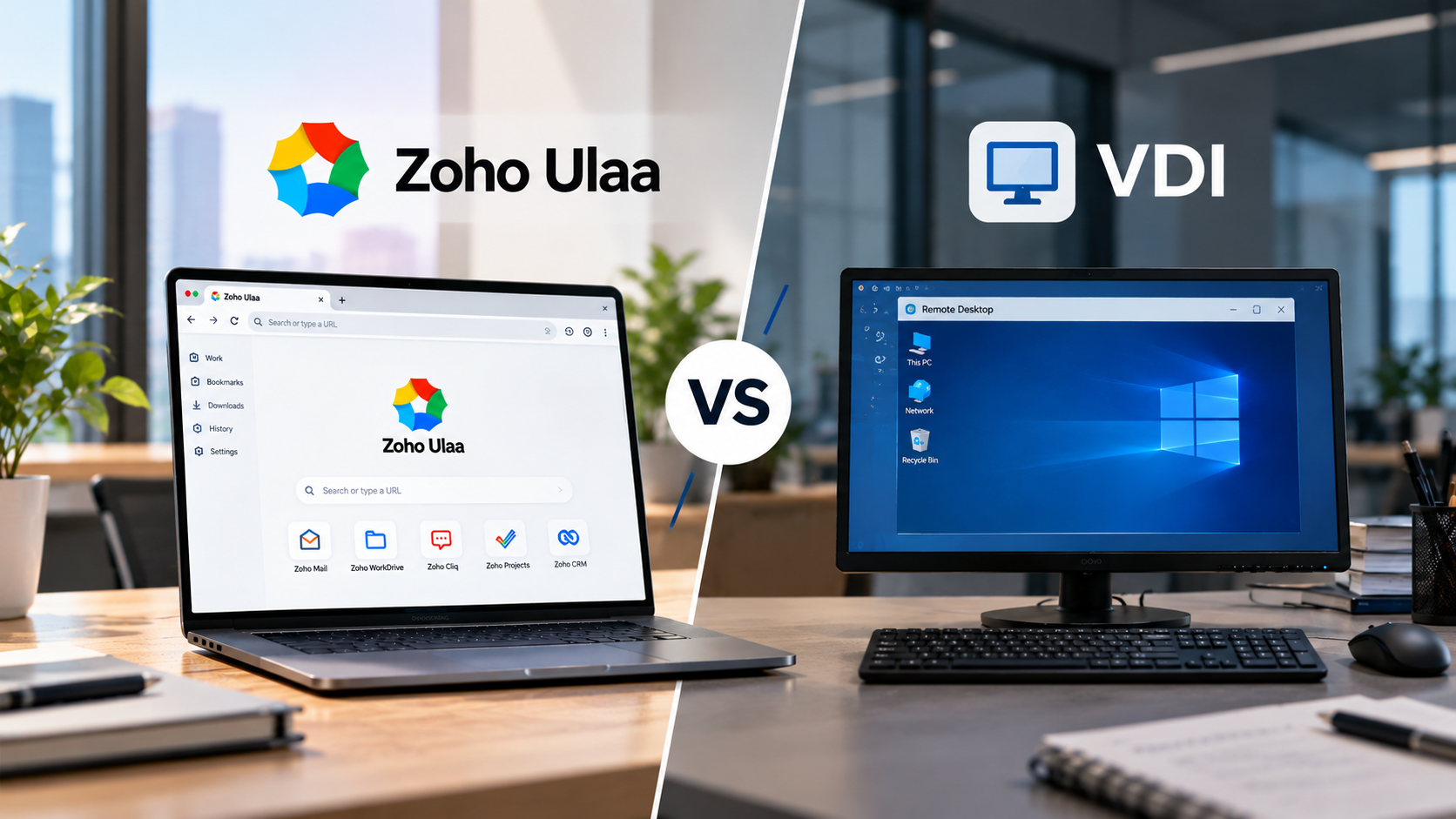
Virtual Desktop Infrastructure has traditionally been used to isolate enterprise workloads.
But VDI can introduce:
Ulaa’s proposition is fundamentally different.
Instead of creating a separate virtual environment to secure browsing, it attempts to secure the browsing environment itself.
Zoho specifically positions Ulaa Enterprise as a simpler alternative for many secure-browsing scenarios where VDI or DaaS may introduce unnecessary complexity. (Ulaa)
The important question is therefore not:
“Can Ulaa replace VDI everywhere?”
It cannot be assumed to.
The better question is:
“Do we really need a virtual desktop for every browser-based security requirement?”
That is a much more interesting enterprise architecture question.
This may ultimately be Ulaa’s strongest strategic advantage.
Zoho is not just a browser company.
It already operates across:
Ulaa can become the browser layer connecting employees to that ecosystem.
Zoho itself positions Ulaa Enterprise as working alongside the Zoho ecosystem, with integrations designed to support enterprise workflows and security controls. (Ulaa)
This creates a technology stack that can potentially look like:
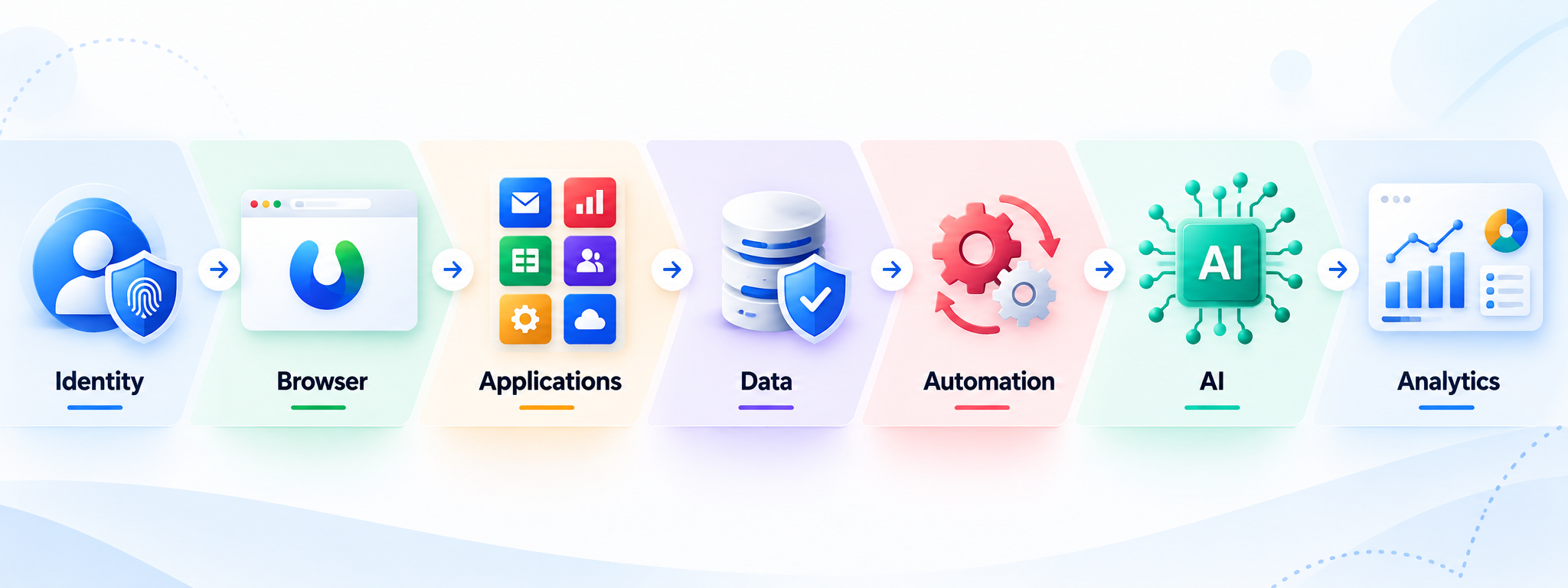
The browser is no longer outside the enterprise architecture. It becomes part of it.
Credential security is another important part of the architecture.
Ulaa Enterprise includes Ulaa Keysafe, powered by Zoho Vault, for policy-driven password management.
Zoho says administrators can enforce credential-sharing controls, track access logs and prevent credential exposure without relying on browser extensions. (Ulaa)
This creates another important shift:
Credentials + Browser + Policy
instead of treating password management as a completely separate security function.
Enterprise work no longer happens only on desktops.
Employees use:
Ulaa Enterprise’s policies extend to mobile browsing as well, supporting platforms including macOS, Linux, Android and iOS. (Ulaa)
This matters because security policies become less useful if they stop at the office laptop.
The modern workforce is distributed.
Security has to travel with it.
This may be the biggest reason to watch Ulaa.
AI is changing the browser from a place where users read information to a place where they increasingly interact with intelligent systems.
Employees will use AI to:
That creates new questions around:
What can AI see?
What can employees copy into AI systems?
Which AI sites are approved?
What information can leave the organization?
Can sensitive information be uploaded?
Can browser activity be monitored without violating privacy?
The browser is becoming the meeting point between employees, enterprise data and AI. That makes browser security much more strategic.
At first glance, Ulaa Enterprise appears to be entering a crowded browser market.
Chrome, Edge, Firefox, Brave, Safari, Enterprise browser vendors, Security platforms, VDI providers, DaaS platforms.
But Ulaa is not necessarily trying to win by being “another browser.” Its more interesting proposition is:
What if the browser itself becomes part of the enterprise security stack?
That is a much bigger idea.
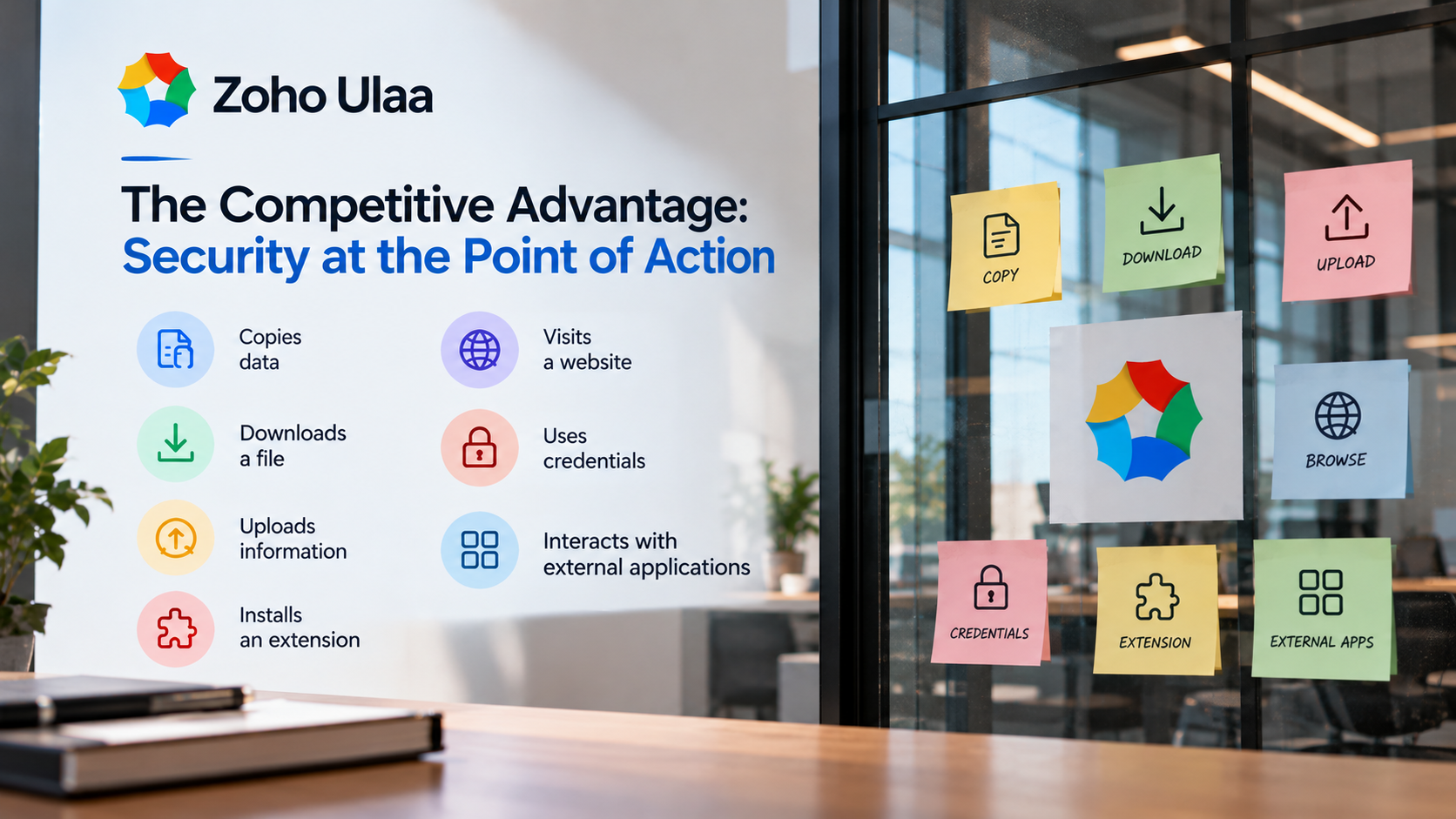
The strongest argument for Ulaa is not simply that it can detect threats. It is where it can enforce policy.
When a user:
Copies data
Downloads a file
Uploads information
Installs an extension
Visits a website
Uses credentials
Interacts with external applications
the browser is present. That makes it an unusually powerful enforcement point.
And when security controls are applied at that point, organizations can potentially prevent risky actions instead of discovering them after the fact.
There is no honest enterprise answer that says one browser is universally the best. Chrome Enterprise has scale. Edge has Microsoft’s enterprise ecosystem. Firefox has a strong open-source and privacy reputation. Brave has a strong consumer privacy position. Different organizations have different requirements. But Ulaa’s combination is unusual:
Privacy-first philosophy + enterprise browser + native DLP + centralized controls + Zoho ecosystem integration.
That combination is what makes Ulaa strategically interesting.
The strongest case for Ulaa is therefore not:
“Every company should replace its browser tomorrow.”
It is:
“The browser deserves to be treated as an enterprise security layer, and Ulaa is building around that idea from the ground up.”
For years, organizations focused security on: Servers, Networks, Endpoints, Applications, Identity, Cloud infrastructure. But the browser sits at the intersection of almost all of them.
It is where users interact with applications. It is where data moves. It is where credentials are entered. It is where AI services are accessed. It is where phishing attacks often begin. It is where sensitive information can leave the organization. That makes the browser a strategic security boundary.
And Zoho is betting that this boundary should be controlled from inside the browser itself.
There is also a larger pattern here. Zoho has increasingly moved beyond being perceived simply as a collection of business applications.
Its ecosystem now touches:
Business Applications
AI
Analytics
Security
Identity
Infrastructure
Developer Tools
Collaboration
Ulaa Enterprise fits naturally into that broader strategy. It puts Zoho at another critical layer of the technology stack:
the place where employees access the digital world.
That is a much bigger position than simply competing in the browser market.
The browser market is already crowded.
Ulaa does not win simply because it has tabs, extensions or familiar browsing. Its real differentiation lies elsewhere.
It asks a more fundamental question:
Why should enterprise browser security be something added to the browser instead of something built into it?
That question becomes increasingly relevant as organizations become:
In that environment, the browser is becoming one of the most important interfaces between people and enterprise data.
Ulaa Enterprise turns that interface into a security control point. And that may be the real story.
The next generation of enterprise security may not begin at the firewall.
It may begin at the browser.
Zoho Ulaa Enterprise is betting on exactly that future.
UniCloud IT Services helps organizations design and implement secure Zoho ecosystems across CRM, automation, analytics, integrations, identity, business applications and AI-enabled workflows.
Our approach focuses on technology architecture rather than isolated product deployment—helping organizations connect their applications, users, data, automation and security controls into a scalable digital environment.