
AI has changed how software is built.
A developer can describe a requirement in natural language, ask an AI coding assistant to generate the implementation, review the output, make a few corrections and move forward in a fraction of the time traditional development might require.
That sounds like progress.
However, there is a question the industry is only beginning to confront:
If AI can generate code faster than developers can write it, can developers still identify everything that is wrong with it?
This is where the security problem begins.
AI can produce functional code. However, functional does not necessarily mean secure.
And this is exactly the problem Zoho Fortify is targeting.

Software development has historically had a natural speed limit.
Developers had to understand a requirement, design the solution, write the code, test it and fix vulnerabilities.
AI has removed part of that friction. As a result, code can now be generated almost instantly.
Developers can ask AI to:
The productivity opportunity is enormous.
However, there is an uncomfortable reality:
AI does not automatically understand the security consequences of every implementation it generates.
A piece of code can compile and pass functional tests. In addition, it can look perfectly reasonable during a code review and still contain a vulnerability.
That changes the role of the developer.
The developer is no longer only asking:
“Does this code work?”
Instead, the developer increasingly needs to ask:
“How could someone break this code?”
Zoho Fortify is positioned as a hands-on cybersecurity training platform designed to help developers identify and understand vulnerabilities through practical challenges.
Instead of treating application security as another theoretical certification topic, Fortify puts developers into situations where they need to find, understand and exploit vulnerabilities.
That distinction matters because security knowledge becomes much more valuable when developers understand the attacker’s perspective.
A developer who only knows how to write an authentication function may know how authentication is supposed to work.
However, a developer who has actually exploited a broken authentication implementation understands something different:
how the implementation can fail in the real world.
The title of this article is deliberately provocative:
Your AI writes code. Zoho Fortify teaches you how to break it.
Modern application security cannot stop at code generation.
Developers need to understand what happens when an attacker interacts with the software in ways the original developer never intended.
Consider a simple API.
AI can generate the endpoint, authentication and database queries. It can also create error-handling logic.
However, developers still need to ask what happens if:
These aren’t theoretical questions. Instead, they represent the difference between working software and secure software.
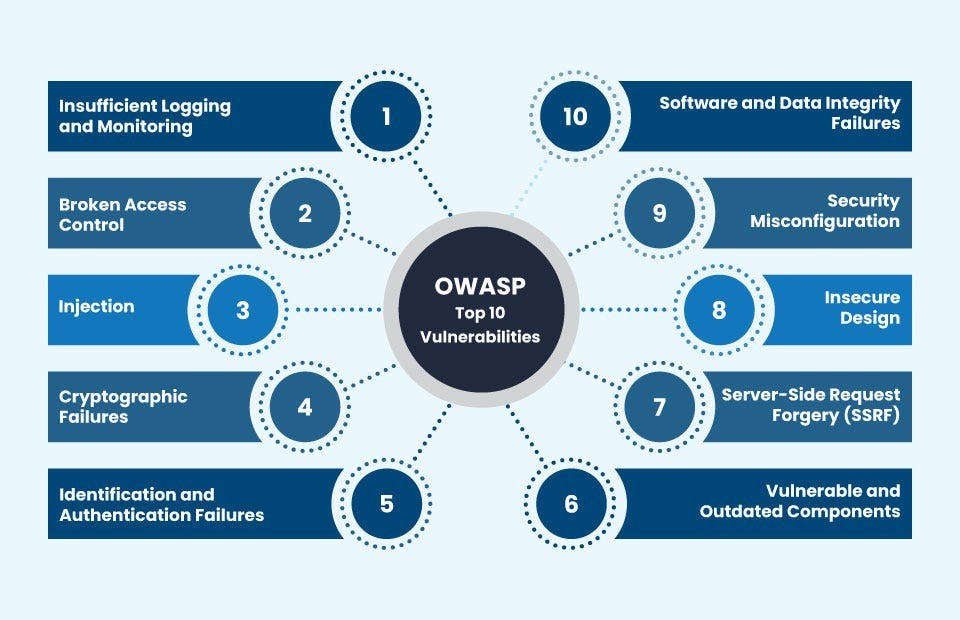
AI has changed software development. However, it has not eliminated fundamental application security principles.
Vulnerabilities around areas such as:
continue to matter.
The technology generating the code may have changed, but the attacker’s objective has not.
Therefore, security education remains important even as AI-assisted development becomes mainstream.
Developers need to understand not only what code to generate, but also what assumptions that code is making.
There is a deeper shift happening here.
Traditional secure coding education often asks developers to learn best practices.
Adversarial security education, however, asks a different question:
What happens if I assume the developer made a mistake?
That mindset is powerful.
Instead of looking at:
Input → Application → Database
a security-minded developer starts thinking:
Attacker → Input → Application → Unexpected behavior
As a result, the objective changes from simply building functionality to understanding the application’s attack surface.
That is particularly important when AI is involved because AI can produce large quantities of code very quickly.
The faster code is generated, the more important it becomes to have people capable of challenging its assumptions.
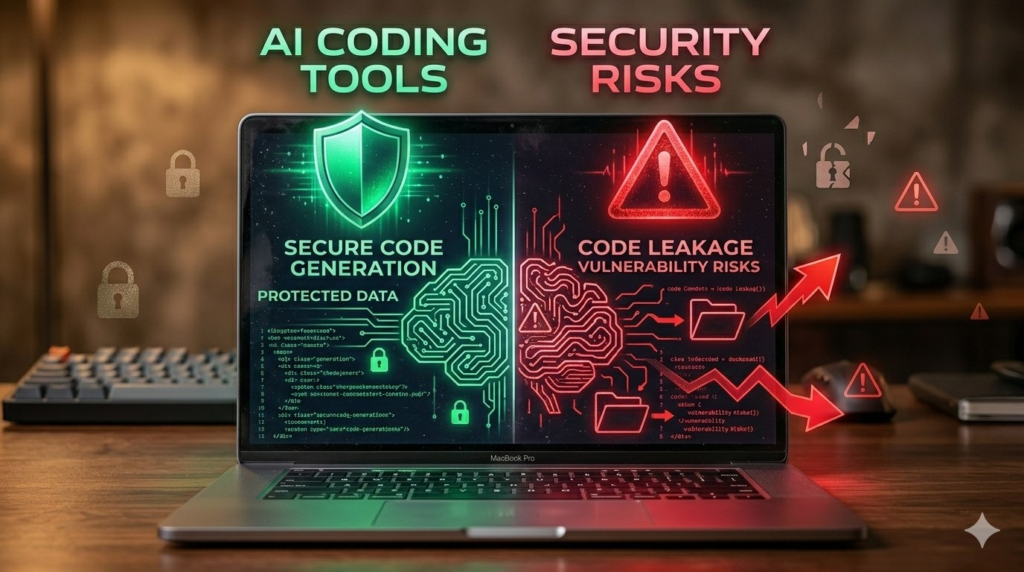
There is an interesting paradox here.
AI is making software development easier. However, that may actually make security expertise more valuable, not less.
Why?
Because when code becomes cheaper to produce, the bottleneck moves.
Developers may spend less time manually writing repetitive code and more time:
Therefore, the developer increasingly becomes a reviewer and security decision-maker, not simply a code producer.
One of the strongest ideas behind a platform such as Fortify is experiential learning.
Reading that SQL injection exists is one thing. However, seeing a vulnerable application and understanding its input creates a very different learning experience.
A developer can manipulate that input, observe the result and then fix the vulnerability. As a result, the knowledge becomes much more practical.
Over time, developers begin to recognize dangerous patterns.
Eventually, they may see potentially vulnerable code during development and think:
“I know how this could be attacked.”
That instinct is extremely valuable.
For many organizations, security still appears near the end of the development lifecycle.
Traditionally, teams build the application, test its functionality and deploy it. Only then do they run a security assessment.
However, that model is becoming increasingly difficult to sustain.
When AI accelerates development, vulnerabilities can potentially enter the codebase just as quickly as functionality does.
Therefore, security needs to move closer to development.
The modern lifecycle increasingly looks like:
Plan → Generate → Review → Test → Attack → Fix → Deploy → Monitor
As a result, security becomes part of development rather than a final inspection.
This raises another question.
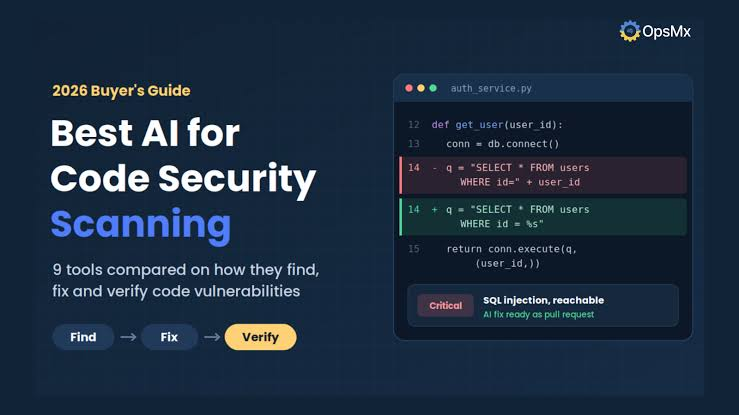
If AI can generate code, can’t another AI simply scan it for vulnerabilities?
Yes. In fact, automated security tooling is extremely important.
Static analysis, dependency scanning, dynamic testing, code scanning and other AppSec technologies all have an important role.
However, tooling does not eliminate the need for developer understanding.
A scanner may identify a vulnerability, but a developer still needs to understand:
Why does it exist?
What is the actual risk?
How could an attacker exploit it?
What is the safest architectural fix?
Could the same vulnerability exist somewhere else?
Ultimately, that is where human security knowledge remains critical.
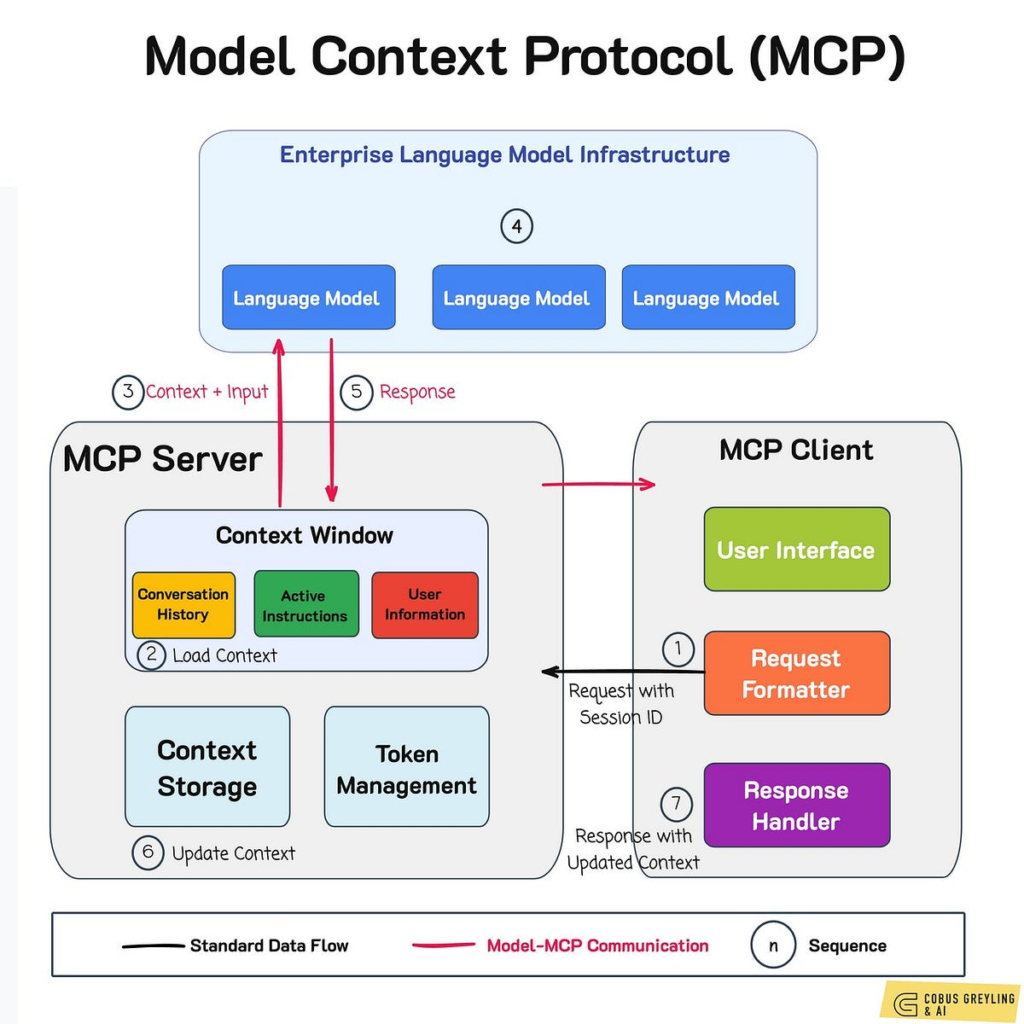
Modern AI systems are also becoming connected to external tools and business systems through technologies such as the Model Context Protocol (MCP).
Consequently, that introduces another security dimension.
An AI model may no longer simply generate text or code. Instead, it can increasingly interact with tools, data and external services.
That means security questions expand from:
“Is the code secure?”
to:
“What can the AI access?”
“What actions can it perform?”
“Which tools can it invoke?”
“What happens if an instruction is manipulated?”
“Are permissions properly enforced?”
Therefore, security education is moving into a much broader territory.
Developers need to understand not just application vulnerabilities, but also the security implications of AI-connected software architectures.
This may be the biggest takeaway.
Traditionally, organizations relied heavily on dedicated security teams, including security engineers, penetration testers, application security specialists and security operations teams.
However, as software development accelerates through AI, security can no longer remain isolated from developers.
Every developer who prompts an AI system to generate production code is making security decisions—whether consciously or not.
AI-generated authentication functions, database queries, API endpoints, permission checks and data-processing workflows can all become part of an organization’s attack surface.
Therefore, developer security education is increasingly becoming an architectural requirement.
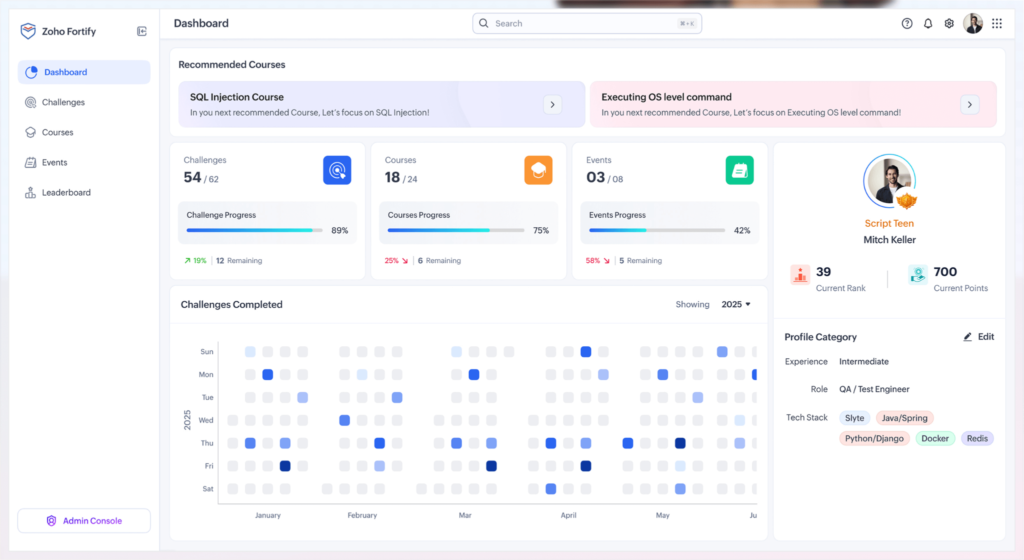
Fortify is interesting not simply because Zoho has launched another training platform.
Instead, it represents a broader shift in how developers may need to learn security.
The future developer may need three capabilities simultaneously:
Build it.
Understand it.
Break it.
The first creates functionality, while the second creates technical understanding. Finally, the third creates security awareness.
AI is already becoming extremely good at helping developers with the first.
Therefore, the industry now needs to become much better at the other two.
There is a tendency to frame AI as a replacement for developers. However, that view is too simplistic.
AI is more likely to change what developers spend their time doing.
Developers may spend less time on repetitive code generation and more time on architecture, validation and review.
In addition, security reasoning, system-level thinking and adversarial testing may become increasingly important.
As a result, developers who understand how software can fail may become significantly more valuable in an AI-assisted development environment.
The old development question was:
“How do I build this?”
AI can increasingly answer that question.
However, the next question is more difficult:
“How would someone attack what I just built?”
That requires a completely different mindset.
This is where platforms such as Zoho Fortify become relevant.
The future of secure software development may not depend only on better AI-generated code.
Instead, it may depend on developers becoming better at challenging, attacking and validating that code.
AI can generate the software.
Developers still have to defend it.
And sometimes, the best way to learn how to defend software is to learn how to break it first.
UniCloud IT Services works with businesses on Zoho architecture, CRM, automation, integrations, APIs and technology implementation.
As AI increasingly becomes part of software development and business automation, secure architecture, controlled integrations and responsible implementation are becoming equally important.
Our focus is not simply on implementing technology, but on designing systems that are connected, scalable, secure and aligned with real business processes.
This angle should work particularly well for UniCloud because it connects Zoho Fortify → AI-generated code → OWASP → developer security → MCP → modern application architecture, rather than making the article read like a product announcement.