UniCloud
May 13, 2026
Zia vs OpenAI Tools: Why Zoho’s AI Wins Inside Business Systems (And Where It Doesn’t)
AI conversations today are dominated by tools like ChatGPT. But in real business environments, the question is not:
“Which AI is smarter?”
It’s:
“Which AI actually runs my business better?”
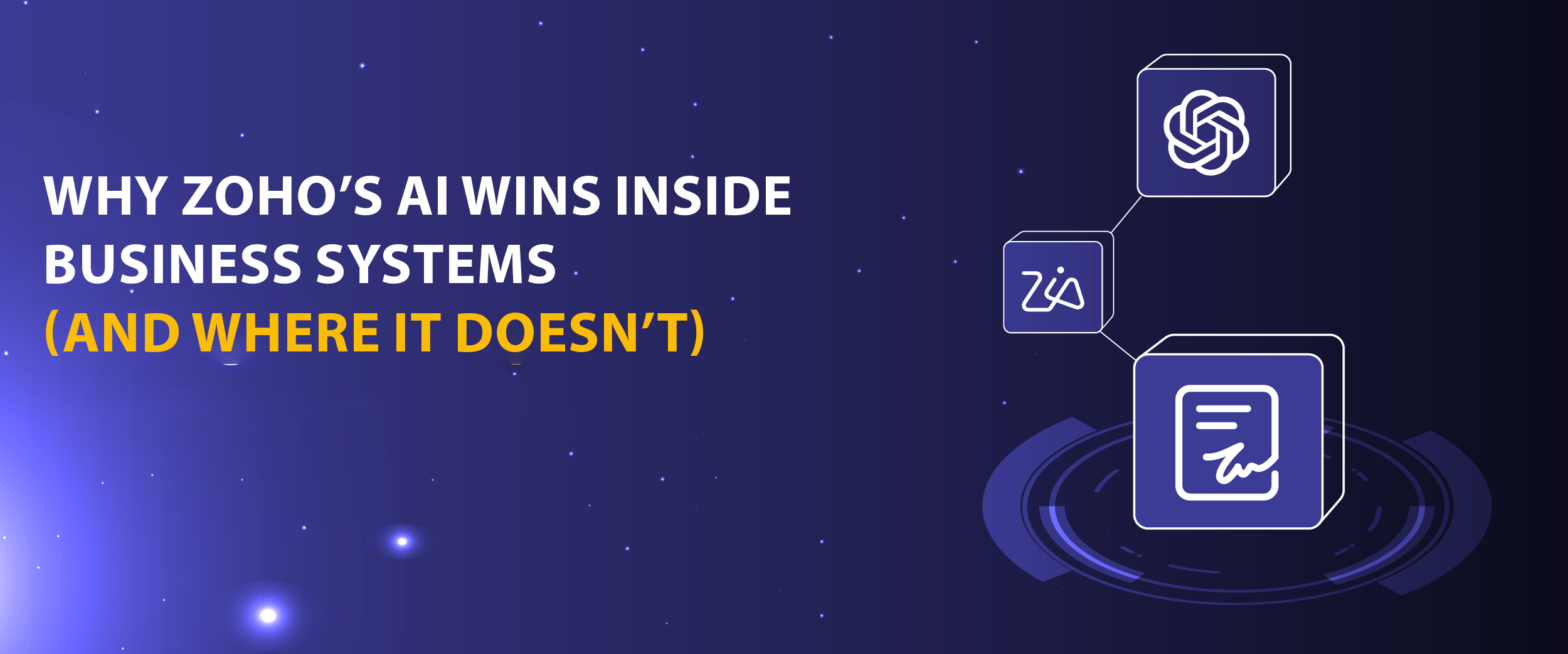
This is where Zia, the AI layer from Zoho Corporation, creates a fundamentally different value compared to generic OpenAI tools.
The Core Difference (This Is Everything)
OpenAI Tools (ChatGPT, APIs)
- General-purpose intelligence
- Requires setup, prompts, integrations
- Works outside your business systems
Zoho Zia
- Context-aware AI embedded inside Zoho apps
- Works within your CRM, finance, support, and workflows
- Designed for execution, not just generation
This is the key shift:
OpenAI = Intelligence
Zia = Operational Intelligence
1. Context is the Real Power (Zia’s Biggest Advantage)
OpenAI tools:
- Don’t know your CRM data
- Don’t understand your pipeline
- Require manual context input
Zia:
- Lives inside Zoho CRM, Zoho Desk, etc.
- Understands:
- Customer history
- Deal stages
- Ticket sentiment
- Business workflows
Example:
Zia can:
- Predict deal closure
- Detect anomalies
- Suggest next best actions
While OpenAI:
- Needs prompts + external data feeding
Zia uses real-time business data, not just language patterns.
2. Built for Action, Not Just Answers
OpenAI tools:
- Generate responses
- Summarize text
- Assist with content
Zia:
- Triggers workflows
- Automates decisions
- Executes tasks across systems
Example:
- Ticket sentiment detected → escalate automatically
- Deal stagnation → trigger follow-up workflow
Zia doesn’t stop at insight—it drives execution.
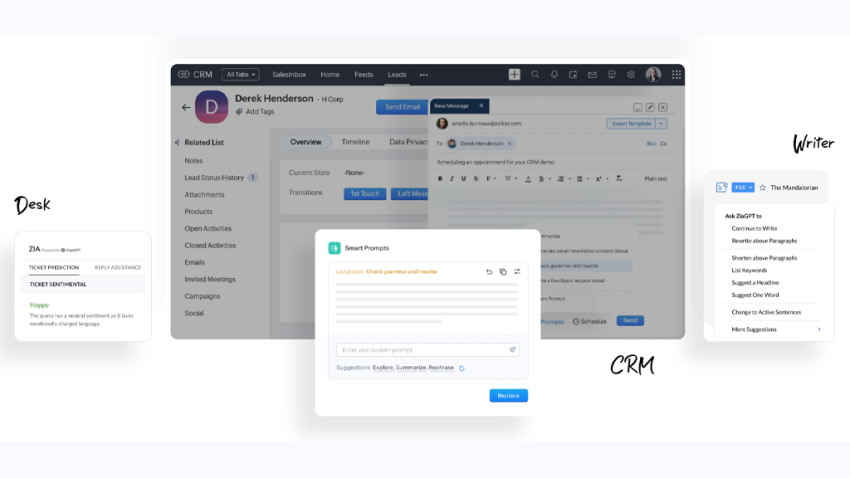
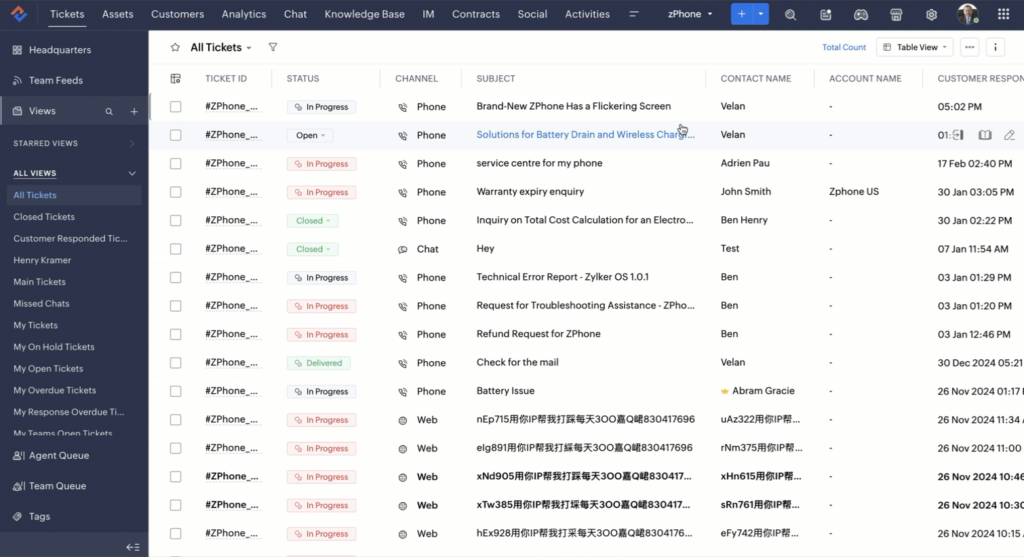
In Zoho Desk, Zia can analyze customer sentiment, summarize issues, and suggest replies to agents automatically
Native Ecosystem Advantage (Where Zia Dominates)
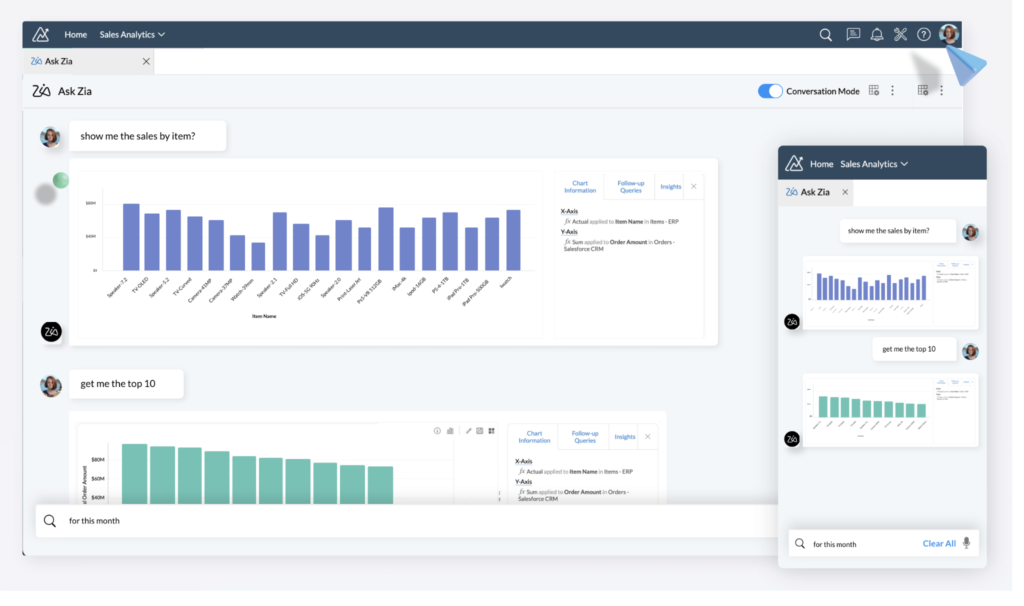
Zia is not a standalone tool.
It operates across:
- Zoho CRM
- Zoho Books
- Zoho Creator
- Zoho Analytics
This creates:
- Shared data layer
- Unified automation
- Cross-functional intelligence
OpenAI tools:
- Require APIs, middleware, and engineering effort to achieve the same
Zia is already embedded.
Zero Setup vs Engineering Overhead
OpenAI:
- API setup
- Prompt engineering
- Hosting + integrations
- Cost management
Zia:
- Pre-built AI features
- Works out of the box
- No infrastructure needed
In many Zoho apps:
- Zia is enabled by default
- No API key required (for Zoho’s own AI)
This makes Zia:
- Faster to deploy
- Easier for non-technical teams
5. Data Privacy & Control (A Massive Enterprise Factor)
Zia:
- Runs within Zoho ecosystem
- Controlled data environment
- Enterprise compliance (GDPR, etc.)
OpenAI:
- External processing
- Requires data-sharing considerations
Also:
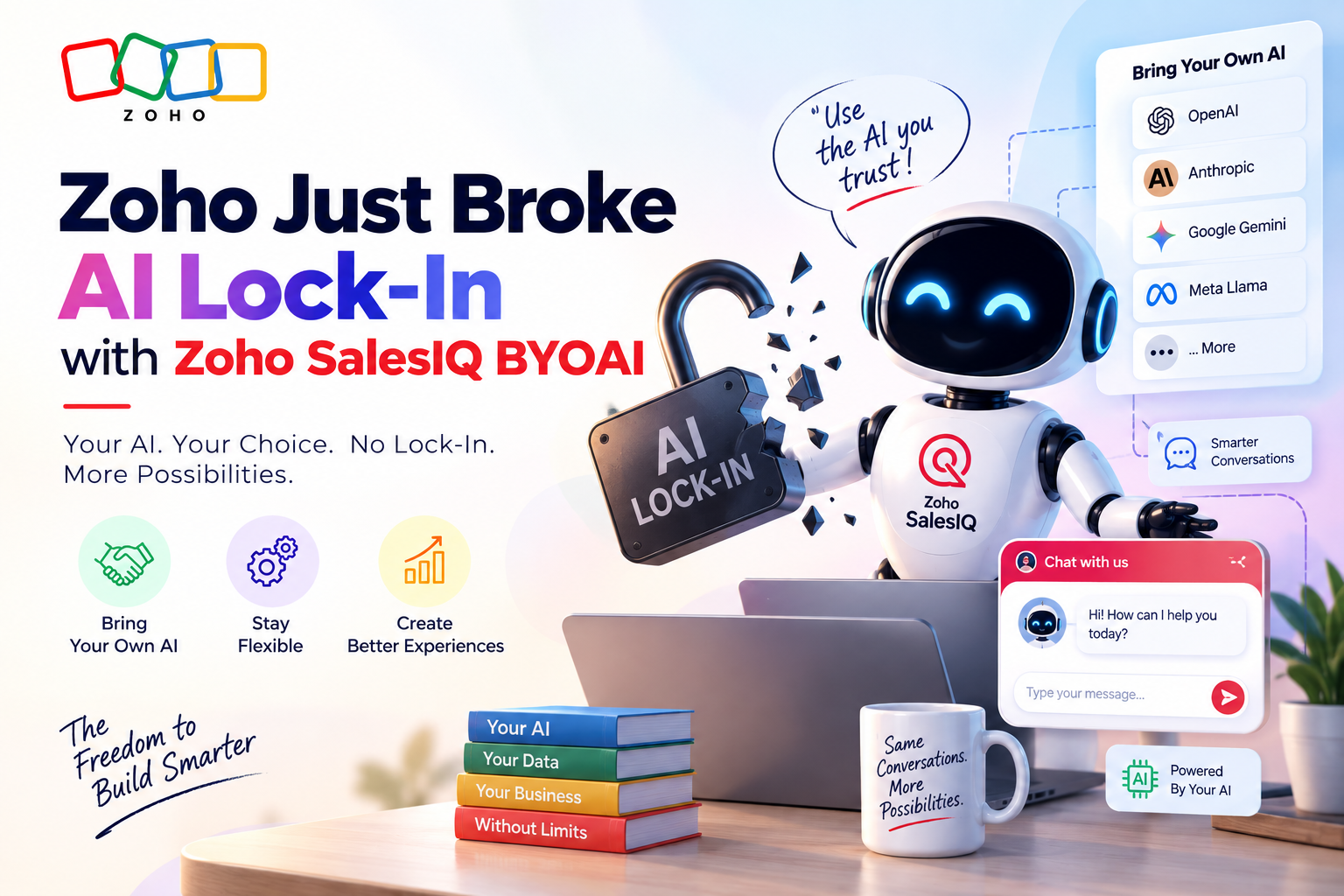
- Zoho allows BYOK (Bring Your Own Key) when integrating OpenAI, giving control over usage and privacy
Zia gives control-first AI, not black-box AI.
6. Domain-Specific Intelligence (Where Zia is Smarter)
OpenAI:
- General intelligence across domains
Zia:
- Optimized for business use cases:
- Sales predictions
- Support automation
- Recruitment scoring
- Finance insights
Example:
Zia in recruitment can generate role-specific assessments and hiring workflows automatically
It’s not just AI—it’s business-trained AI.
7. Cost Efficiency at Scale
OpenAI:
- Pay-per-token model
- Costs increase with usage
- Hard to predict scaling cost
Zia:
- Included in Zoho ecosystem (many cases)
- Predictable pricing
- No per-request complexity
For businesses:
- Zia = operationally sustainable AI
- OpenAI = powerful but usage-sensitive AI
Where OpenAI Still Wins (Be Honest — This Builds Trust)
To position strongly, you must acknowledge this:
OpenAI is better at:
- Deep reasoning
- Complex content generation
- Creativity & general intelligence
- Advanced conversational nuance
Zia (currently):
- More practical than powerful
- More operational than intelligent
Even Zoho allows switching between:
- Zia (Zoho GenAI)
- OpenAI (external LLM) depending on need
The Real Winner? Hybrid AI Architecture
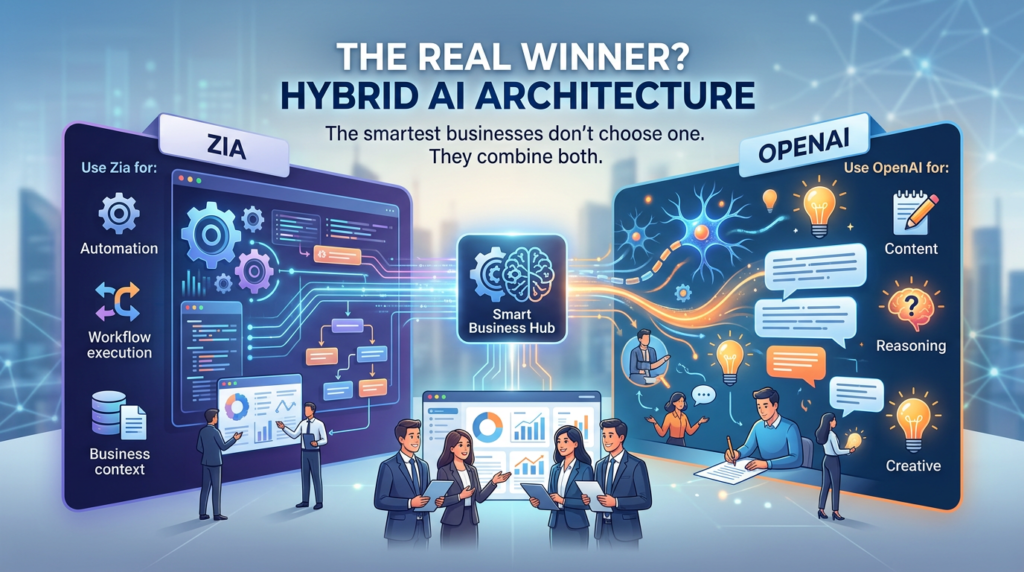
The smartest businesses don’t choose one.
They combine both:
Use Zia for:
- Automation
- Workflow execution
- Business context
Use OpenAI for:
- Content
- Reasoning
- Advanced AI tasks
This creates a dual-layer AI system:
- Zia = Execution Engine
- OpenAI = Intelligence Engine
Final Thought
- OpenAI makes AI smarter.
- Zia makes businesses faster.
And in real-world operations?
Speed, context, and execution win over raw intelligence.