In the software world, trust is easy to claim.
But at government scale, trust must be earned.
That’s why one recent development deserves far more attention than it’s getting:
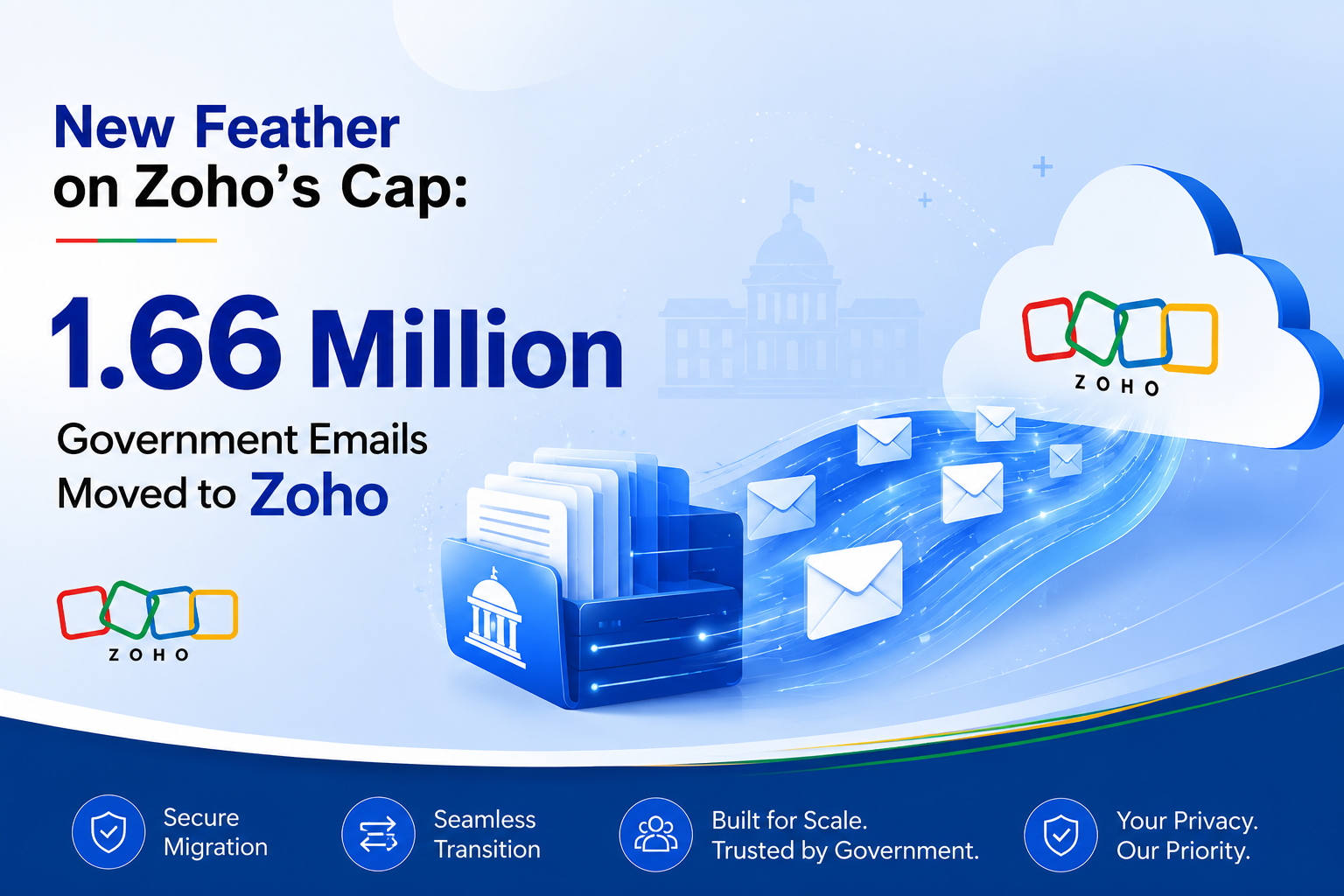
The Government of India migrated approximately 1.66 million official email accounts from National Informatics Centre (NIC) infrastructure to Zoho’s cloud platform.
At first glance, this may sound like just another enterprise migration story.
It isn’t.
Because when a national government moves millions of official communication accounts to a platform, the decision goes far beyond software features.
It becomes a statement about:
And perhaps most importantly:
It shows how deeply governments are beginning to rely on Zoho as critical operational infrastructure — not merely as a low-cost SaaS alternative.

Most people underestimate how difficult government-scale migrations actually are.
Migrating 1.66 million official accounts involves:
At this scale, email stops being a communication tool.
It becomes national operational infrastructure.
A single disruption can impact:
That level of operational dependency changes the meaning of software selection entirely.
Large enterprise customers switching platforms is common.
Governments are different.
Governments operate under far stricter requirements involving:
And this is where Zoho’s positioning becomes especially interesting.
Because unlike many global SaaS vendors, Zoho has consistently emphasized:
Those priorities align surprisingly well with modern government concerns.

For years, public-sector cloud discussions were dominated by a few global giants:
But the digital infrastructure conversation is changing.
Governments increasingly care about:
That creates opportunities for companies like Zoho that position themselves differently from traditional Silicon Valley cloud ecosystems.
This migration reflects something bigger happening globally:
Many people still think of Zoho primarily as:
But that perception is becoming outdated.
What makes Zoho unusually attractive for large-scale institutional environments is its ecosystem depth.
Zoho controls a remarkably large portion of its own stack:
That creates operational consistency governments value heavily.
Instead of stitching together fragmented systems across multiple vendors, organizations can centralize workflows under a more unified environment.
At government scale, simplification itself becomes a strategic advantage.
The most important part of this migration is not technical.
It’s psychological.
Because governments are extremely conservative technology adopters.
They do not migrate millions of official accounts unless they believe the platform can support:
In other words:
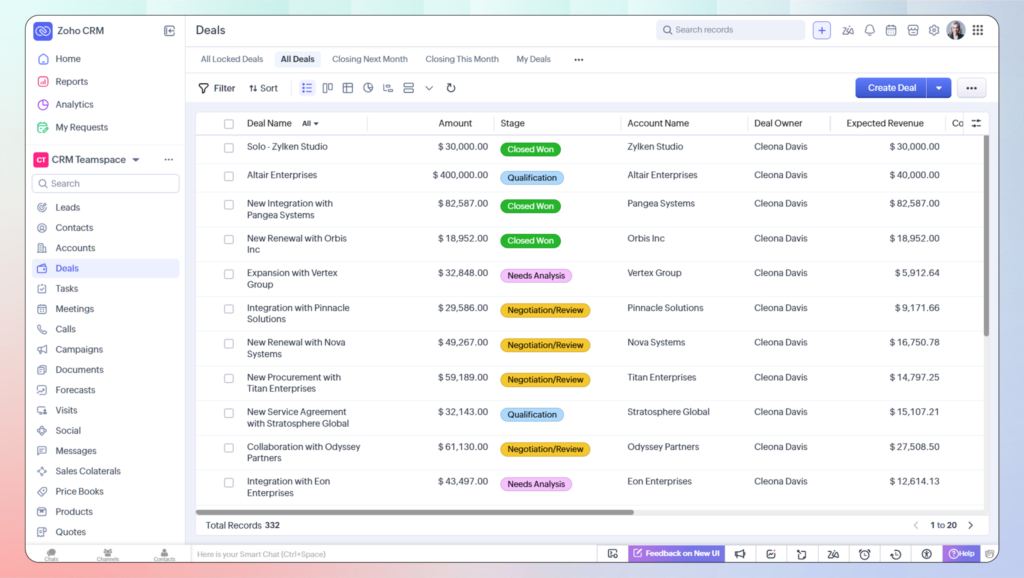
Historically, some enterprises viewed Zoho as:
“good for smaller businesses, but not mission-critical operations.”
That narrative becomes harder to maintain when national-level institutions rely on the platform.
Government adoption creates a different kind of credibility because public-sector systems typically undergo:
For businesses evaluating SaaS ecosystems, this sends a strong signal:
The timing of this shift is important.
Around the world, concerns are growing about:
Zoho’s long-standing positioning around privacy and independence now feels increasingly aligned with global institutional priorities.
In many ways, the market may finally be catching up to themes Zoho emphasized years ago.
Email migrations are often the beginning, not the end.
Once institutions trust a platform operationally, expansion becomes easier.
That opens the door to broader adoption involving:
This is where Zoho’s ecosystem strategy becomes powerful.
Because the company isn’t selling isolated products anymore.
It’s building a complete operational cloud stack.
The migration of 1.66 million government email accounts to Zoho is more than an infrastructure update.
It’s a signal.
A signal that:
And perhaps most importantly: