For almost two decades, CRM systems have trained sales teams to work the same way:
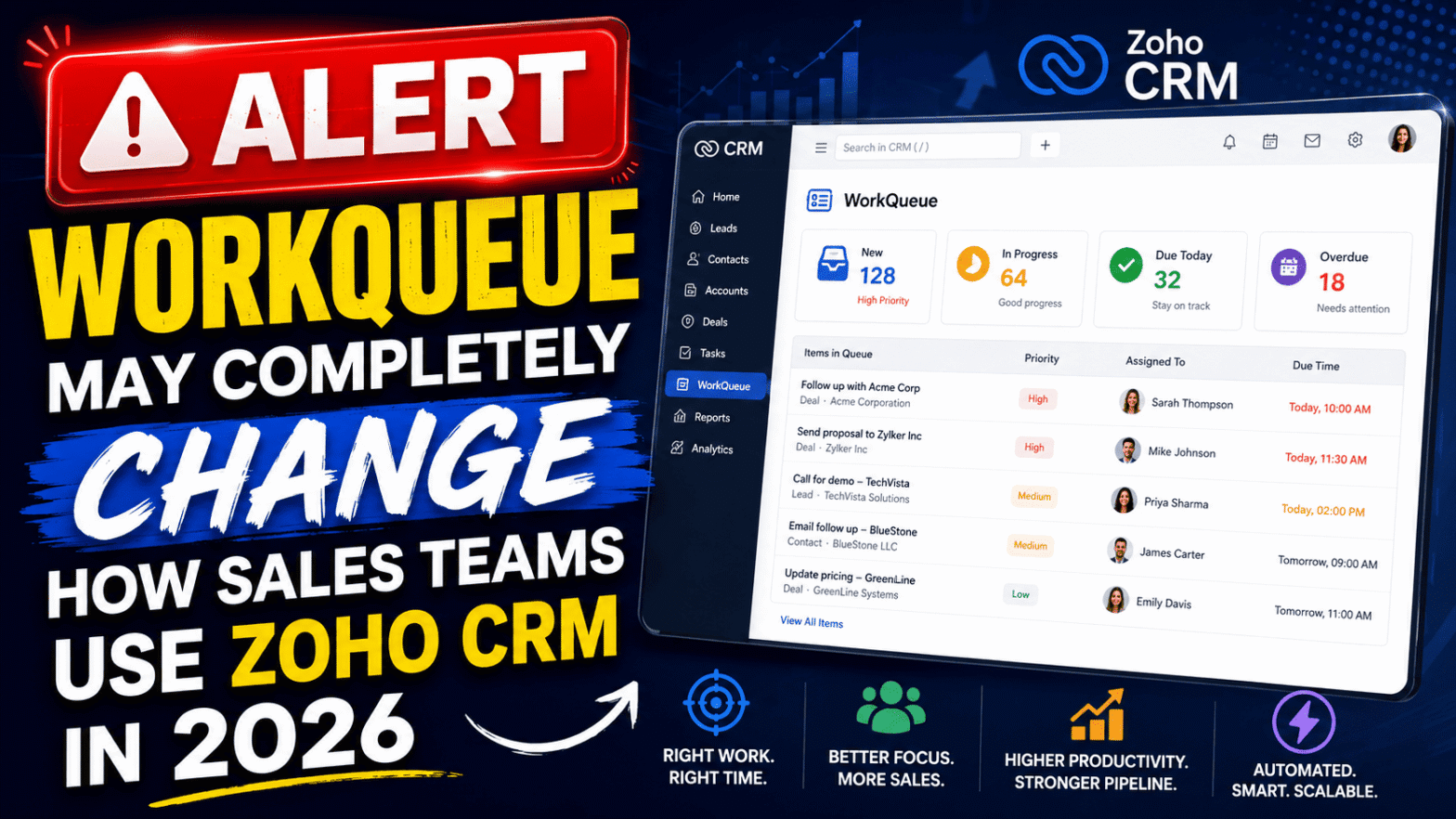
However Zoho’s new WorkQueue feature may signal something much bigger than just another UI update.
It could represent the beginning of the end for the traditional CRM interface itself.
While most users see WorkQueue as a productivity feature, the deeper reality is more disruptive:
Zoho is quietly redesigning CRM around execution-first workflows instead of database navigation.
And if this direction continues, sales teams may eventually stop “using CRM modules” altogether.
Instead, they’ll work from intelligent operational queues driven by AI, priorities, and contextual actions.
That changes everything.
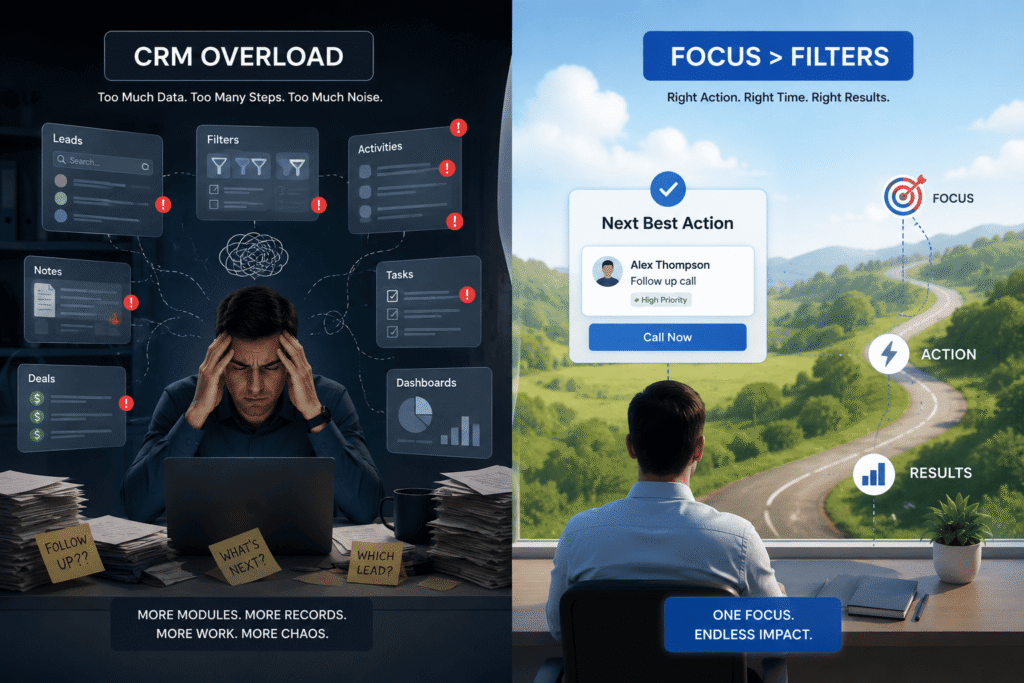
Most CRM platforms were built like databases pretending to be productivity tools.
Typically, The workflow typically looks like this:
The problem isn’t just inefficiency.
It’s cognitive overload.
Sales reps spend enormous mental energy deciding:
In many organizations, CRM becomes less of a sales accelerator and more of a navigation exercise.
Ironically, the bigger the CRM implementation becomes, the worse this problem gets.
More modules.
More records.
More workflows.
More dashboards.
More chaos.
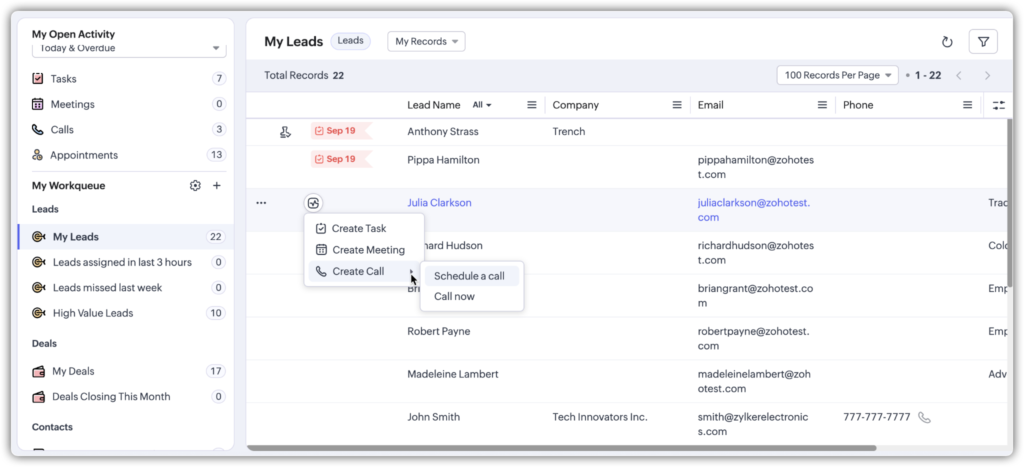
Instead of forcing users to navigate the CRM manually, WorkQueue shifts the experience toward:
| Traditional CRM | WorkQueue Model |
| User searches for work | Work is delivered to user |
| Navigation-heavy | Action-heavy |
| Module-centric | Task-centric |
| Reactive workflows | Guided execution |
| Information overload | Prioritized workflows |
This is closer to how:
Sales is finally moving in the same direction.
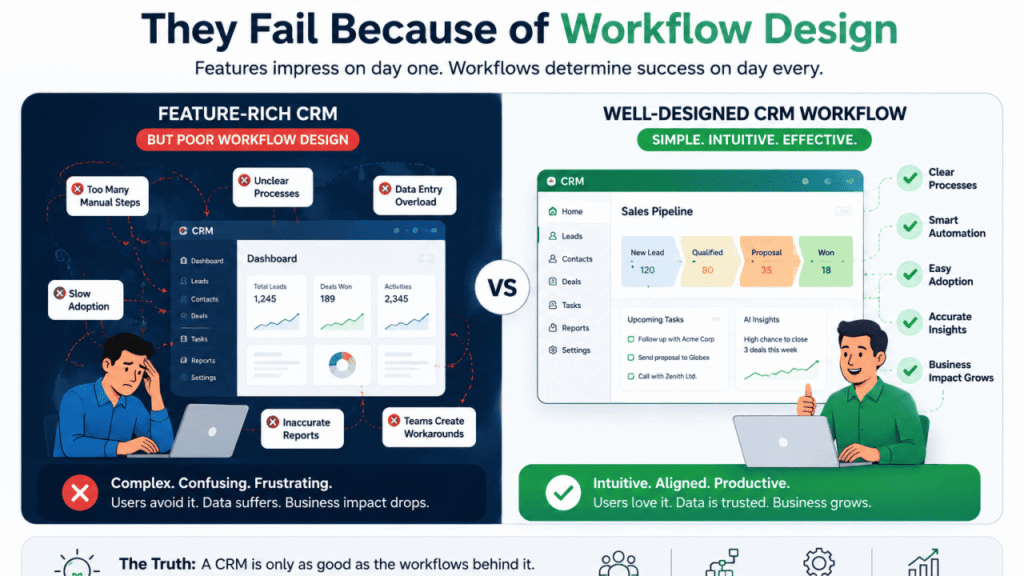
WorkQueue is not just about convenience.
It changes:
And most importantly:
Reps constantly ask themselves:
WorkQueue externalizes those decisions into operational logic.
That creates a fundamentally different CRM experience.
Historically, CRMs existed to store customer data.
But modern CRM platforms are increasingly becoming systems that actively direct operational behavior.
That’s a massive transition.
We’re now entering an era where CRMs will:
WorkQueue feels like Zoho’s first major visible step in that direction.
Here’s where things become especially interesting.
WorkQueue becomes exponentially more powerful when paired with:
Imagine this future workflow:
Instead of:
A sales rep sees:
At that point, CRM stops being a database interface.
It becomes an operational command center.
That is a very different product category.
This is the uncomfortable implication most people haven’t considered yet.
If queue-based execution becomes the primary workflow layer, then modules themselves become less important.
Users won’t care where records live.
They’ll only care about:
The interface shifts from:
“Browse information”
to:
That’s a profound UX transformation.
This shift also changes how Zoho agencies and consultants should design CRM systems.
Old implementation mindset:
New mindset:
The future CRM consultant may look less like a CRM admin and more like an operations architect.
Of course, this model also introduces new challenges.
If queues become too aggressive, users may lose contextual awareness.
Blind task execution can create operational rigidity.
Bad queue prioritization can destroy productivity instead of improving it.
Garbage logic = garbage operations.
As AI becomes involved in queue generation, businesses will need:
This becomes especially important in enterprise environments.
While many SaaS companies are obsessed with flashy AI demos, Zoho appears to be focusing on operational AI.
That’s a smarter long-term strategy.
Because businesses don’t actually need more chatbots.
They need:
WorkQueue aligns perfectly with that philosophy.
And that may ultimately become more transformative than generative AI features themselves.
Most people will see WorkQueue as a small productivity improvement.
I don’t think it is.
I think it’s one of the clearest signals yet that CRM platforms are evolving away from passive data systems and toward active operational systems.
The long-term implication is enormous: