For the last few years, businesses adopting AI-powered SaaS have had relatively little choice.
A software vendor selected the AI model.
The vendor decided how the model was used.
The customer consumed the AI capability as part of the application.
That model is now being challenged.
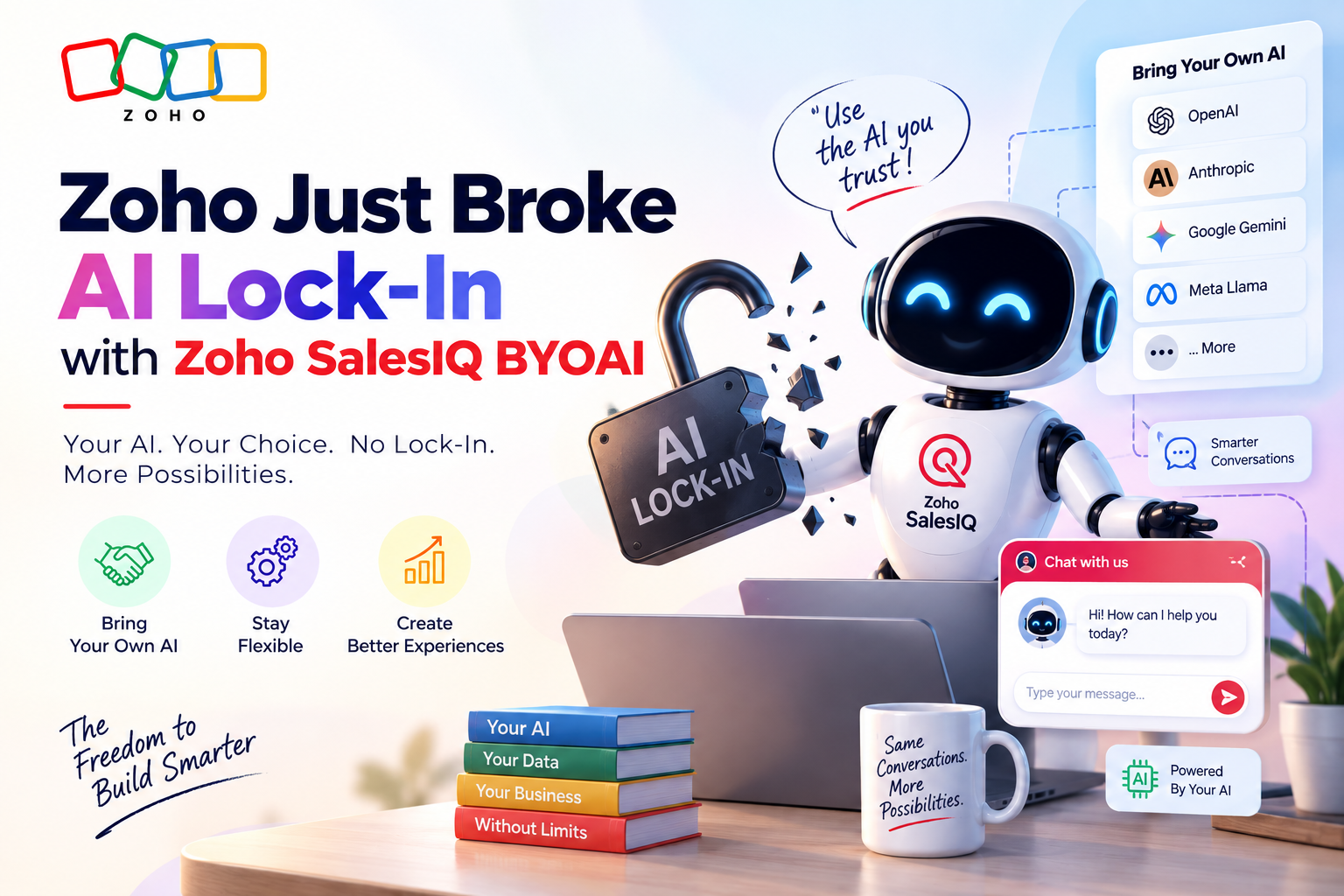
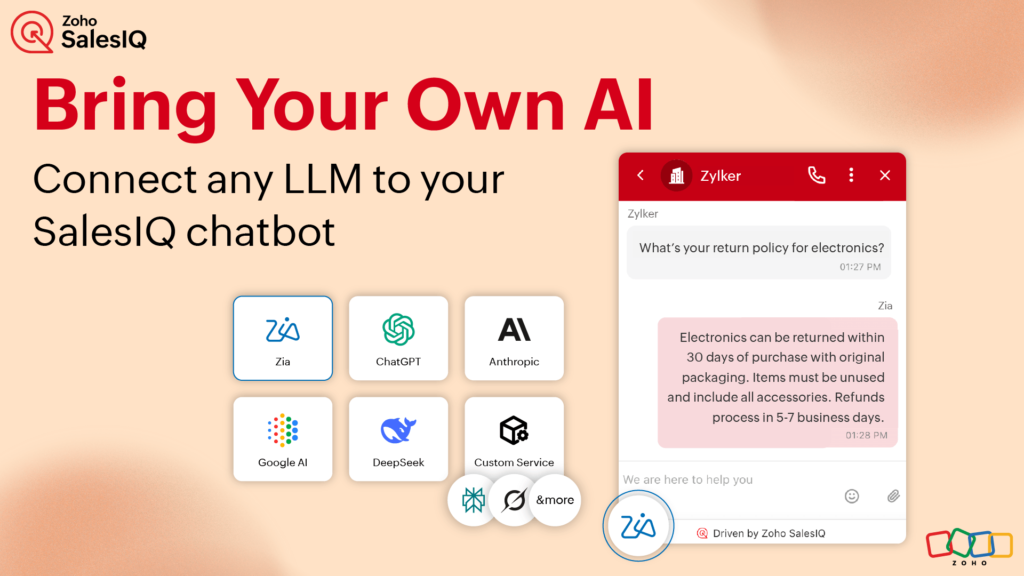
With the introduction of Bring Your Own AI (BYOAI) in Zoho SalesIQ, businesses can choose the AI models they want to use for their customer engagement and conversational experiences instead of being restricted to a single model provided by the SaaS platform.
Zoho SalesIQ’s Summer ’26 updates introduce BYOAI support for models including Claude, Gemini, DeepSeek, Perplexity and Grok, alongside support for self-hosted models.
This may initially look like another AI configuration option.
It is actually a much bigger technology shift.
The future of enterprise AI may not belong to platforms that provide one “best” model. It may belong to platforms that let businesses choose, combine and control the models they need.
BYOAI stands for Bring Your Own AI.
The basic idea is simple:
Instead of a SaaS vendor saying:
“This is the AI model you must use.”
The platform says:
“Choose the AI model that works best for your business.”
In Zoho SalesIQ, this means businesses can connect supported external AI models and use them within SalesIQ’s customer engagement environment.
The architecture changes from:
Customer → SalesIQ → Zoho-selected AI model
to:
Customer → SalesIQ → Chosen AI model
The model becomes a configurable component rather than a fixed part of the application.
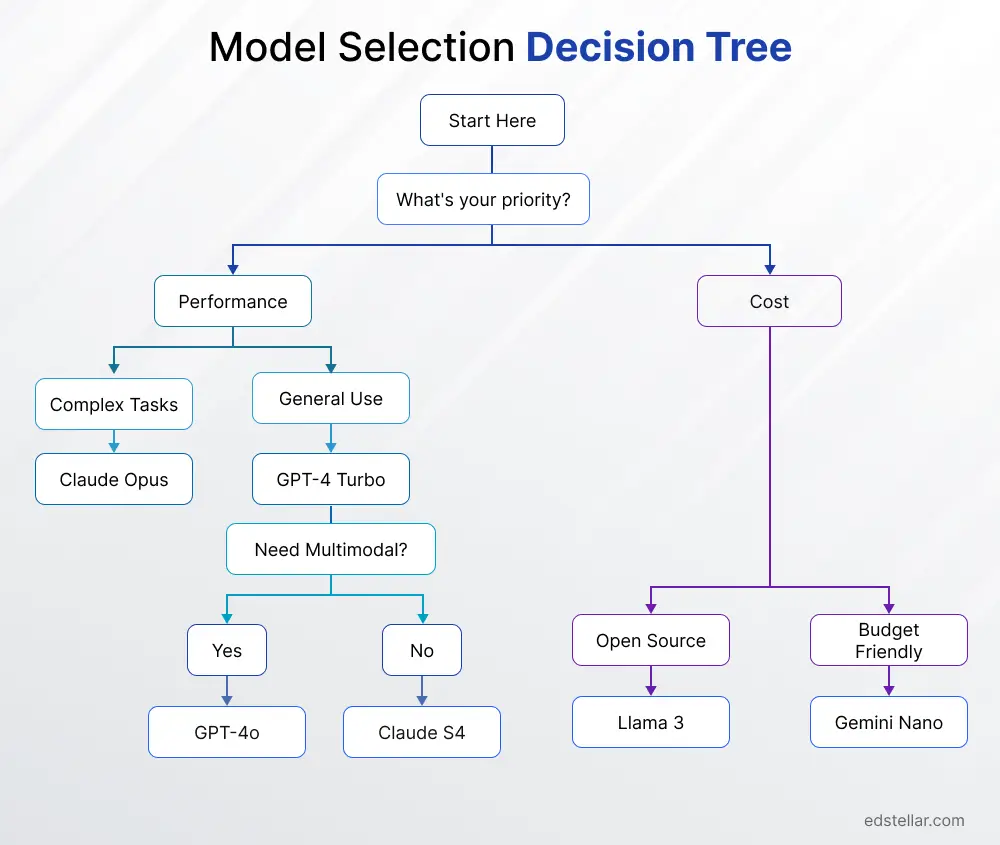
AI models are not identical.
Different models can have different strengths in areas such as:
A customer-service chatbot might prioritize low latency and cost.
A technical support assistant might prioritize reasoning.
A highly regulated business might prioritize a self-hosted model.
A global company might need strong multilingual performance.
There is no guarantee that one model will be the best choice for every situation.
That creates a problem with the traditional SaaS approach.
If a vendor hardcodes one model into its application, customers inherit that vendor’s AI decision.
BYOAI changes that relationship.
The AI industry has spent years debating:
Which model is the smartest?
But enterprise technology may eventually ask a different question:
Which model is best for this particular business task?
That is a much more practical question.
Imagine a company using SalesIQ across several customer-facing scenarios.
For one use case, it might prefer a model with excellent reasoning.
For another, it might prioritize response speed.
For another, it may want to use a self-hosted model because of internal data requirements.
BYOAI allows the AI layer to become more flexible.
For years, SaaS applications have generally followed a predictable architecture:
Application + Database + Vendor AI
The vendor controls the entire stack.
BYOAI introduces another layer:
Application + Business Data + AI Model Choice
This creates a more modular architecture.
The business application provides the workflow and customer context.
The AI model provides intelligence.
The customer can influence which intelligence layer is used.
This separation could become increasingly important as AI models continue to evolve rapidly.
AI models are improving at an extraordinary pace.
A model that is considered state-of-the-art today may be overtaken by another model within months.
That creates a problem for businesses making long-term software investments.
Imagine selecting a CRM or customer-engagement platform in 2026 because it has a particular AI model built into it.
What happens in 2027?
What if a different model becomes:
If the AI model is permanently tied to the SaaS platform, switching models may mean changing platforms.
That creates AI vendor lock-in.
BYOAI offers a possible alternative.
The application can remain.
The AI model can change.
This is perhaps the strongest argument for the technology.
Choose platform → inherit its AI
Choose platform → choose AI → change AI when requirements change
That second architecture can provide greater flexibility.
The business doesn’t necessarily have to rebuild its customer-engagement infrastructure every time AI technology changes.
Instead, the AI layer can evolve independently.
This is similar to the broader movement toward modular technology architectures.
Why SalesIQ?
Because customer conversations are highly sensitive to the quality of AI responses.
A website visitor may ask:
“Which product is right for my company?”
Another may ask:
“I have a problem with my existing order.”
Another may ask a highly technical question.
Another may ask in a language the company doesn’t commonly use.
The AI needs to understand the question, access relevant business context and respond appropriately.
That means the model matters.
But the model isn’t the entire system.
SalesIQ also provides the surrounding customer-engagement infrastructure:
BYOAI adds another layer of flexibility to this environment.
There is an important point that businesses should understand.
Choosing an AI model does not automatically create a good AI experience.
A powerful model connected to poor business data can still produce poor answers.
Consider a customer asking:
“Where is my order?”
The AI model itself may be excellent.
But unless the system can access:
the model cannot provide a reliable answer.
This means the future of enterprise AI is not simply:
Better Model = Better AI
It is closer to:
Model + Business Context + Data + Tools + Governance = Useful Enterprise AI
That distinction is extremely important.
The next question is even more important:
Where does the model get its information?
A customer-facing AI assistant needs business context.
For example:
The model is only one component.
The surrounding architecture determines what the model can actually accomplish.
This is why BYOAI makes system architecture more important, not less important.
One of the most interesting aspects of Zoho’s BYOAI approach is the support for self-hosted models.
This opens a very different conversation.
A business may decide that certain AI workloads should remain within its own infrastructure or controlled environment.
This can be relevant for organizations with requirements around:
Instead of assuming every AI workload must be sent to a public AI provider, organizations can potentially choose a different architecture.
That is a major step toward AI infrastructure flexibility.
The difference can be summarized simply.
| Traditional SaaS AI | BYOAI Model |
|---|---|
| Vendor selects model | Customer selects model |
| AI is tightly coupled to platform | AI becomes a configurable layer |
| Limited model flexibility | Multiple model choices |
| Potential model lock-in | Reduced model dependency |
| Vendor controls AI roadmap | Customer has greater control |
| Switching models can be difficult | Model can potentially change independently |
The important word here is flexibility.
BYOAI doesn’t mean every business should use multiple models.
It means businesses have the option.
This is where things get particularly interesting.
Businesses may eventually stop asking:
“Which AI platform do we use?”
and start asking:
“Which AI model should handle which task?”
For example:
Customer support
Complex technical questions
Internal knowledge search
High-volume, low-cost conversations
Sensitive workloads
The SaaS platform becomes the orchestration layer.
The models become interchangeable components.
This could create a multi-model enterprise AI architecture.
Vendor lock-in isn’t new.
Businesses already experience it with:
AI introduces another possible lock-in layer.
If business processes become deeply dependent on one AI model, moving away from that model can become expensive.
BYOAI can reduce some of that dependency by separating the application from the underlying model.
The result is a more flexible architecture:
The model becomes replaceable.
Flexibility comes with complexity.
Once businesses can choose their AI models, they also have to manage them.
That raises questions such as:
Different tasks may require different models.
Businesses need meaningful metrics beyond whether an answer sounds good.
Token usage, infrastructure and model pricing can vary.
A model provider can release a new version that behaves differently.
Organizations need to understand where prompts and context are processed.
AI becomes another component of the enterprise technology stack.
This means BYOAI is not simply a checkbox.
It can become an AI governance decision.
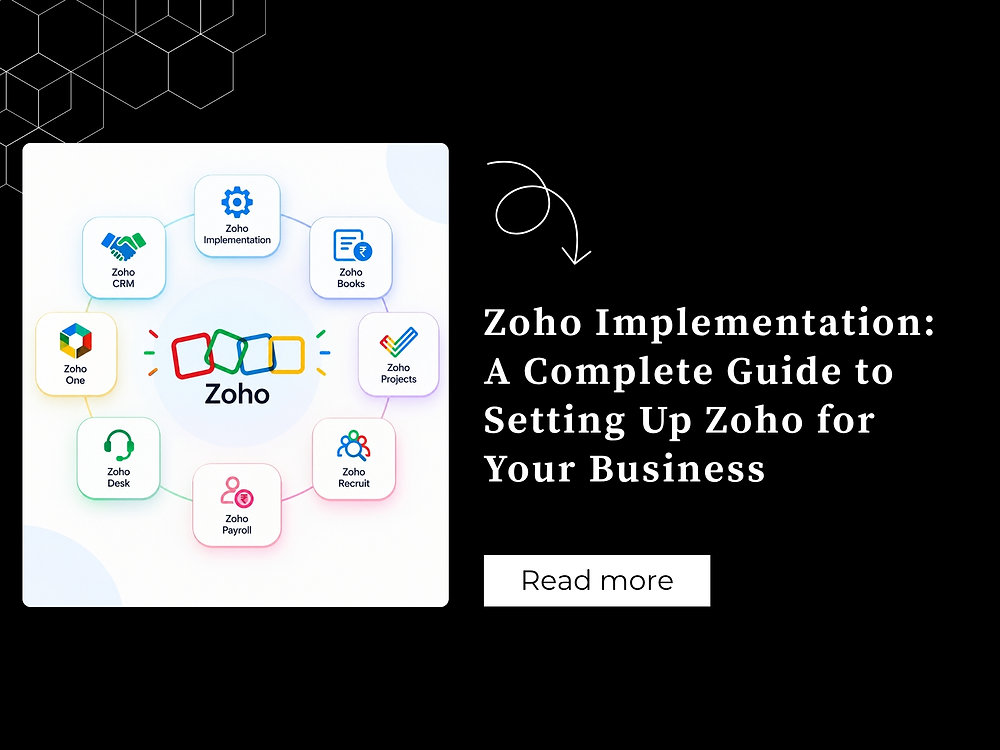
This is where the development becomes particularly relevant to organizations implementing Zoho.
Traditional Zoho implementation often focuses on:
With BYOAI, implementation architecture can increasingly include:
The implementation partner is no longer only configuring the application.
They may increasingly be designing the AI layer around the business process.
This may ultimately be the most important takeaway from BYOAI.
Software architecture has repeatedly moved toward modularity.
Applications became modular.
Cloud infrastructure became modular.
Microservices separated application components.
APIs allowed systems to communicate.
MCP is creating standardized ways for AI systems to interact with tools.
BYOAI introduces similar flexibility at the model layer.
The architecture increasingly looks like:
Each layer can potentially evolve independently.
That is a much more flexible technology architecture than simply embedding one AI model inside a SaaS product.
Probably not immediately.
For many organizations, simplicity is still valuable.
A business may prefer a SaaS platform that provides everything out of the box.
But as AI becomes more strategically important, larger organizations may increasingly ask:
Those questions could become standard enterprise software requirements.
And that is why BYOAI matters.
Zoho’s BYOAI approach raises an interesting strategic question:
Is the future of enterprise software about owning the AI model—or owning the business context around the AI model?
The model can change.
Models will become faster.
Cheaper.
More capable.
More specialized.
But the business context remains valuable:
The application that understands and controls that context may ultimately be more important than the model generating the response.
BYOAI in Zoho SalesIQ is easy to interpret as another AI feature.
A closer look reveals a much larger technology shift.
For years, SaaS vendors decided which AI technology their customers would use.
Now, platforms are beginning to separate the application layer from the AI model layer.
That gives businesses greater choice.
And choice matters in an AI market where today’s leading model may not be tomorrow’s leading model.
The emerging architecture could look like this:
That could eventually make the idea of a single, permanently embedded AI model feel as restrictive as a software platform that only works with one database.
The most important change is therefore not simply that Zoho SalesIQ supports Claude, Gemini, DeepSeek, Perplexity, Grok or self-hosted models.
The bigger change is philosophical:
The AI model is becoming a choice, not a permanent dependency.
And as enterprise AI matures, businesses may increasingly expect their SaaS platforms to give them that choice.