You’ve invested in Zoho.
You’ve customized modules, built workflows, configured Blueprints, automated approvals, and integrated third-party applications.
On paper, your implementation is perfect.
So why are employees still asking:
Here’s the truth most organizations discover too late:
Technology adoption—not technology implementation—is where digital transformation succeeds or fails.
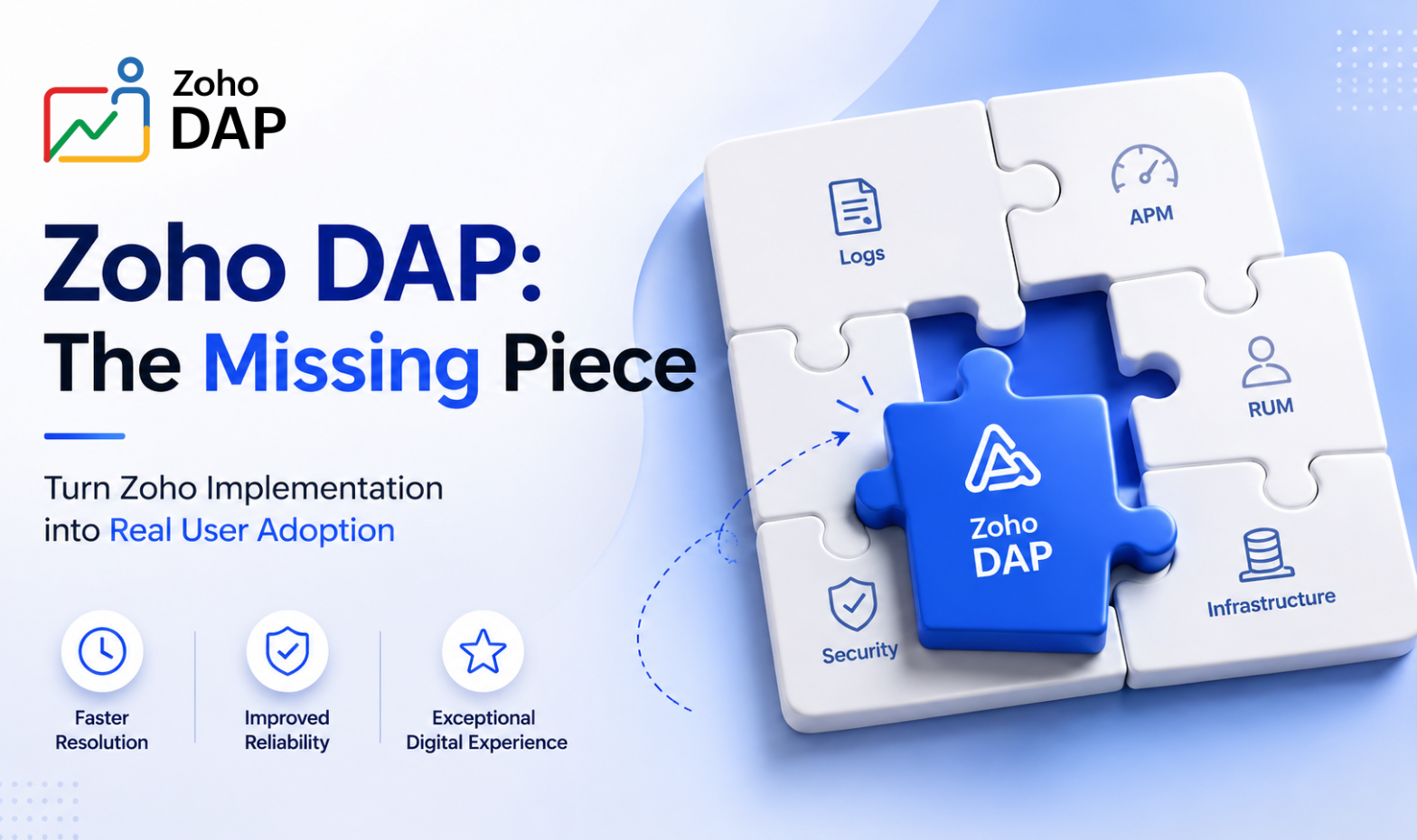
And that’s exactly where Zoho DAP comes in.
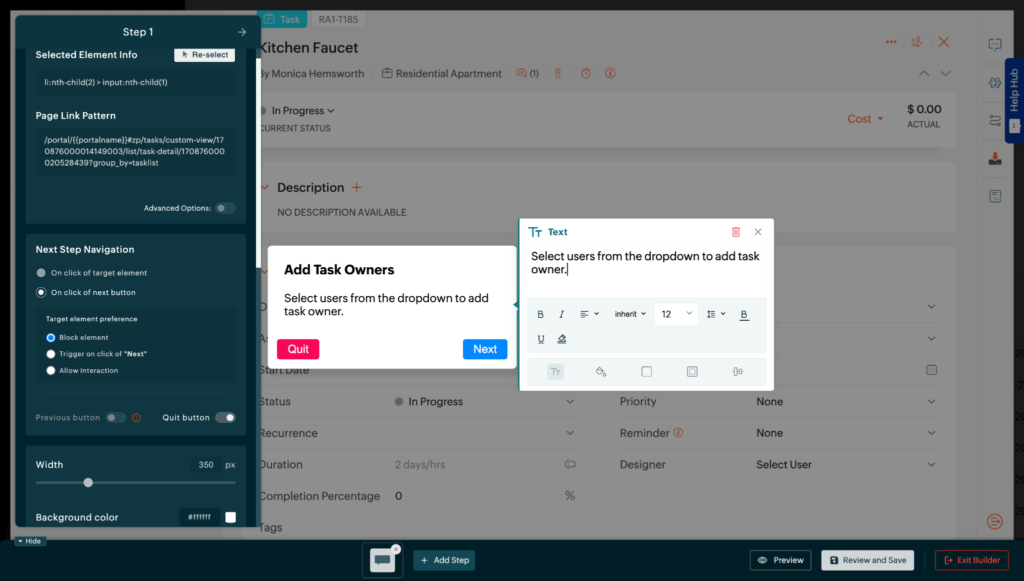
Zoho DAP (Digital Adoption Platform) is an in-app guidance and user enablement solution designed to help employees navigate business applications in real time.
Instead of relying on PDFs, recorded sessions, or lengthy onboarding manuals, DAP provides contextual assistance directly within the application.
Think of it as an intelligent layer sitting on top of your software ecosystem, guiding users exactly when they need help.
Not before.
Not after.
But during execution.
Most organizations follow the same approach:
But employees don’t work in training environments. They work under pressure.
Processes change.
Features evolve.
People forget.
By the time a user actually needs to perform a task, the training session from two months ago is long forgotten.
The result?
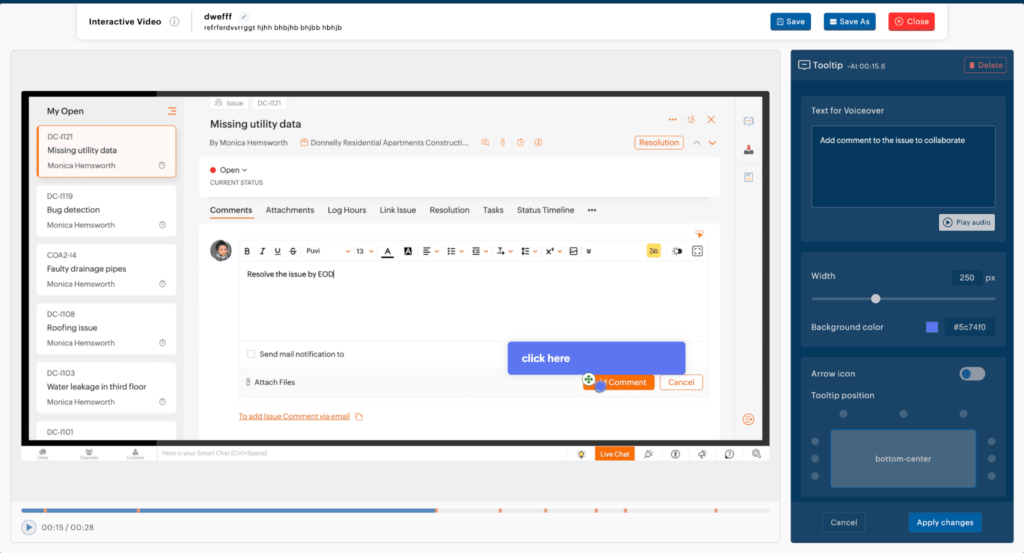
Traditional training follows a “learn first, execute later” approach.
Zoho DAP flips that model.
It enables users to learn while doing.
For example, imagine a sales representative creating an opportunity for the first time.
Instead of searching through manuals, DAP can:
The guidance becomes part of the workflow itself.
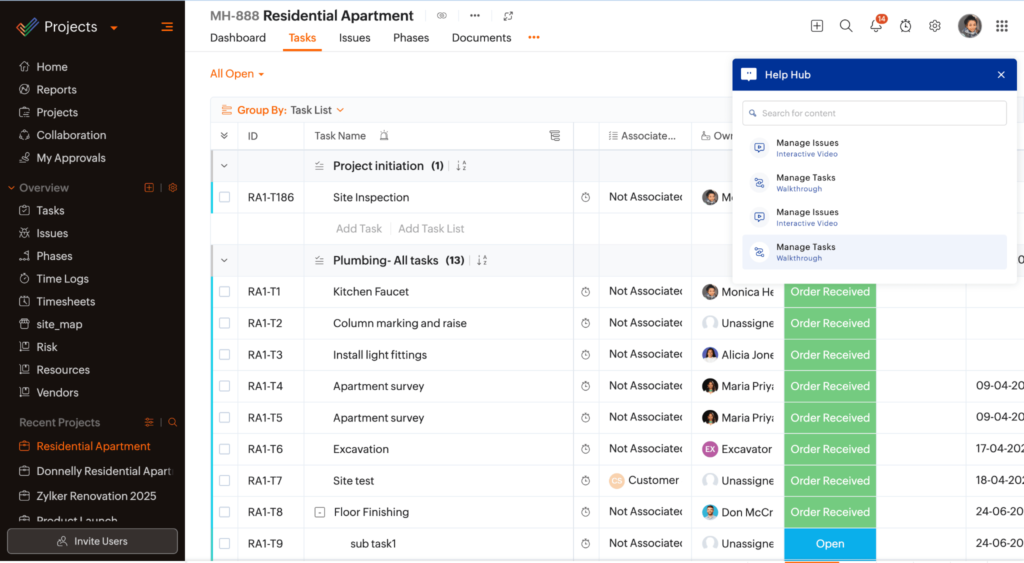
While DAP is often perceived as a training tool, its technical value is often overlooked.
Organizations can create guided experiences for critical business processes.
Examples include:
Every walkthrough can be tailored to specific workflows.
Context-sensitive instructions appear exactly where users struggle.
Instead of overwhelming users with information, assistance is delivered in micro-moments.
This significantly improves retention and execution accuracy.
One of DAP’s most powerful capabilities is visibility.
Administrators can identify:
This transforms adoption from guesswork into measurable data.
Not every employee needs the same guidance.
DAP allows organizations to deliver personalized experiences based on:
A sales executive sees different guidance than a support agent.
The right information reaches the right users.
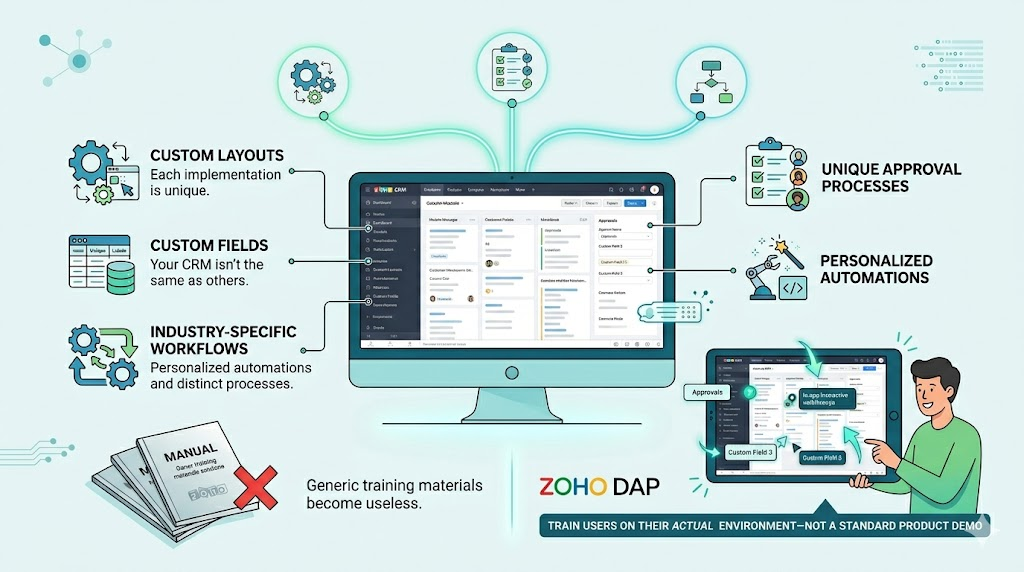
Zoho’s biggest strength is customization.
Every implementation is unique.
Your CRM isn’t the same as another company’s CRM.
You have:
This creates a challenge.
Generic training materials become useless.
Zoho DAP bridges the gap by enabling organizations to train users on their actual environment—not a standard product demo.
Businesses often evaluate software ROI through licenses and implementation costs.
But they rarely ask:
“Are employees actually using the system correctly?”
Even the most sophisticated implementation delivers limited value if users:
Zoho DAP improves:
Ultimately, it helps organizations maximize the return on investments they’ve already made.
As enterprise applications become more sophisticated, expecting users to memorize processes is unrealistic.
The future isn’t more training sessions.
The future is embedded guidance.
Applications that teach.
Processes that adapt.
Experiences that support users in real time.
Digital adoption is no longer optional.
It’s becoming a competitive advantage.
Organizations spend months designing the perfect Zoho environment.
But technology alone doesn’t drive transformation.
People do.
Zoho DAP fills the gap between implementation and adoption. It ensures that the systems you’ve carefully built are actually embraced, understood, and used effectively by the people they were designed for.
Because the success of your Zoho investment isn’t determined by how many workflows you create.
It’s determined by how confidently your people use them.
And that might just be the missing piece.