For years, cloud computing has been dominated by a familiar narrative:
Build applications.
Scale subscriptions.
Add AI.
But beneath every AI assistant, CRM workflow, and business application lies something far less glamorous and infinitely more important.
Infrastructure.
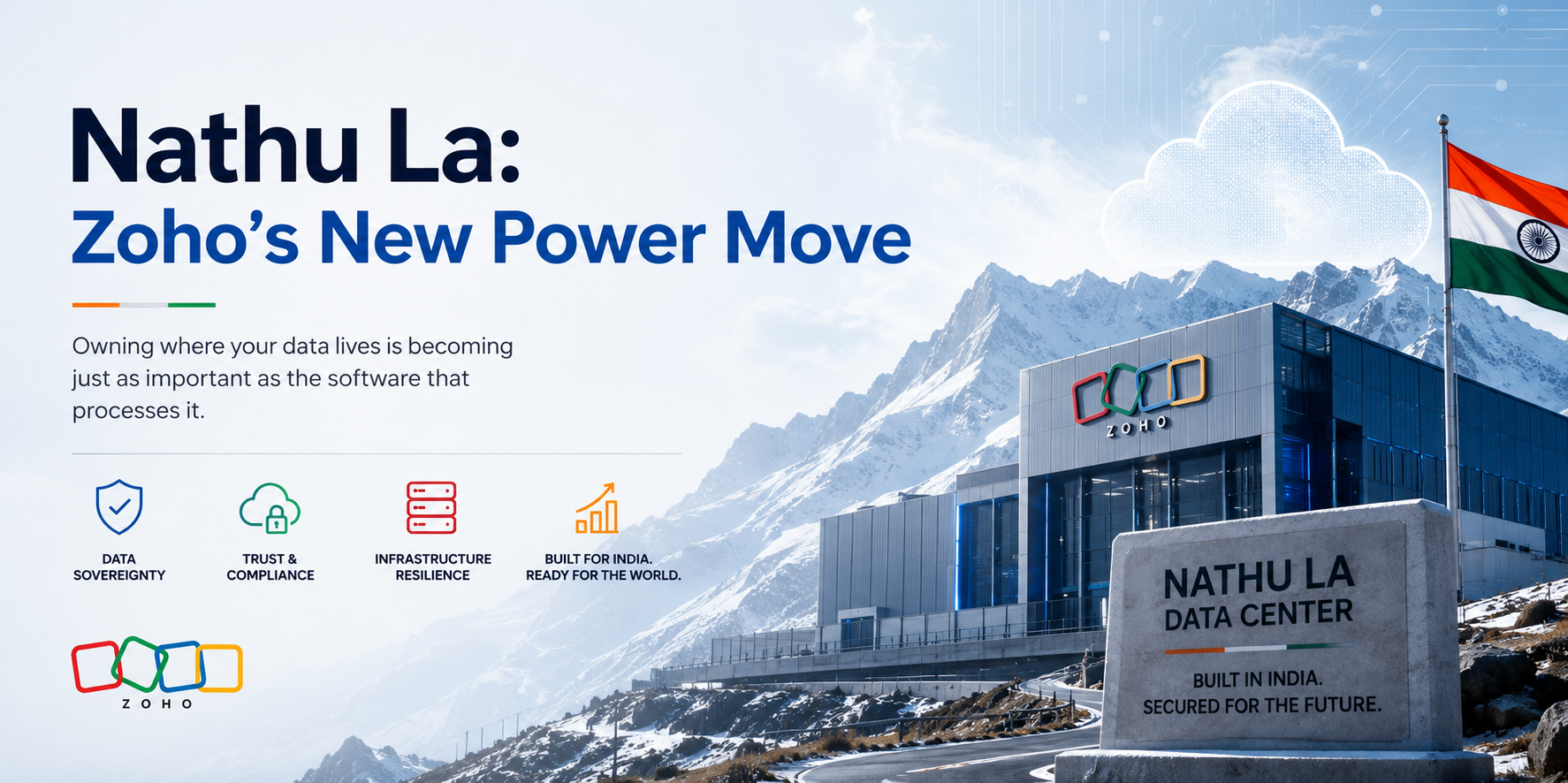
And with the launch of its Nathu La data center, Zoho has made one of its boldest infrastructure moves yet.
At first glance, it may seem like another expansion announcement.
It’s not.
It’s a statement about sovereignty, resilience, trust, and the future of India’s digital ecosystem.
Because in the cloud era, owning where your data lives is becoming just as important as the software that processes it.

Most businesses choose SaaS applications based on features:
Rarely do they ask:
“Where does our data actually reside?”
Yet this question has become increasingly important.
Data powers:
As organizations digitize deeper layers of their operations, data residency is no longer an IT concern.
It’s a boardroom concern.
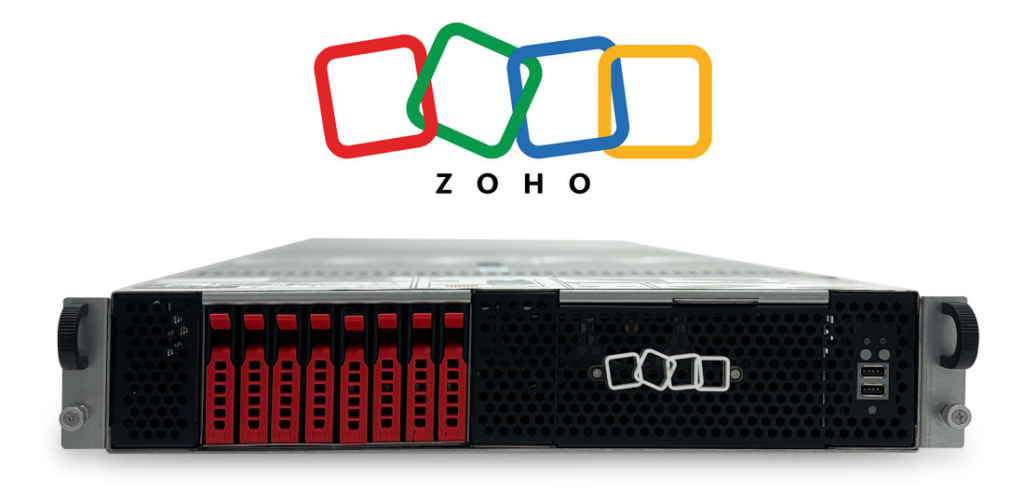
Zoho’s Nathu La facility represents more than additional compute capacity.
It strengthens four strategic pillars.
Countries around the world are introducing stricter regulations governing where sensitive data can be stored and processed.
Organizations increasingly seek assurance that critical business information remains within defined jurisdictions.
Local infrastructure supports:
For industries like healthcare, financial services, education, and the public sector, this becomes a significant advantage.
Infrastructure proximity directly impacts user experience.
Every CRM search,
every API request,
every workflow execution,
and every email transaction travels through networks before reaching users.
Reducing geographical distance can improve:
As businesses become increasingly real-time, milliseconds matter.
Especially when organizations process millions of transactions daily.
Modern businesses operate around the clock.
Downtime is no longer an inconvenience.
It’s an operational disruption.
Additional regional infrastructure enhances:
Resilience is often invisible—until it’s needed.
Then it becomes priceless.
Perhaps the most overlooked aspect of Zoho’s approach is independence.
Unlike many software providers that rely extensively on third-party hyperscale ecosystems, Zoho has consistently invested in controlling larger portions of its technology stack.
This philosophy extends beyond applications.
It includes infrastructure.
Owning more of the underlying architecture enables:
In an era of increasing concentration among global cloud providers, this approach stands out.
Nathu La isn’t simply about servers.
It’s about trust.
Businesses today are not merely purchasing software licenses.
They’re entrusting vendors with:
Trust isn’t built through marketing.
It’s built through investments in architecture, reliability, and accountability.
Infrastructure is one of the clearest demonstrations of that commitment.
Indian organizations are rapidly accelerating their digital transformation journeys.
But they’re also becoming more sophisticated buyers.
They increasingly ask questions such as:
The answers increasingly influence technology decisions.
Zoho’s investment signals a long-term commitment to addressing these concerns.
Not just through software innovation, but through foundational infrastructure.
For years, the cloud conversation focused on scale.
The next phase looks different.
The winners may increasingly be defined by:
Organizations no longer want software that merely works.
They want platforms they can depend on for the next decade.