Zoho Deluge vs Full Stack Development: Key Differences
UniCloud May 27, 2026

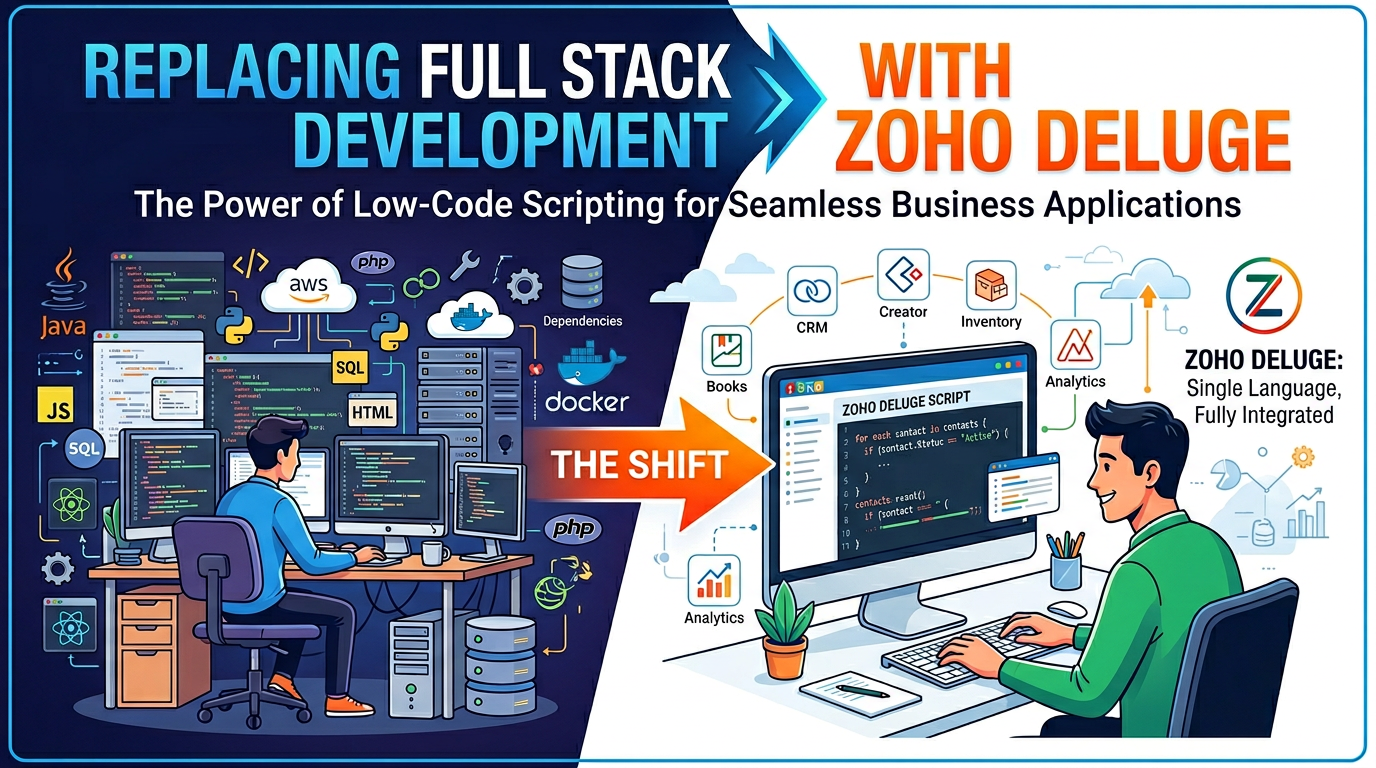
Replacing Full Stack Development with Zoho Deluge

For years, building business systems meant one thing: hire developers, write code, deploy, maintain, repeat.

But that model is being challenged fast. With platforms like Zoho Deluge, businesses are no longer asking:

“How do we build this with code?”

They’re asking:

“Do we even need traditional development for this anymore?”

This blog breaks down the real shift happening between Deluge scripting vs traditional coding and whether scripting is actually replacing development.

The Core Debate: Development vs Scripting

Traditional Coding

  • Languages like Java, Python, JavaScript
  • Full control over architecture
  • Requires dev teams, deployment pipelines
  • High flexibility—but high effort

Zoho Deluge

  • Purpose-built scripting inside Zoho ecosystem
  • Designed for automation, logic, and workflows
  • Runs natively within Zoho apps
  • Low setup, faster execution

This is not just a tooling difference.
It’s a philosophy shift.
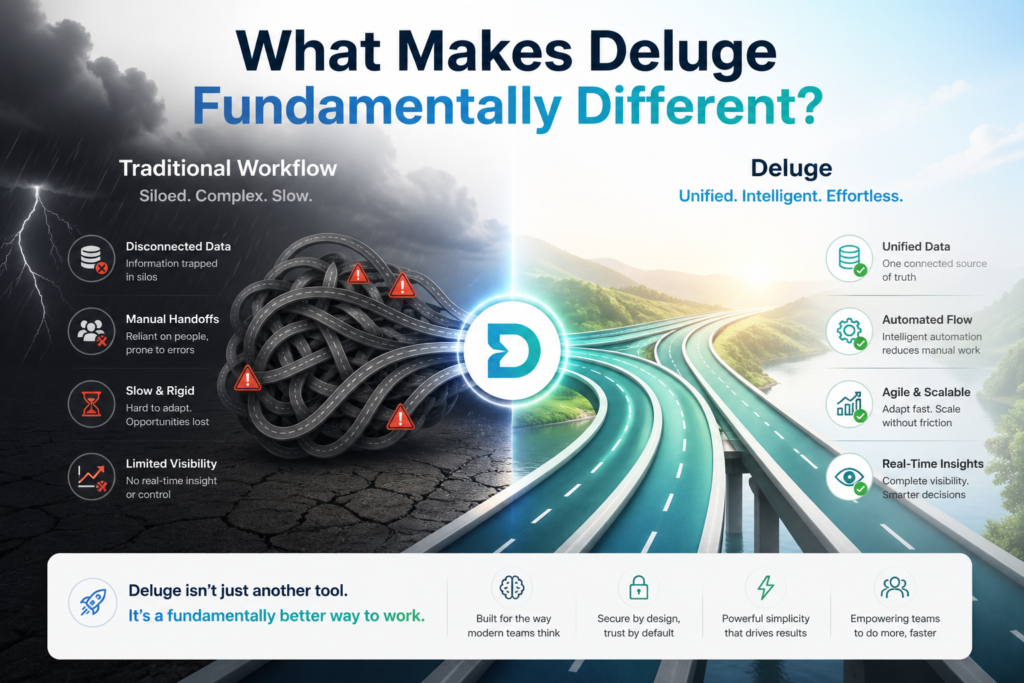
What Makes Deluge Fundamentally Different?

Unlike traditional coding, Deluge is:

1. Context-Aware (Not Generic)

Traditional code:

  • Needs APIs to access CRM or business data

Deluge:

  • Lives inside apps like Zoho CRM and Zoho Creator
  • Directly interacts with records, workflows, and modules

No API layer needed. No authentication overhead.

2. Built for Business Logic (Not System Engineering)

Traditional coding focuses on:

  • Infrastructure
  • Performance optimization
  • Backend architecture

Deluge focuses on:

  • Workflow automation
  • Data manipulation
  • Business rules

Example:

  • Auto-create invoice when deal closes
  • Validate lead data
  • Trigger multi-step approval flows

This is execution-layer logic, not system-layer coding.

3. Speed of Development is 10x Faster

With traditional development:

  • Requirement → Dev → Testing → Deployment

With Deluge:

  • Requirement → Script → Live

No servers
No CI/CD
No deployment cycles

This drastically reduces time-to-value.
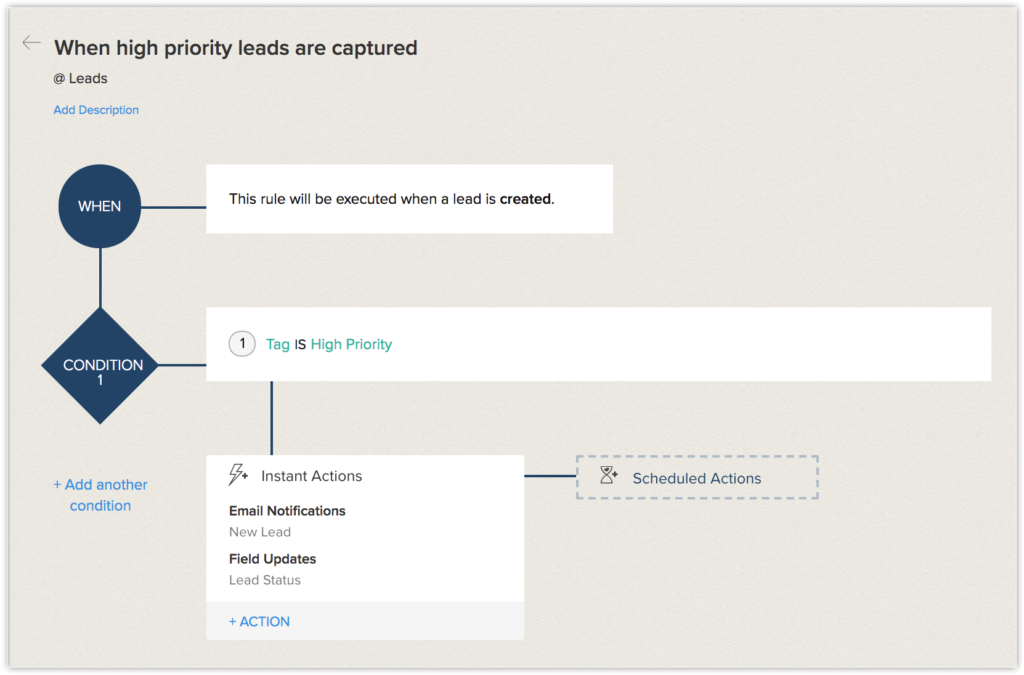
Where Deluge is Replacing Traditional Development

Let’s be practical—this is where the real disruption is happening:

1. CRM Automation

Inside Zoho CRM:

  • Lead scoring
  • Workflow automation
  • Field validations
  • Data sync

Earlier: required backend logic
Now: handled by Deluge scripts

2. Custom Business Applications

Using Zoho Creator + Deluge:

  • Order management systems
  • Vendor portals
  • Internal dashboards

Earlier: full-stack development
Now: low-code + scripting

3. Integration Logic

Instead of building middleware:

  • Use Deluge + Zoho Flow
  • Handle data transformation directly

Reduces dependency on external developers

Where Traditional Coding Still Wins

Let’s be real—Deluge is powerful, but not a complete replacement.

1. Complex Systems & Scalability

  • High-performance applications
  • Large-scale distributed systems

Traditional coding is still required

2. Advanced UI/UX Applications

  • Custom frontends
  • Mobile apps
  • Interactive platforms

Deluge is backend/business logic focused

3. Deep Algorithmic or AI Work

  • Machine learning models
  • Complex computations

Requires Python, AI frameworks, etc.

The Real Shift: From Development → Composition

The biggest change isn’t “Deluge vs coding.”

It’s this:

From building systems → to assembling systems

With Deluge:

  • You don’t build everything from scratch

You compose logic on top of existing platforms

A Practical Comparison

Aspect Traditional Coding Zoho Deluge
Setup High Minimal
Speed Slow Fast
Flexibility Very high Context-specific
Maintenance Complex Simplified
Cost High Low
Best For Complex systems Business automation

Strategic Insight (This is the Real Takeaway)

Deluge is not replacing developers.

It’s replacing unnecessary development work.

Which means:

  • Developers focus on core systems

Deluge handles business logic & automation

What Smart Businesses Are Doing

They’re not choosing one.

They’re combining both:
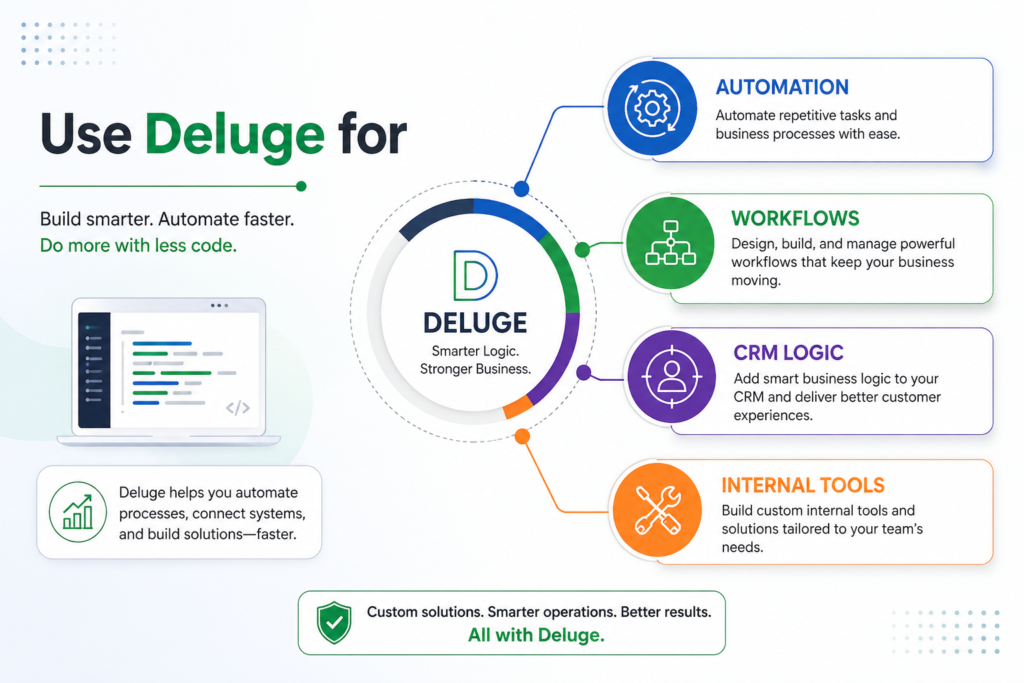
Use Deluge for:

  • Automation
  • Workflows
  • CRM logic
  • Internal tools

Use Traditional Coding for:

  • Core platforms
  • Customer-facing apps
  • Advanced systems

This creates a hybrid architecture:

  • Fast
  • Scalable
  • Cost-efficient

Final Thought

Not everything needs to be coded anymore.

And that realization is changing how businesses build technology.

Zoho Deluge isn’t here to replace developers.

It’s here to eliminate:

  • Delays
  • Over-engineering
  • Unnecessary complexity

The future isn’t “no-code vs code”

It’s:

“Right tool for the right layer.”