For years, the CRM market followed a familiar hierarchy.
Salesforce led the enterprise world.
Zoho served the SMB market.
And AI innovation largely revolved around whichever features Salesforce announced next.
But something has changed in 2026.
Quietly, strategically, and without the massive marketing spectacle of Dreamforce, Zoho has started building something surprisingly serious:
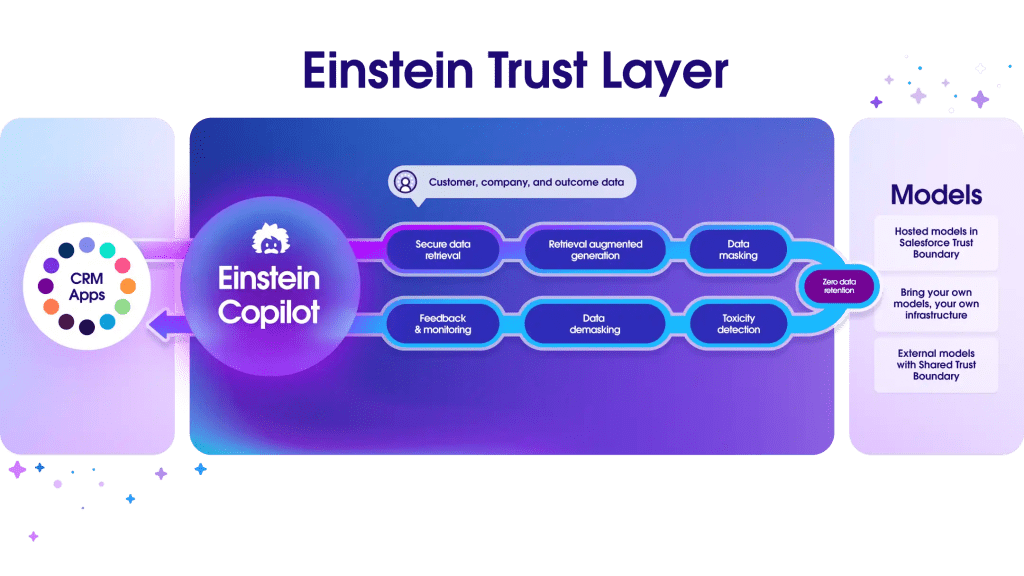
This distinction is important.
Most CRM AI today still feels like an “assistant layer” added on top of old software:
Useful? Yes.
Transformative? Not really.
Zoho’s recent direction feels fundamentally different.
Instead of treating AI as a productivity add-on, Zoho is embedding AI deeper into operational workflows themselves.
That includes:
This is much closer to operational AI infrastructure than simple assistant tooling.
And that changes the competitive conversation entirely.
Salesforce dominates enterprise AI headlines largely because of scale and visibility.
But beneath the branding, many companies still struggle with:
For many mid-market organizations, Salesforce AI can feel less like empowerment and more like another enterprise layer to manage.
Zoho, meanwhile, is pursuing something more dangerous:
Practical AI.
Not AI as a presentation layer.
AI as operational acceleration.
That distinction matters far more in the long run.
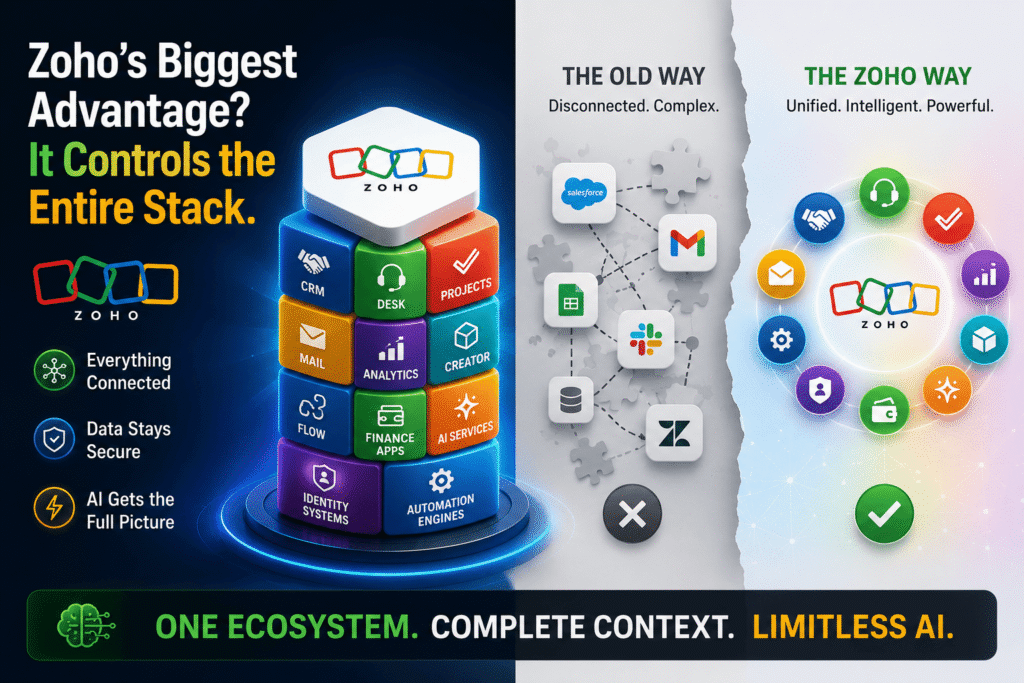
This is where the market may be underestimating Zoho.
Unlike many SaaS vendors that rely heavily on third-party ecosystems, Zoho owns a massive amount of its own infrastructure:
This creates something incredibly important for AI systems:
Unified operational context.
AI becomes dramatically more powerful when it can access:
Most companies are still stitching these contexts together manually across disconnected platforms.
Zoho already has much of it living inside one ecosystem.
That’s a major architectural advantage for the AI era.
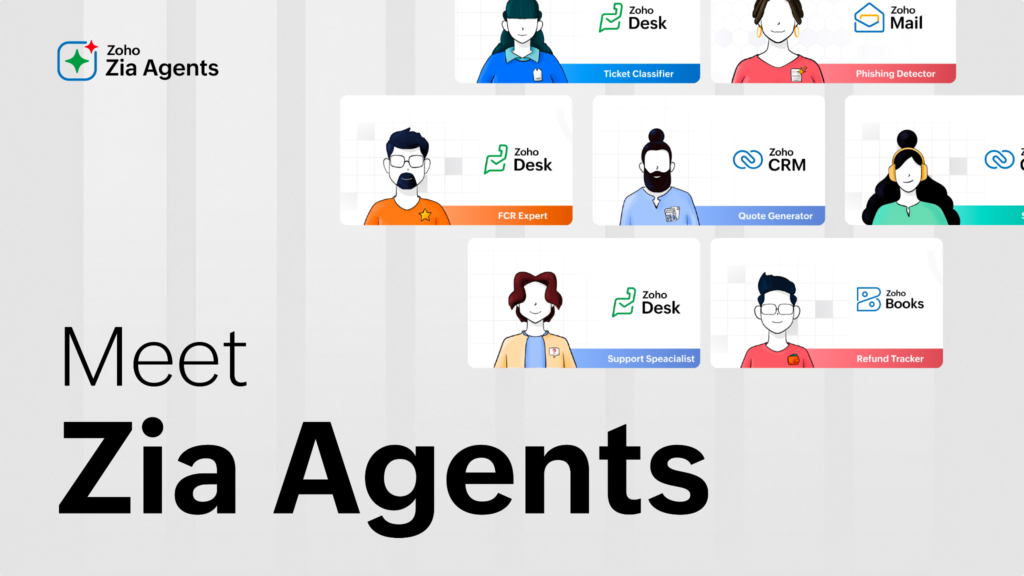
Most people still underestimate what Zia Agents actually represent.
This isn’t just chatbot automation.
It’s a shift toward autonomous operational systems.
Traditional CRM automation follows rigid logic:
If X happens → trigger Y action.
Agentic systems behave differently.
They:
That is a fundamentally different software paradigm.
And Zoho appears to be pushing aggressively in that direction while much of the market is still focused on AI copilots.
This may be the smartest part of Zoho’s strategy.
While much of the AI industry focuses on:
Zoho seems focused on reducing operational friction.
That’s much harder to market.
But much more valuable to businesses.
Most companies don’t need another AI assistant.
They need:
Zoho’s AI direction aligns directly with those pain points.
Historically, many growing businesses faced a painful transition:
But AI may disrupt that assumption.
Because in the AI era, the winning platform may not be:
It may be the platform that:
That creates a very different competitive environment.
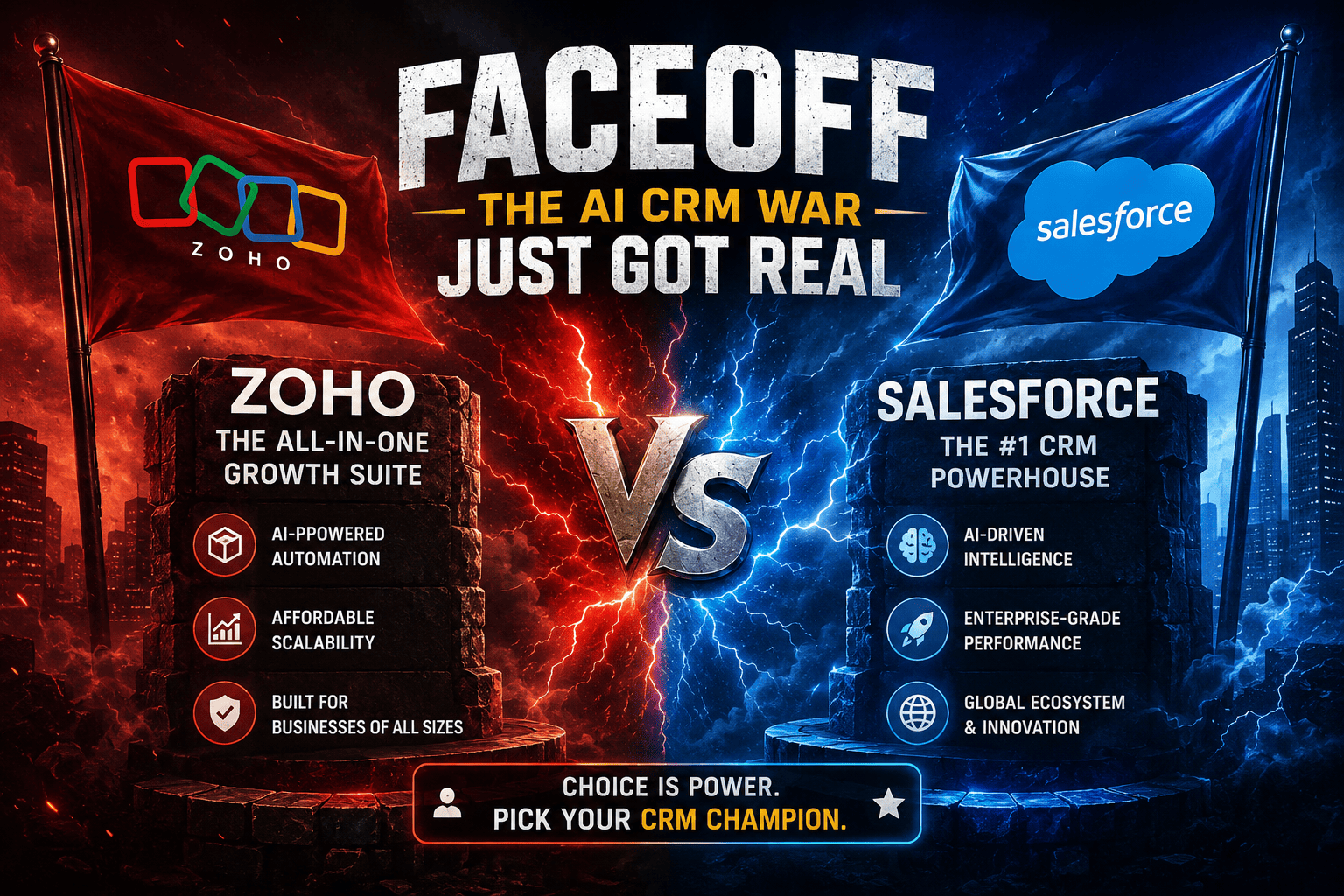
The real threat isn’t that Zoho suddenly overtakes Salesforce in enterprise market share.
The threat is subtler.
Zoho could become:
And that combination becomes dangerous during periods of economic pressure.
Because companies increasingly care about:
Not just brand prestige.
To be fair, Zoho still faces major limitations.
Including:
And Salesforce still dominates:
This battle is far from over.
But for the first time in years, it genuinely feels like a battle.
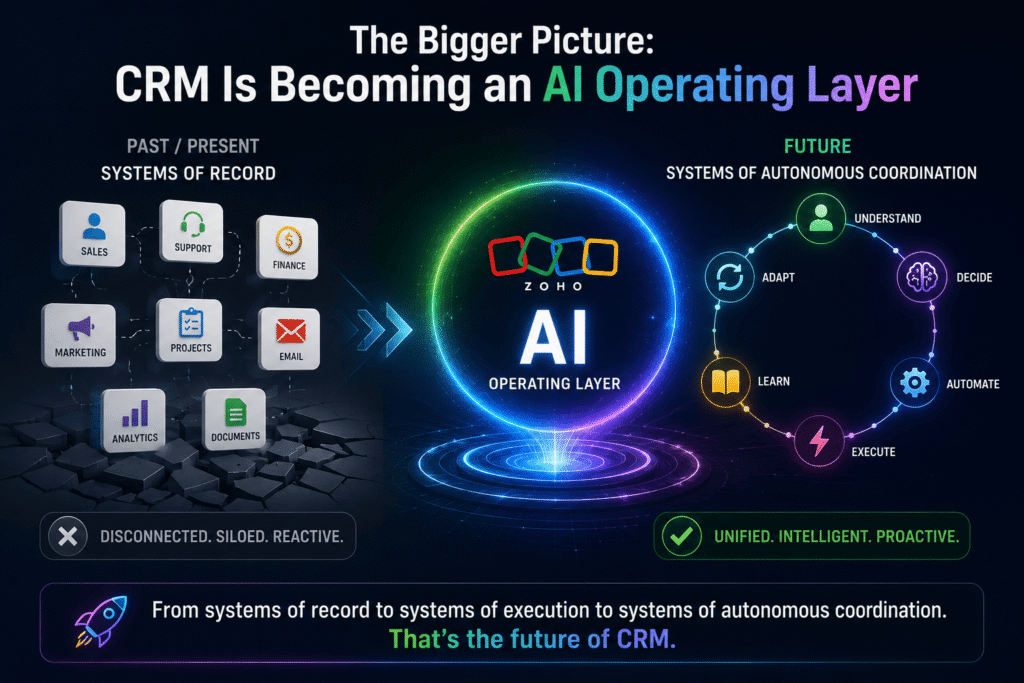
The larger story here extends beyond Zoho vs Salesforce.
CRM systems themselves are evolving.
They are shifting from:
systems of record
to:
systems of execution
And eventually:
systems of autonomous coordination
That transition changes everything:
The CRM of the future may not even resemble today’s CRM interfaces.
And Zoho appears unusually aligned with that future.
For years, Zoho was often viewed as the affordable alternative.
A practical option.
A budget-friendly ecosystem.
A strong SMB platform.
But in 2026, the conversation feels different.
Because Zoho is no longer merely competing on price.
It’s competing on operational intelligence.
And if its AI strategy continues evolving at this pace, Salesforce may eventually face something it hasn’t faced seriously in years:
A challenger with a genuinely different vision of how business software should work.