For almost two decades, CRM systems have trained sales teams to work in a familiar way.
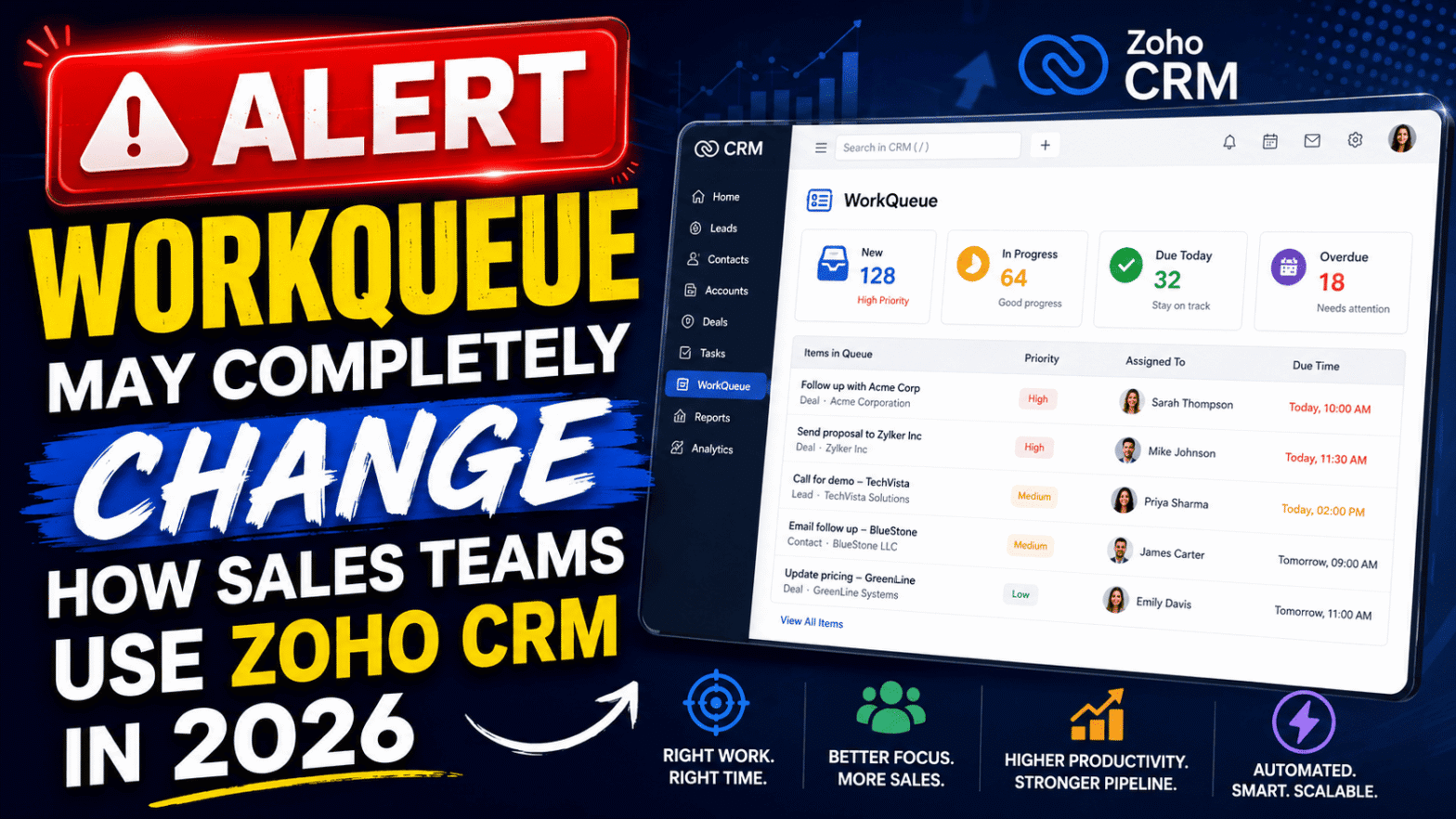
However, Zoho’s new WorkQueue feature may signal something much bigger than another CRM interface update.
In fact, it could represent the beginning of the end for the traditional CRM interface itself.
While many users may see WorkQueue primarily as a productivity feature, the deeper idea is more significant.
Zoho is moving CRM toward execution-first workflows instead of relying entirely on database navigation.
As a result, sales teams may eventually spend less time navigating CRM modules and more time working from intelligent operational queues.
Instead of searching for the next task manually, users can increasingly work from priorities, contextual actions and structured queues.
That changes the CRM experience considerably.
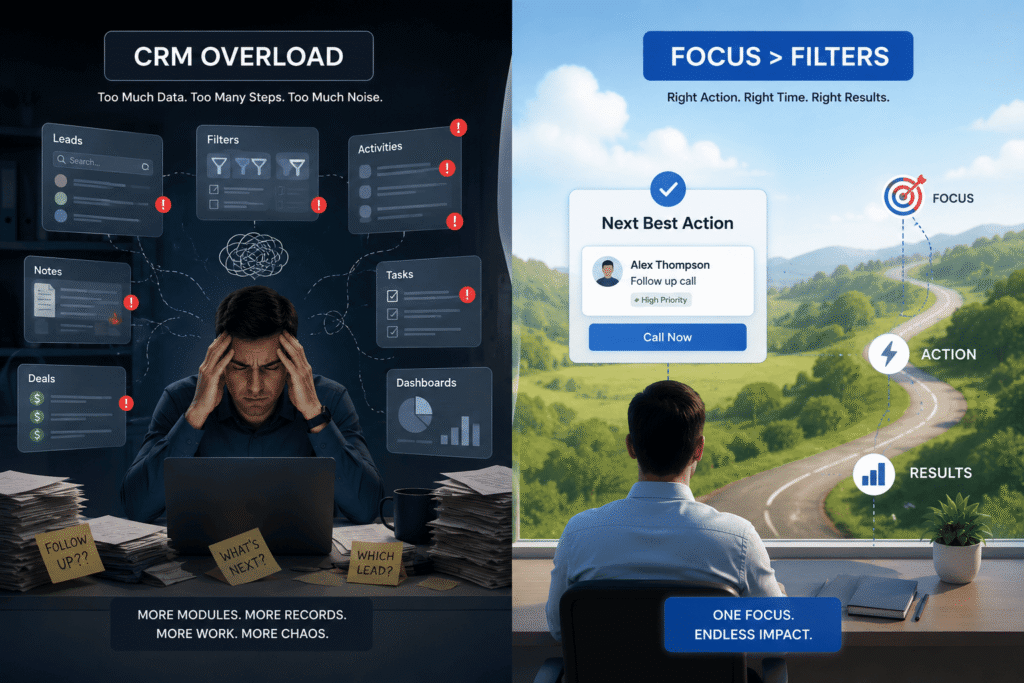
Most CRM platforms were originally designed around records, modules and database-style navigation.
Typically, the workflow looks something like this:
However, the problem isn’t simply inefficiency.
More importantly, it creates cognitive overload.
Sales representatives constantly have to decide what to do next, which records matter and where their attention should go.
For example, they may need to determine:
Consequently, CRM can become less of a sales accelerator and more of a navigation exercise.
Ironically, this problem can become more noticeable as the CRM implementation grows.
Additional modules introduce more records, while new workflows create more processes to manage. Furthermore, expanding dashboards and reporting layers can add even more information for users to process.
Without careful design, that growth can ultimately create more operational complexity.
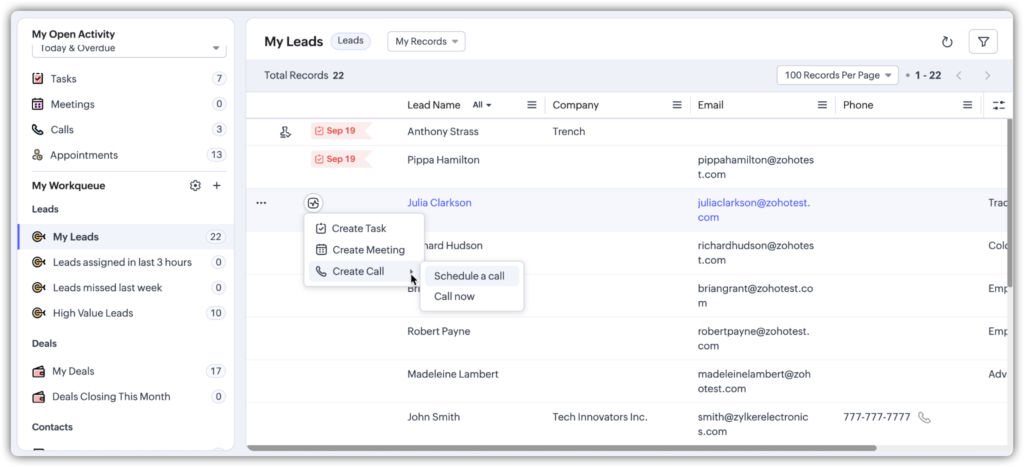
Instead of forcing users to navigate CRM manually, Zoho WorkQueue shifts the experience toward a simpler idea:
“Here is the exact work you should do next.”
At first, that sounds simple.
Architecturally, however, it represents a significant shift.
The CRM is no longer acting purely as a record-management system. Instead, it can increasingly function as a work-orchestration system.
That distinction matters.
| Traditional CRM | WorkQueue Model |
| User searches for work | Work is delivered to the user |
| Navigation-heavy | Action-heavy |
| Module-centric | Task-centric |
| Reactive workflows | Guided execution |
| Information overload | Prioritized workflows |
This approach is closer to how many operational systems already work.
In other words, sales workflows are beginning to move in a similar direction.
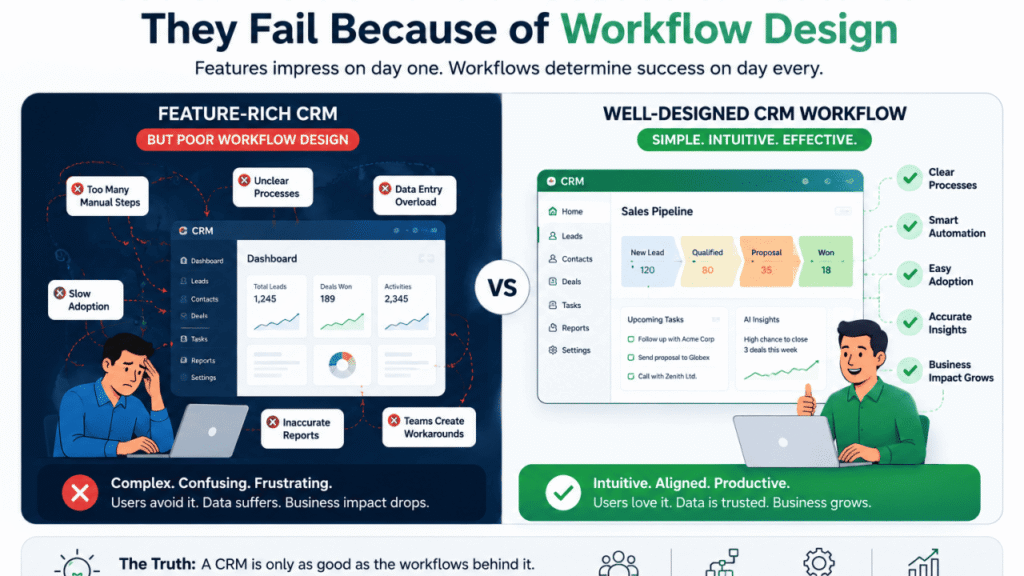
WorkQueue is not simply about convenience.
Instead, it can influence several important areas of CRM usage:
Most importantly, it can help reduce decision fatigue.
This matters because one of the hidden challenges in sales operations is micro-decision exhaustion.
Throughout the day, representatives may repeatedly ask:
WorkQueue can externalize some of those decisions into operational logic.
As a result, users can spend more time executing important work and less time deciding where to find it.
Therefore, the CRM experience begins to change fundamentally.
Historically, CRM platforms primarily existed to store and organize customer information.
Today, however, modern CRM platforms are increasingly becoming systems that actively support and direct operational behavior.
That represents a major transition.
For example, CRM systems can increasingly help businesses:
As a result, CRM is moving beyond passive record storage.
Zoho WorkQueue feels like a visible step toward that execution-focused model.
This is where the concept becomes particularly interesting.
WorkQueue can become more powerful when combined with technologies and capabilities such as:
For example, consider a future sales workflow.
Instead of opening the CRM and manually figuring out what to do, a representative could see a prioritized operational view containing:
At that point, CRM stops behaving primarily like a database interface.
Instead, it starts becoming an operational command center.
Ultimately, that represents a very different product experience.
This is one of the more interesting long-term implications of queue-based CRM.
If queue-based execution becomes the primary workflow layer, modules themselves may become less important to everyday users.
For instance, users may care less about where a particular record is stored.
Instead, they may focus primarily on:
Consequently, the interface begins to shift from:
“Browse information”
to:
“Execute work.”
Therefore, queue-based CRM represents more than a workflow improvement. It could also become a significant user-experience transformation.
This shift also changes how Zoho agencies, consultants and internal implementation teams can think about CRM architecture.
The traditional implementation mindset often focuses on:
Those elements remain necessary. However, an execution-focused CRM requires another layer of thinking.
The newer mindset can include:
As a result, the future CRM consultant may increasingly operate like an operations architect rather than only a CRM administrator.
Of course, queue-based CRM also introduces new challenges.
If queues become too aggressive, users may lose important contextual awareness.
Therefore, businesses need to balance guided execution with human judgment.
Otherwise, blind task execution can create operational rigidity.
A queue is only as useful as the logic behind it.
For example, poor prioritization could direct users toward low-value work while more important activities remain unnoticed.
Consequently, bad queue logic can reduce productivity instead of improving it.
As AI becomes more involved in queue generation, organizations will need strong controls.
These can include:
This becomes especially important in enterprise environments.
Therefore, intelligent prioritization should not mean removing human oversight completely.
While many SaaS companies are focused heavily on visible generative AI experiences, Zoho’s WorkQueue direction emphasizes operational AI.
That may prove valuable over the long term because businesses don’t simply need more AI interfaces.
For example, they often need:
In addition, businesses need AI capabilities that fit naturally into existing processes rather than creating another system employees must manage.
WorkQueue aligns closely with that philosophy.
As a result, operational improvements like intelligent work prioritization may ultimately prove more transformative than isolated generative AI features.
At first glance, Zoho WorkQueue may look like a relatively small productivity improvement.
However, its larger implication is much more interesting.
CRM platforms are gradually evolving away from passive data systems and toward active operational systems.
In this model, users don’t always need to search through modules to determine what needs attention.
Instead, the CRM can increasingly organize, prioritize and present relevant work.
Therefore, the long-term implication is significant:
The future CRM may not look like a traditional CRM at all.
Instead, it may behave more like an intelligent operational layer that continuously guides users toward the next important action.
Zoho WorkQueue may already be an early step toward that future.