UniCloud
June 10, 2026
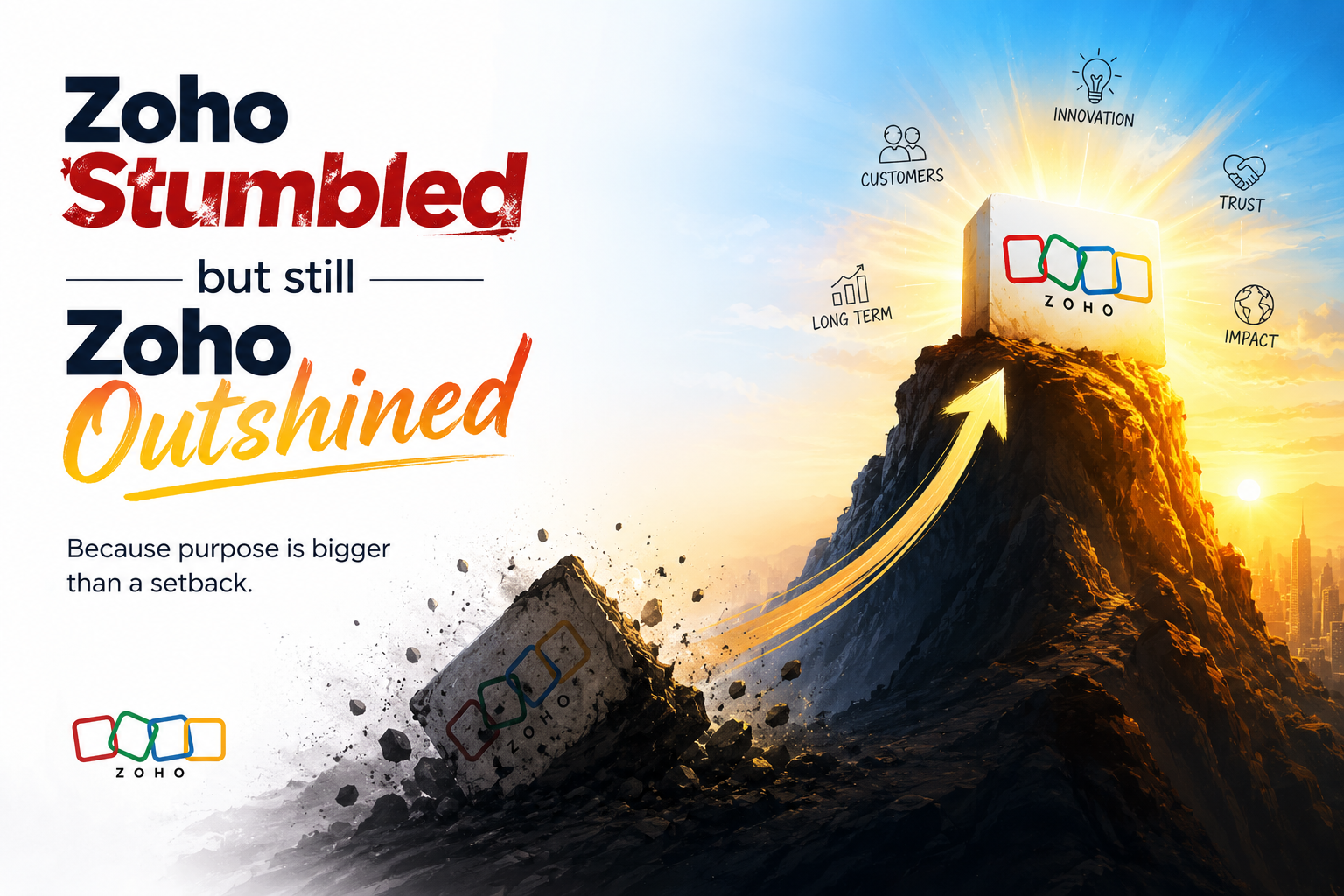
Zoho Stumbled but still Zoho Outshined
Zoho Corporation has grown into one of the most comprehensive SaaS ecosystems globally but that scale comes with real challenges.
What makes Zoho interesting isn’t that it faced challenges (every platform does)…
It’s how it solved them—quietly, architecturally, and often ahead of the curve.
Let’s break down the most relevant recent challenges and the practical solutions Zoho implemented.
1. Challenge: “Too Many Apps, Not Enough Clarity”

The Problem
Zoho offers 50+ apps:
- CRM, Books, Desk, Creator, Analytics, etc.
For businesses, this created:
- Confusion in tool selection
- Overlapping functionalities
- Poor implementation decisions
Result: Fragmented systems instead of unified ones
Zoho’s Solution: Unified Ecosystem Thinking
Zoho doubled down on:
- Zoho One (bundled ecosystem)
- Pre-integrated apps with shared data layers
- Stronger cross-app workflows
Shift from:
“Which app should I use?”
“How should my system work?”
2. Challenge: Competition from AI Giants (OpenAI, Microsoft, Google)

The Problem
AI exploded:
- OpenAI (ChatGPT)
- Microsoft Copilot
- Google AI
Zoho risked being seen as:
“Feature-rich but not AI-first”
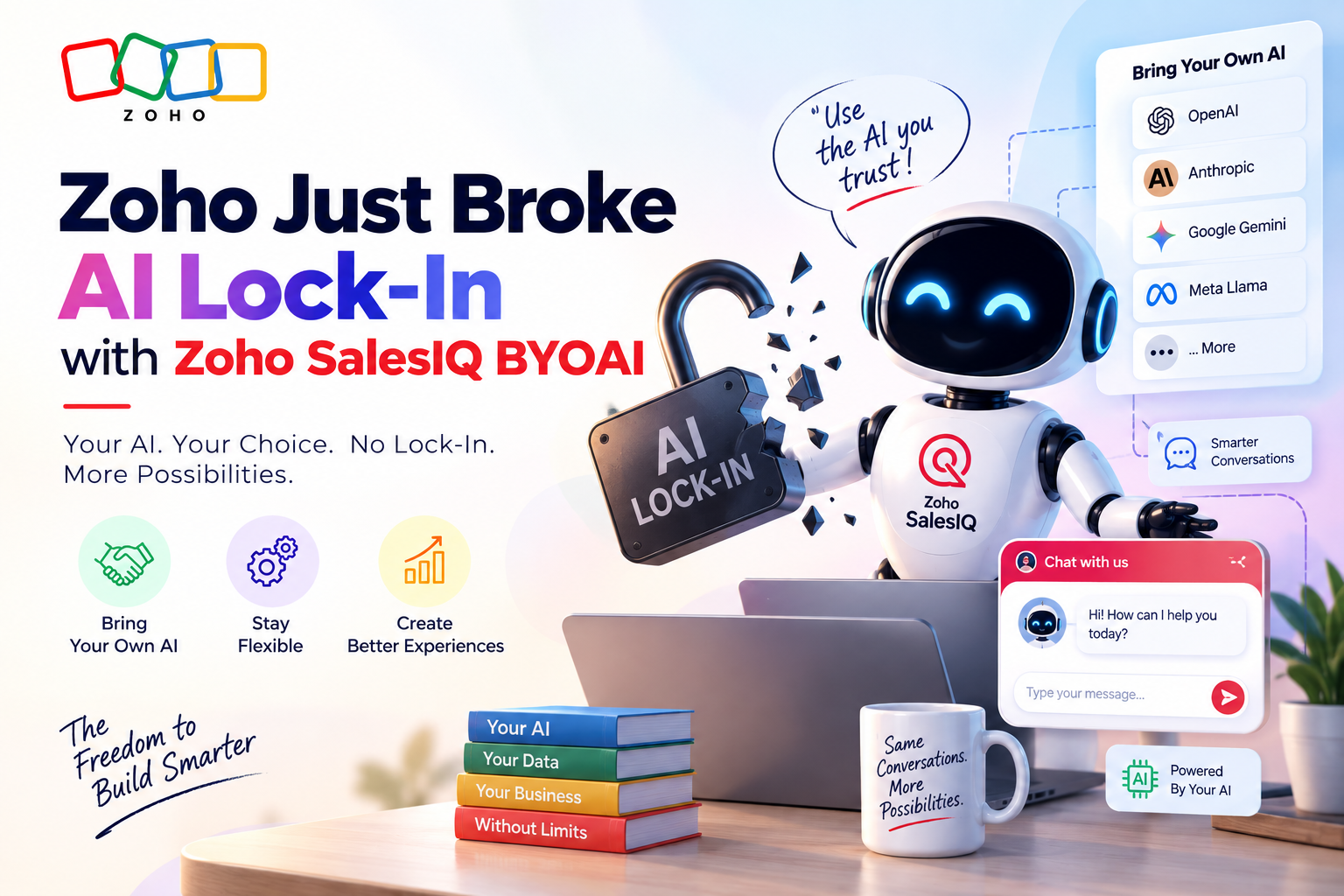
Zoho’s Solution: Zia + OpenAI Hybrid Strategy
Zoho strengthened:
- Native AI: Zia
- External AI integrations: OpenAI
Across tools like:
Smart move:
- Zia → execution + context
- OpenAI → intelligence + generation
Result:
AI inside workflows, not just chat interfaces
3. Challenge: Perception as “SMB Tool Only”
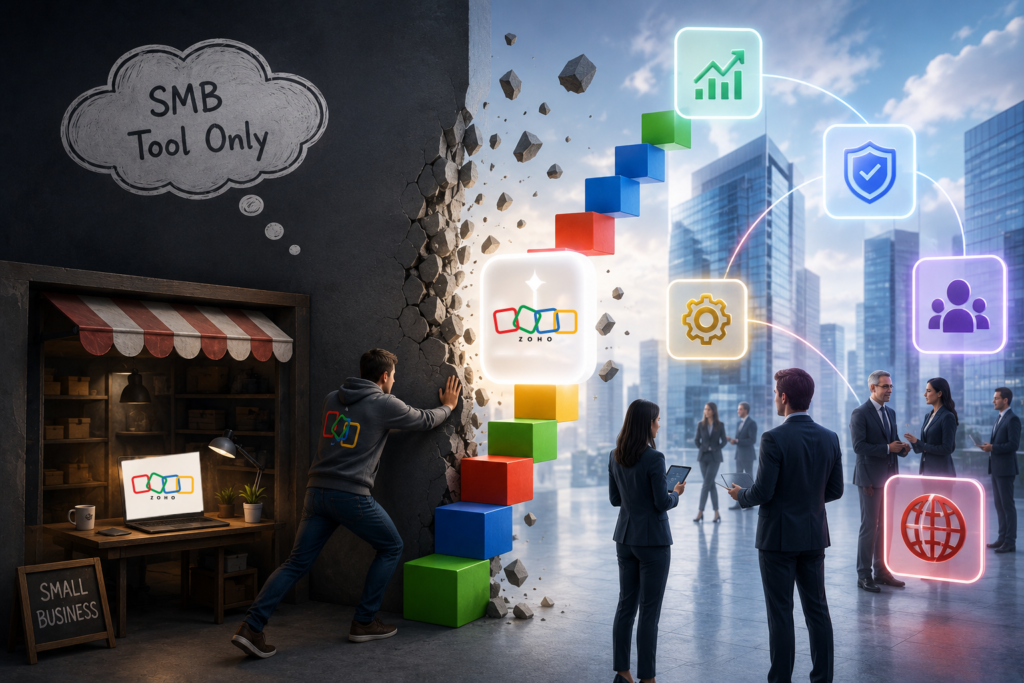
The Problem
Zoho was often seen as:
- Suitable for startups
- Not enterprise-grade
This limited:
- Large deal acquisition
- Enterprise trust
Zoho’s Solution: Enterprise-Ready Architecture
Zoho improved:
- Security & compliance
- Scalability
- Customization depth
Using:
- Zoho Creator for complex apps
- Zoho Analytics for enterprise reporting
Plus:
- Vertical solutions (finance, healthcare, etc.)
Result:
Zoho is now competing in mid-market and enterprise segments
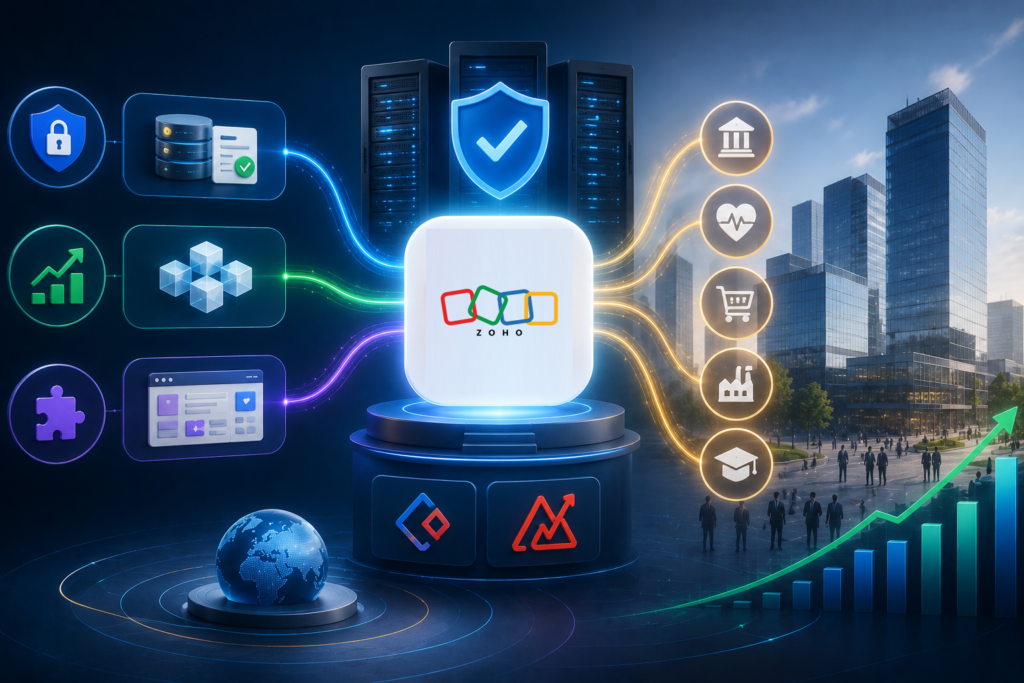
4. Challenge: Integration Complexity Across Systems
The Problem
Even within Zoho:
- Data duplication
- Workflow gaps
- Integration dependency
Outside Zoho:
- Heavy reliance on Zapier, APIs
Zoho’s Solution: Native Integration + Orchestration
Zoho enhanced:
- Zoho Flow
- Internal APIs
- Event-based automation
Key shift:
From integration → to orchestration
Result:
- Real-time sync
- Reduced middleware dependency
- More stable systems
5. Challenge: Over-Customization Leading to System Chaos
The Problem
Users overused:
- Custom fields
- Complex workflows
Especially in:
Result:
- Slow systems
- Hard maintenance
- Poor scalability
Zoho’s Solution: Low-Code + Modular Architecture
Instead of forcing everything into CRM:
Zoho promoted:
- Zoho Creator for custom apps
- Zoho Deluge for logic
Architectural shift:
- CRM = customer layer
- Creator = application layer
Result:
Cleaner, scalable systems
6. Challenge: Data Privacy & Trust in AI Era
The Problem
Businesses became cautious about:
- Data sharing
- AI privacy risks
- External processing
Zoho’s Solution: Privacy-First AI
Zoho positioned itself as:
- Privacy-focused SaaS provider
- Minimal data monetization
With:
- Data control within ecosystem
- Optional external AI integrations
Result:
Strong trust advantage vs competitors
7. Challenge: Adoption Gap (Users Not Using Full Potential)
The Problem
Even after implementation:
- Teams underutilized features
- Low adoption
- Manual processes continued
Zoho’s Solution: Embedded Intelligence + Automation
Zoho improved:
- UI/UX
- AI suggestions (Zia)
- Workflow automation
Across:
Result:
- Less manual effort
- Higher adoption
- Smarter usage
The Bigger Picture: Zoho’s Real Strategy
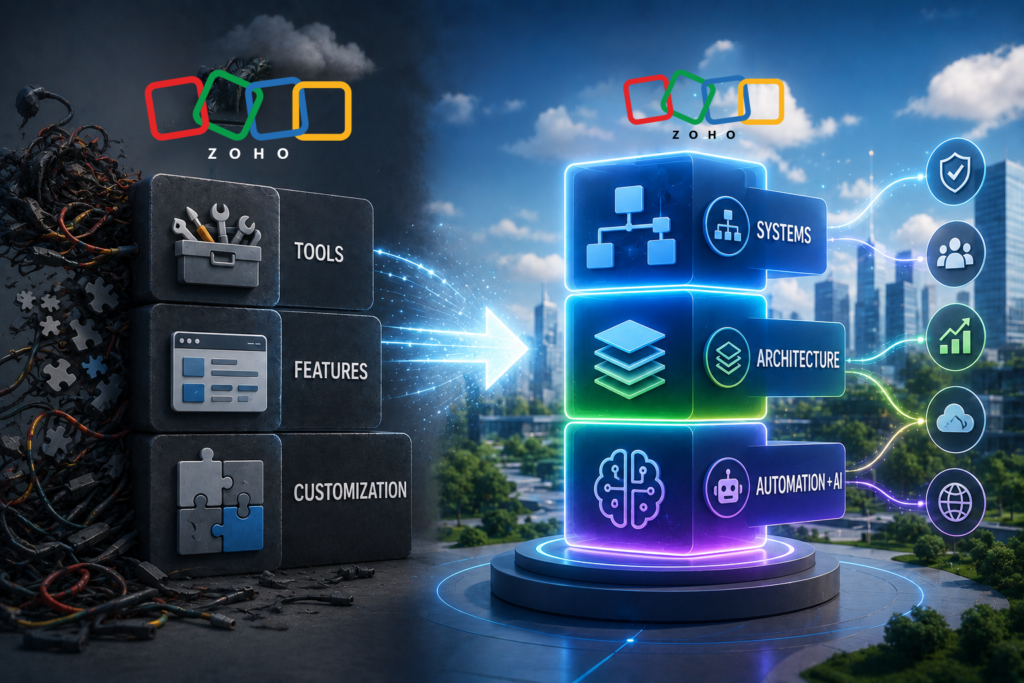
Zoho didn’t just fix problems individually.
It evolved its core philosophy:
Old Zoho
- Tools
- Features
- Customization
New Zoho
- Systems
- Architecture
- Automation + AI
Final Thought
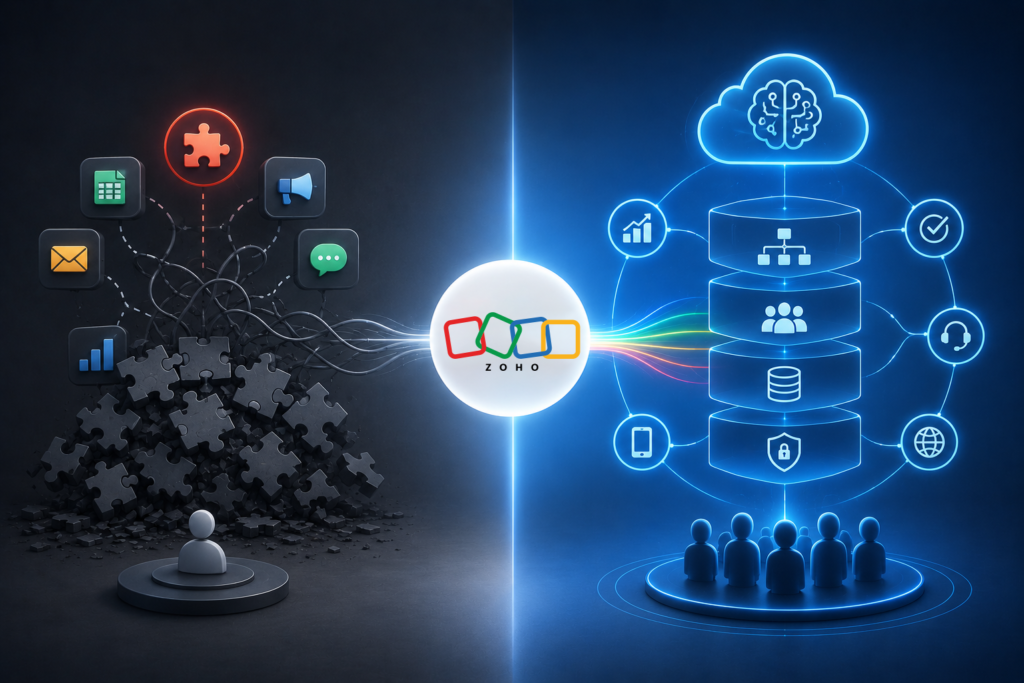
Zoho’s biggest strength isn’t just its products.
It’s this:
It solves problems at the system level—not just the feature level.
While competitors:
- Add features
- Launch tools
Zoho:
- Improves architecture
- Strengthens ecosystem
- Embeds intelligence