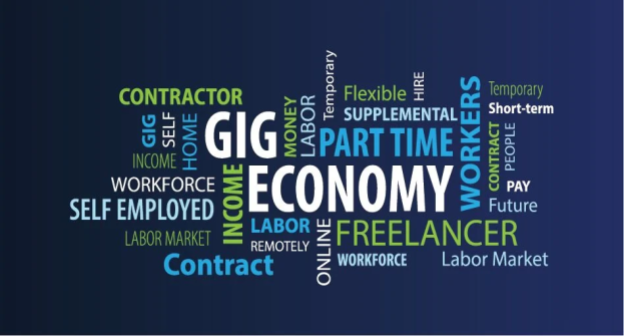
The gig economy has fundamentally changed how businesses hire, manage, and scale their workforce. Temporary staff, contract workers, and shift-based teams are no longer exceptions- they are core to operations across industries like staffing, healthcare, events, logistics, and field services.
Yet, not all workforce management tools are built for this reality.
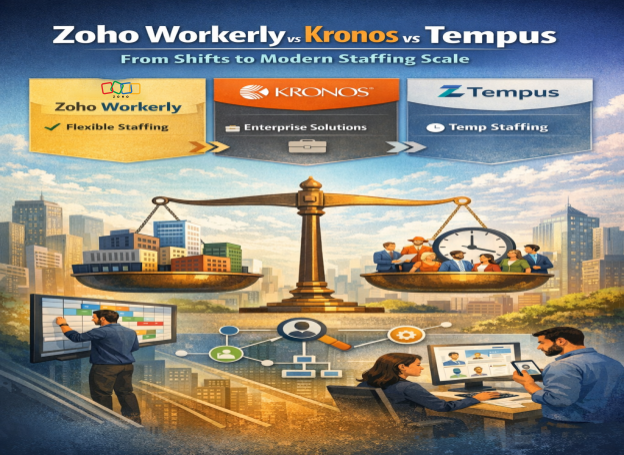
In this comparison, we look at Zoho Workerly, Kronos, and Tempus through the lens of gig and temporary workforce needs, and why Zoho Workerly is emerging as a stronger fit for modern, fast-moving staffing models.
Managing a gig workforce is not the same as managing permanent employees. Businesses need to handle:
Traditional workforce platforms often struggle here because they were designed for fixed schedules and long-term employment models.
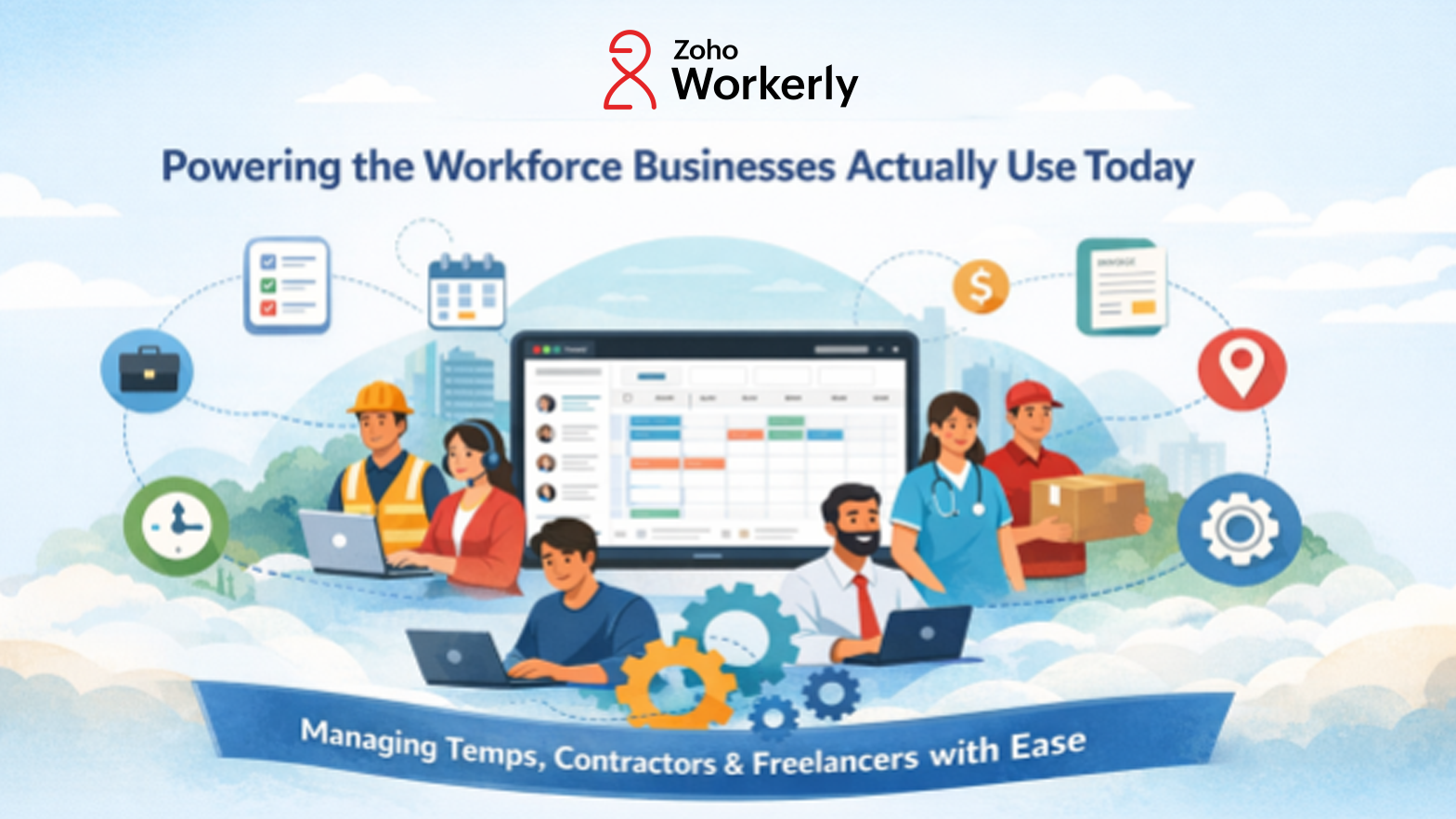
Zoho Workerly is purpose-built for temporary and gig workforce management. It focuses on the full lifecycle—from job requests and worker assignment to timesheets, approvals, and billing readiness—while staying simple and mobile-friendly.
Kronos is a powerful enterprise workforce management solution, best suited for large organizations with permanent or semi-permanent staff. It excels in compliance, labor forecasting, and enterprise scheduling but can feel heavy for gig-focused use cases.
Tempus is typically positioned around time tracking and scheduling, often used for simpler workforce needs. While effective for tracking hours, it lacks deeper workflow and ecosystem integration needed for end-to-end gig operations.
Zoho Workerly is designed from the ground up for:
Kronos, while robust, is optimized for predictable enterprise environments. Tempus handles time tracking well but doesn’t fully address the operational complexity of gig staffing.
Winner: Zoho Workerly
Zoho Workerly connects:
Kronos focuses heavily on time and attendance. Tempus mainly covers scheduling and hours. Neither delivers the same end-to-end staffing workflow without additional systems.
Winner: Zoho Workerly
Gig workers expect speed and simplicity. Zoho Workerly’s mobile-first approach allows workers to:
Kronos mobile experiences are feature-rich but often complex. Tempus is simpler but limited in workflow depth.
Winner: Zoho Workerly
Zoho Workerly can be implemented and adopted quickly, even by non-technical teams. Its UI and workflows are intuitive for staffing coordinators and operations teams.
Kronos implementations typically require longer timelines and heavier configuration. Tempus is easy to set up but lacks scalability and advanced automation.
Winner: Zoho Workerly
Zoho Workerly offers predictable pricing and scales without forcing businesses into enterprise-level costs too early.
Kronos is often cost-prohibitive for small to mid-sized staffing firms. Tempus works well at a smaller scale but can become limiting as operations grow.
Winner: Zoho Workerly
Zoho Workerly integrates seamlessly with:
This unified ecosystem eliminates data silos and manual handoffs—something neither Kronos nor Tempus natively offers at the same level.
| Feature | Zoho Workerly | Kronos | Tempus |
| Gig-focused design | ✅ | ❌ | ⚠️ |
| End-to-end staffing workflow | ✅ | ⚠️ | ❌ |
| Mobile-first worker UX | ✅ | ⚠️ | ✅ |
| Fast implementation | ✅ | ❌ | ✅ |
| Scalable & cost-efficient | ✅ | ❌ | ⚠️ |
| Integrated business ecosystem | ✅ | ❌ | ❌ |
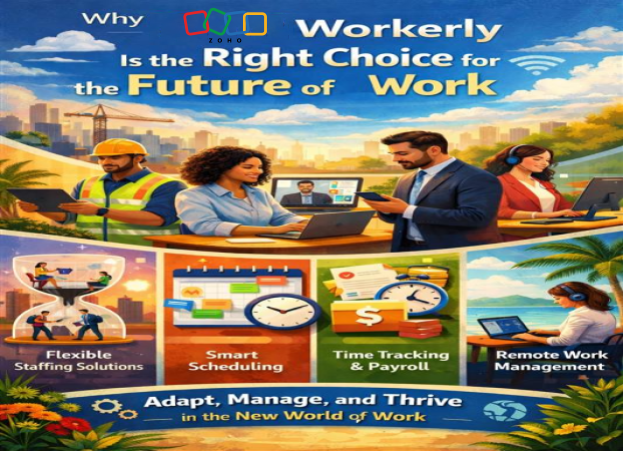
The gig economy demands speed, flexibility, and visibility—not rigid systems built for yesterday’s workforce. Zoho Workerly succeeds because it embraces this reality instead of forcing temporary staffing into permanent-employee frameworks.
For staffing agencies and businesses managing dynamic workforces, Zoho Workerly offers:
Kronos remains a strong enterprise workforce solution, and Tempus serves basic scheduling needs well. But when it comes to managing the complexity of the gig economy, Zoho Workerly stands out as the most balanced, flexible, and scalable option.
It’s not just about tracking time—it’s about running a modern workforce operation.