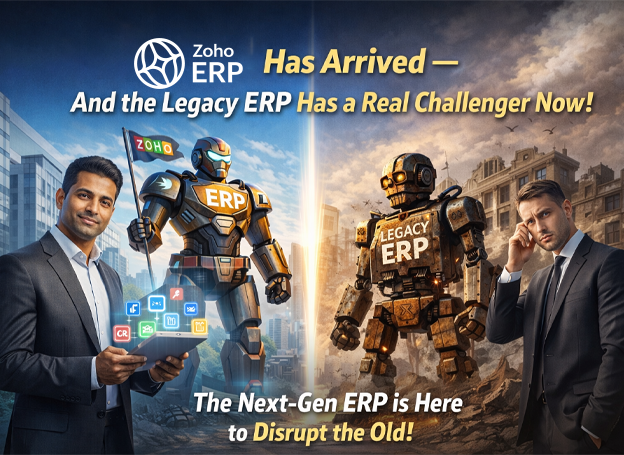
Enterprise Resource Planning (ERP) systems have long been the backbone of complex business operations—connecting finance, supply chain, payroll, billing, analytics and more into a unified platform. But legacy ERPs have traditionally been expensive, rigid, and layered with complexity, leaving many growing businesses locked into long implementation cycles and high costs.
For years, ERP systems have carried a reputation: powerful, expensive, slow to implement, and painful to adapt. Businesses accepted this trade-off because there were few real alternatives. That era is quietly ending.
In January 2026, Zoho Corporation launched Zoho ERP, a modern, AI-native, all-in-one ERP platform, purpose-built to address those long-standing challenges and deliver a truly integrated business suite that’s accessible, intelligent, and adaptable.
Zoho ERP is a comprehensive enterprise resource planning solution designed to centralize all core business functions on one platform. Unlike traditional systems that bolt AI on as an afterthought, Zoho ERP natively integrates artificial intelligence, automation, voice assistance, predictive insights, and anomaly detection across the entire platform. This enables businesses to operate with continuous intelligence and streamlined workflows, not just static modules.
Zoho ERP is designed around a simple idea:
An ERP should adapt to the business—not the other way around.
Unlike traditional ERPs that force companies into predefined structures, Zoho ERP offers a unified yet flexible platform that brings together:
All powered by native AI, automation, and analytics, not bolt-ons.
This is ERP built for real operators, not just IT teams.
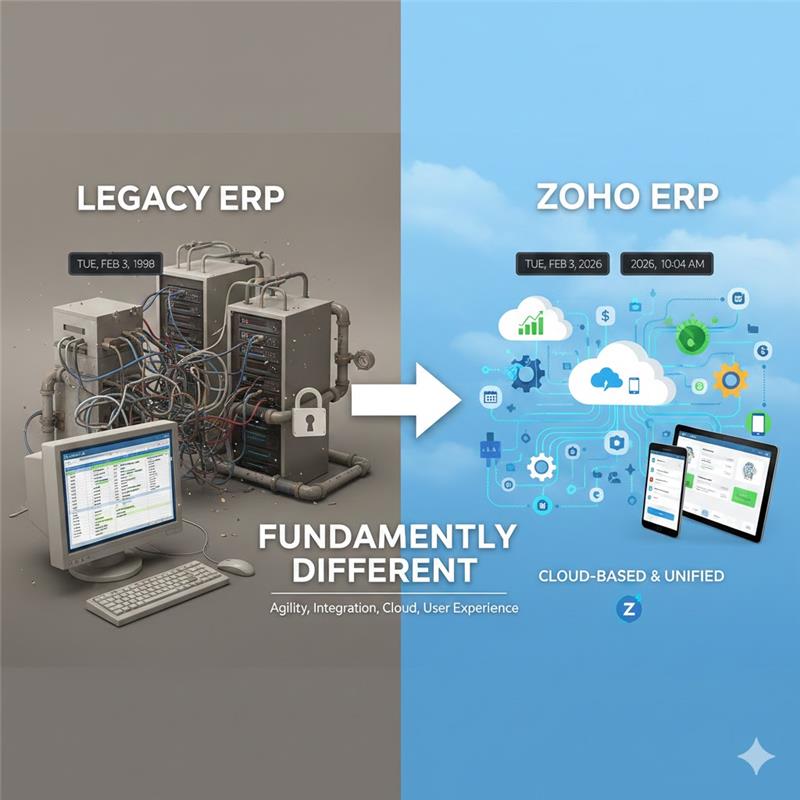
Most ERPs talk about AI. Zoho ERP uses it.
From predictive insights and anomaly detection to conversational analytics via Zia, Zoho ERP continuously analyzes operations and surfaces what matters—before problems escalate.
It’s not just reporting what happened.
It’s helping teams decide what to do next.
Traditional ERPs demand armies of consultants for even small changes. Zoho ERP flips that model.
With built-in low-code and no-code tools, businesses can:
This drastically reduces dependency, cost, and turnaround time.
Most ERP environments today are ecosystems of compromises—finance in one tool, HR in another, inventory somewhere else.
Zoho ERP delivers true unification, eliminating data silos and sync issues. Every function speaks the same language, shares the same data model, and updates in real time.
Zoho ERP is designed with local statutory compliance baked in (GST, payroll, taxation) while remaining fully scalable for global operations—something many global ERPs struggle with in emerging markets.
The demand for modern ERP solutions is growing fast—especially among:
These businesses want speed, visibility, and control—without spending years implementing software.
Zoho ERP meets this demand by offering:
This is why Zoho ERP is increasingly being viewed as a serious alternative to SAP, Oracle, and Microsoft Dynamics, not a lightweight substitute.
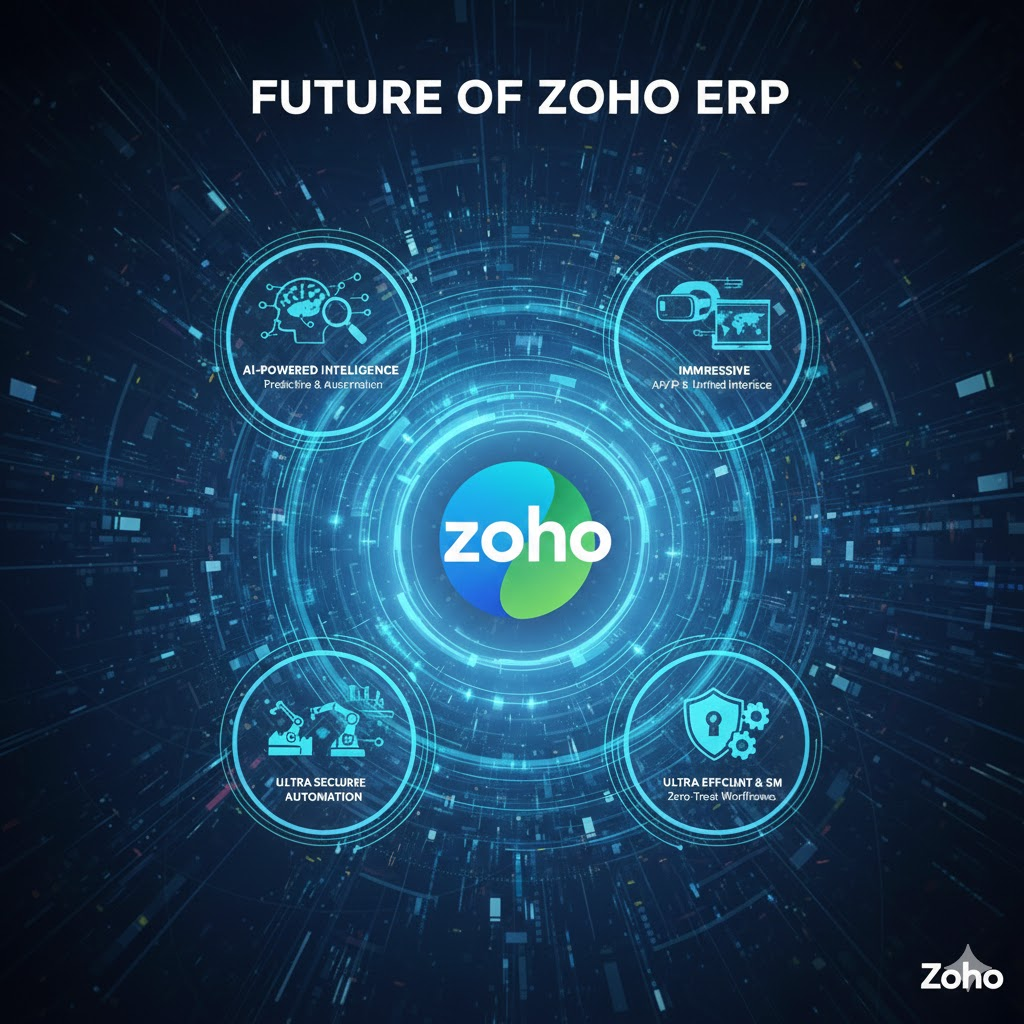
Zoho ERP isn’t static—it’s a foundation.
What lies ahead:
This positions Zoho ERP as a long-term operating system for businesses, not just a transactional platform.
While large ERP migrations take time, early market reactions are telling:
These sentiments echo what many business leaders already feel: ERP needs a reset.
At UniCloud, we don’t see Zoho ERP as a product—we see it as a strategic advantage for businesses ready to move beyond legacy constraints.
As a Zoho Premium Partner, we help organizations:
Zoho ERP isn’t trying to compete by being bigger.
It’s competing by being smarter, simpler, and more aligned with how modern businesses actually work.
And that’s exactly why it matters.