Zoho Business Operating System: The Silent Evolution of SaaS
UniCloud April 29, 2026

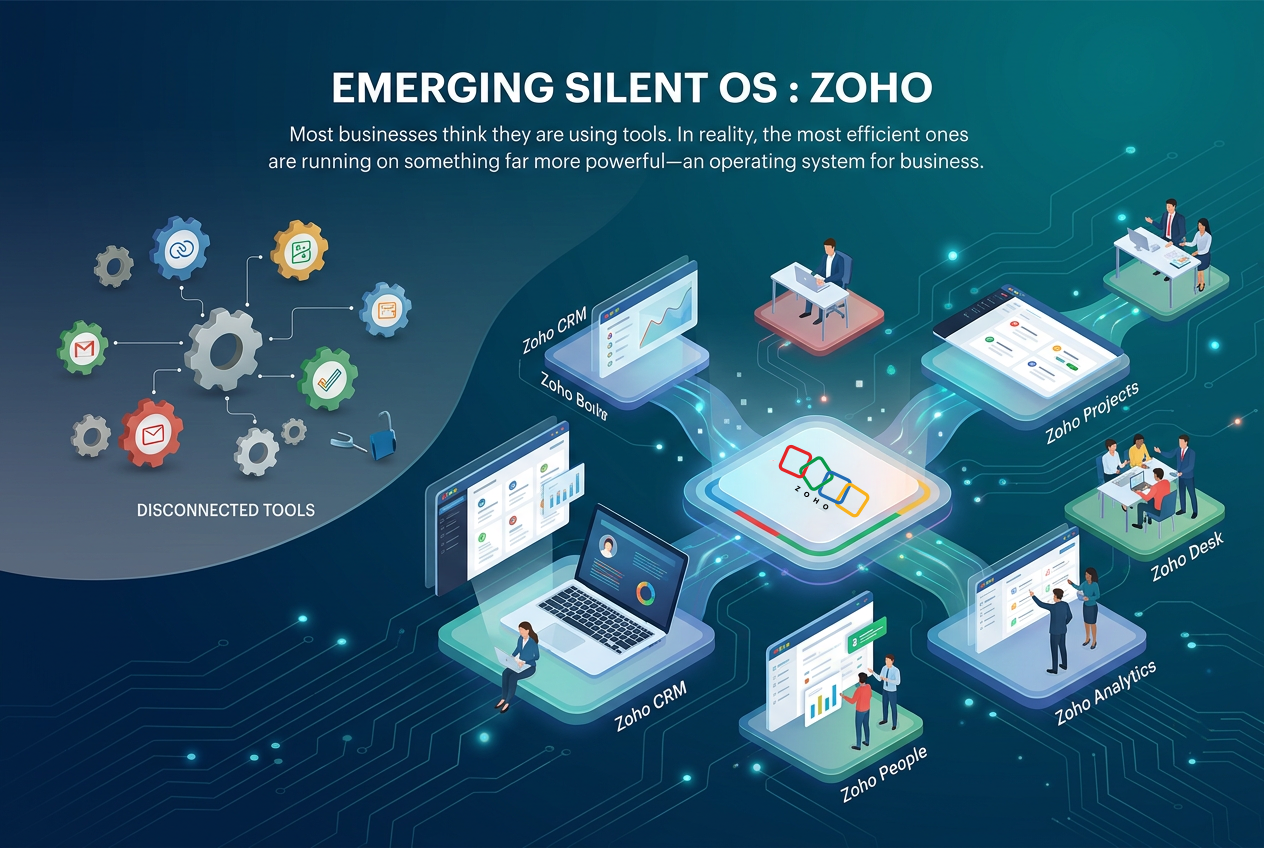
Emerging Silent OS : ZOHO

Most businesses think they are using tools. In reality, the most efficient ones are running on something far more powerful—an operating system for business.

Quietly, without loud branding or hype, Zoho Corporation is evolving from a suite of applications into exactly that:

A Business Operating System (BOS)—where processes, data, automation, and decisions run as one unified layer.

This is not a feature shift.
It’s an architectural transformation.
What Does “Business Operating System” Actually Mean?

In computing, an OS like Windows or Linux:

  • Manages hardware
  • Runs applications
  • Handles memory and processes
  • Ensures communication between components

Now translate that into business:

OS Function Business Equivalent in Zoho
Process management Workflows & automation
Memory (data) Unified data across apps
Applications CRM, Finance, Support, HR
Communication APIs & integrations
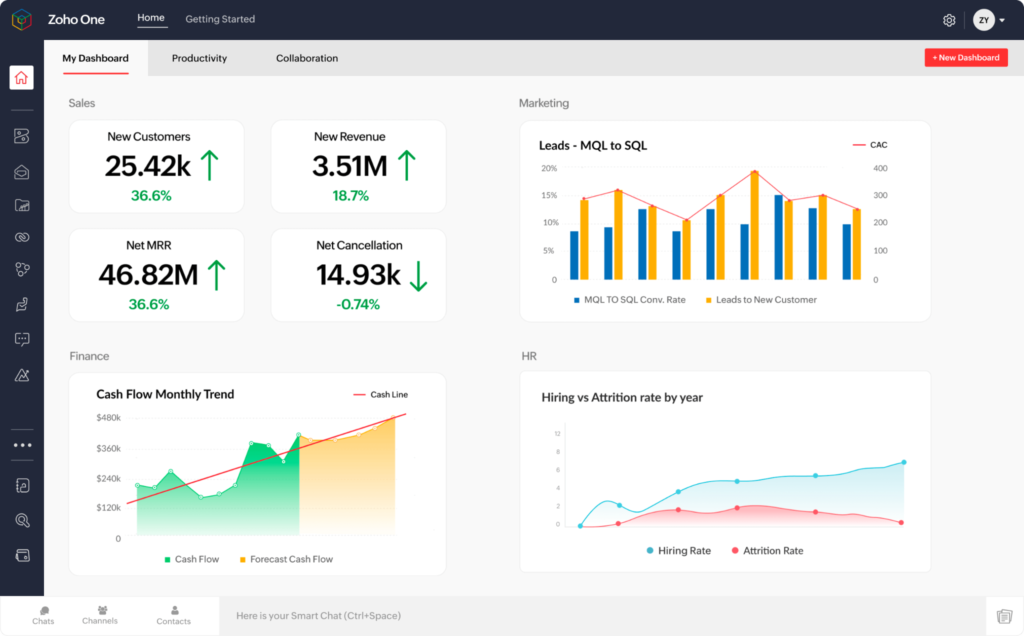
User interface Dashboards, portals

Zoho is doing all of this—across business functions.

Not as separate tools, but as a connected execution layer.

From SaaS Tools → To System-Level Thinking

Most companies still operate like this:

  • CRM for sales
  • Separate accounting software
  • External marketing tools
  • Manual integrations

This creates:

  • Data silos
  • Broken workflows
  • Dependency on manual intervention

With Zoho, especially when architected correctly, you move toward:

  • One ecosystem
  • Shared data layer
  • Event-driven workflows
  • Centralized automation

Core Stack Acting as an OS Layer

  • Zoho CRM → Customer state engine
  • Zoho Books → Financial processing layer
  • Zoho Creator → Custom application runtime
  • Zoho Flow → Inter-process communication
  • Zoho Desk → Service execution layer

Together, they behave less like apps—and more like system services.

The “Quiet” Part: Why Nobody Realizes It Yet

Zoho doesn’t market itself aggressively as an OS.

There’s:

  • No “OS narrative”
  • No enterprise buzzword positioning
  • No loud ecosystem war

But technically?

It already behaves like one.

Why It Feels Invisible

  • Modular adoption (companies adopt app-by-app)
  • Low-code abstraction hides complexity
  • No forced ecosystem lock-in
  • Incremental implementation approach

Result: Businesses don’t realize they’ve built an OS—until everything starts running seamlessly.
Architecture Deep Dive: How Zoho Functions Like an OS

1. Unified Data Layer (Memory)

Data flows across systems without duplication:

  • Customer created in Zoho CRM
  • Financial data reflected in Zoho Books
  • Support history logged in Zoho Desk

This acts like shared system memory.

2. Event-Driven Execution (CPU)

Instead of manual actions:

  • Deal closed → triggers invoice
  • Ticket raised → triggers SLA workflow
  • Lead captured → triggers nurture campaign

Powered by:

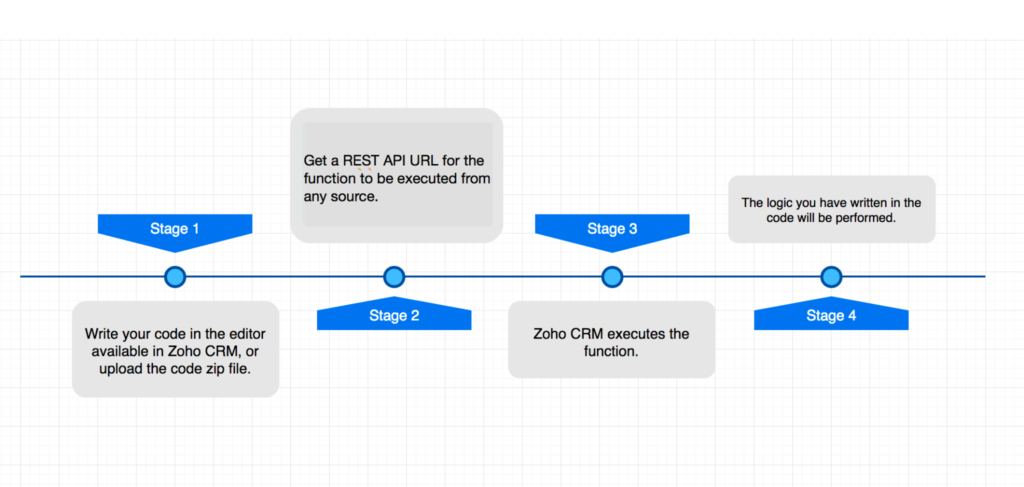
  • Zoho Flow
  • Zoho Deluge

This is your processing engine.

3. Custom Runtime Layer

Not everything fits standard modules.

That’s where:

  • Zoho Creator

acts as a custom application runtime, similar to how apps run on an OS.

4. Inter-Process Communication (IPC)

Different components communicate via:

  • APIs
  • Webhooks
  • Middleware flows

Zoho handles this through:

  • Zoho Flow

Equivalent to how processes talk inside an OS kernel.

Real-World Example: Zoho as an Operating System

Scenario: Order-to-Cash Lifecycle

  1. Lead enters → Zoho CRM
  2. Qualification triggers workflow
  3. Custom onboarding handled in Zoho Creator
  4. Invoice generated in Zoho Books
  5. Support lifecycle managed in Zoho Desk

No manual switching.
No disconnected tools.

Just a system executing processe
Why This Model Dominates Traditional SaaS Thinking

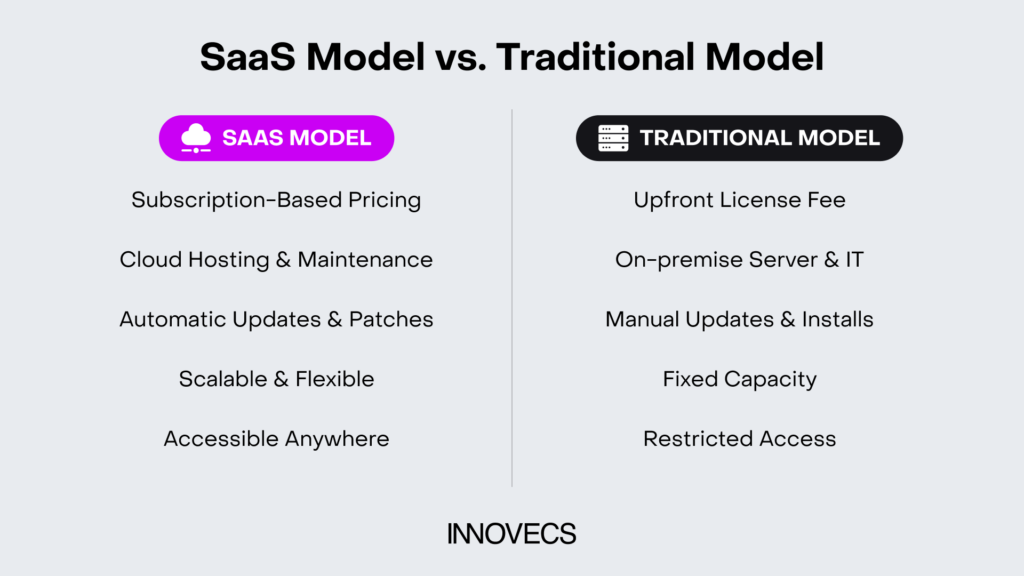
Traditional Approach

  • Tools = independent
  • Integrations = patches
  • Automation = limited

Zoho OS Approach

  • System = unified
  • Data = shared
  • Automation = core layer

The Shift

From: “Which tool should we use?”
To: “How should our system operate?”

That’s a completely different conversation—and a higher-value one.

Strategic Advantage for Businesses

Organizations running on this model gain:

  •  Faster execution (no manual gaps)
  • Continuous automation loops
  • Real-time visibility across functions
  • Infinite scalability via modular expansion

Most importantly:

They stop managing tools—and start running systems.

Where Most Implementations Go Wrong

Despite the potential, many fail to reach this level because they:

  • Treat Zoho apps as isolated tools
  • Over-customize CRM instead of distributing logic
  • Ignore data architecture
  • Build workflows instead of systems

Result?

A fragmented setup—not an operating system.

The Real Opportunity (For Agencies Like Yours)

This is where you differentiate.

Instead of saying:

“We implement Zoho”

Position as:

“We design and deploy Zoho-based Business Operating Systems”

That changes everything:
  • From execution partner → strategic architect
  • From hourly work → high-value consulting
  • From tools → transformation

Final Thought

Zoho is not trying to look like an operating system.

It’s becoming one—quietly.

And the businesses that recognize this early will have a massive advantage:

  • Faster systems
  • Smarter automation
  • Scalable architecture

While others are still stitching tools together…